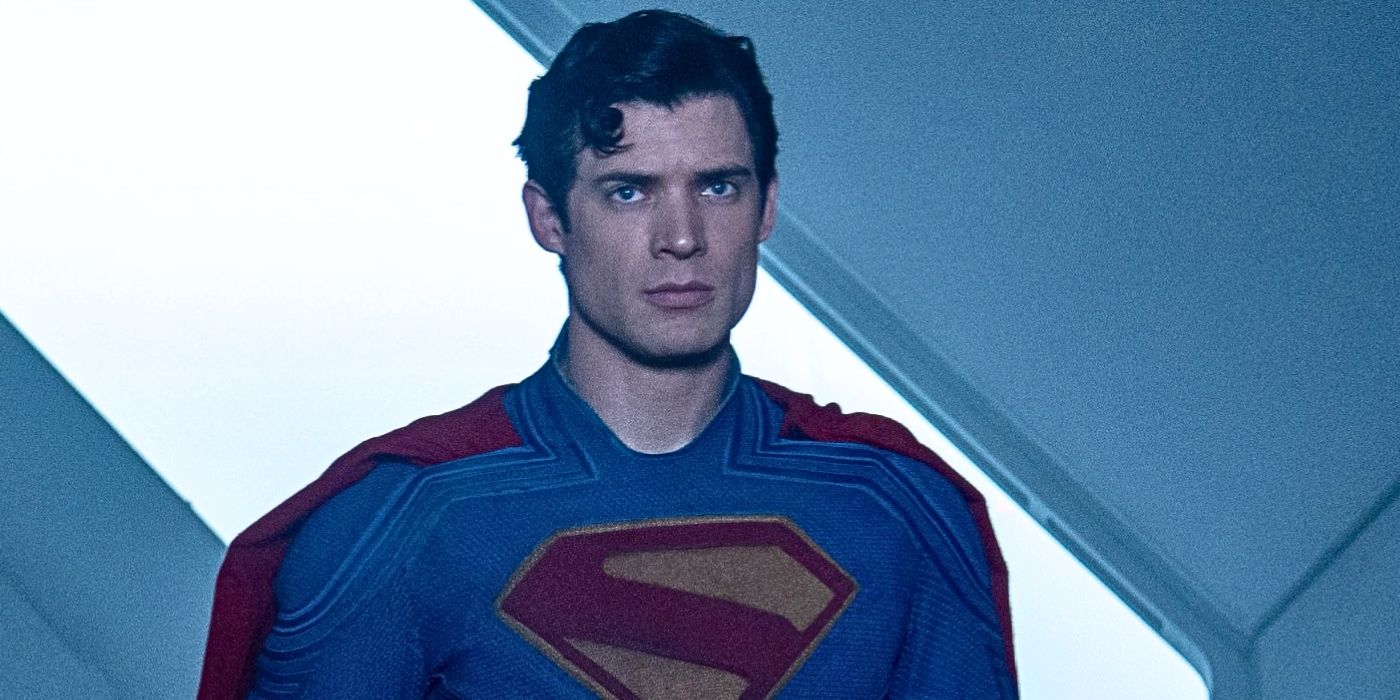

The wait is over, and Superman has landed in theaters. James Gunn‘s relaunch of the world’s most famous superhero and the start of the DCU arrive 25 years into the modern superhero genre of the 21st century, and it looks to be a promising start. The film has earned positive reviews from critics and audiences. It feels like the first time in nearly three decades that Superman feels like the world’s biggest superhero, as the brightly colored hero gets a film that comic fans have always dreamed of.
What might have just been the latest in a long line of Superman reboots or another superhero film in a landscape dominated by them instead reveals something different. Through a combination of topicality and a fun, joyous experience that celebrates the unique weirdness of the DC Universe, Superman feels like a seismic shift for the genre that could usher in a new era. It feels like a paradigm shift in the genre, much like the ones sparked by films like Spider-Man, Iron Man, The Dark Knight, and The Avengers. Superman is the game-changer that DC and the superhero genre needed.

Superman
- Release Date
-
July 11, 2025
- Runtime
-
130 Minutes
- Director
-
James Gunn
- Producers
-
Lars P. Winther, Peter Safran
‘Superman’ Is Not Afraid To Be Silly

From the X-Men in black leather outfits to Galactus as a cloud, the superhero genre spent a significant part of the 21st century hesitant to embrace some of the more colorful flights of fancy out of fear that audiences would reject them and have another Batman & Robin on their hands. In 2005, Christopher Nolan’s Batman Begins rebooted the DC franchise. It, along with its bigger sequel, The Dark Knight, set a template that would not only impact future comic book movies but also the entire industry, where James Bond, Robin Hood, and even Superman received their own “Nolan”-inspired makeovers, often in more somber, grounded stories. Even the more comic-booky DC films of recent years, like Wonder Woman, Aquaman, and Shazam! pull heavily from the New 52 era of comics, which began in the 2010s and was an attempt to modernize many of DC’s heroes.
Superman feels entirely unafraid to embrace the wilder and sillier elements of not just the character’s mythology but also DC history, one that past adaptations tried to shy away from out of fear of being seen as too ridiculous. It features alien dogs that resemble Earth dogs, robots, and kaiju, all without needing to offer realistic explanations for them. Instead, it focuses on letting the emotions be real. Superman isn’t concerned with realism to win audiences over. Instead, it has faith that the material is strong enough for audiences to embrace it in the same way comic readers do, and judging by the positive reaction to Krypto, maybe the genre shouldn’t have been so afraid of these elements for so long.
The Marvel Cinematic Universe certainly laid the groundwork for audiences accepting more fantastical elements, as it started relatively grounded with Iron Man, and the franchise eventually led to various heroes from different genres traveling through time to fight an evil alien in Avengers: Endgame. Yet, despite embracing comic-accurate costumes and incorporating concepts like the multiverse and cosmic space stones, they do have a bit of self-aware irony, winking at the silly concepts before the audience can make a joke about it. After Superman, though, it seems like there is no going back. No idea is too out there for the big screen, and maybe not everything needs to be lampshaded.

Related
How the ‘Creature Commandos’ Season 1 Finale Sets Up the DCU Future
Season 1 of ‘Creature Commandos’ teased a new team, a growing global conflict in Superman, and DC heroes like The Metal Men and Batman.
Hulk screenwriter James Schamus recalled the moment he saw Sam Raimi’s Spider-Man and knew their upcoming film was in trouble.
Sam Raimi really, I think – and working with Kevin Feige and working with Avi [Arad], I mean as a team, these guys did something that you rarely see and it’s one of those great miracles of pop culture: they created a genre. I went and saw that film [Spider-Man] in Times Square and I remember calling right afterwards… I said, “Ang, I think we’re actually in a little trouble.” ‘Cause the end of that first Spider-Man it’s got that long lens and he’s walking towards the camera, the American flag’s waving in the background and the audience has just gone on a roller coaster ride, rightfully so.
I was like “Dude, I think that there’s now a genre”. And you don’t mess with genre, frankly. You can definitely riff on it, you can develop it, you can ironize it, you can do anything you want with genre except go head-on against it. Genre is smarter than you are and more powerful than you are, it really is.
Just as Spider-Man kicked off the superhero movie boom of the 2000s, Batman Begins established the gritty reboot aesthetic, and The Avengers solidified the concept of the shared universe. Superman marks a turning point for the genre, one that isn’t afraid to be bold and a little ridiculous. This shift towards a more Silver Age-inspired superhero movie is highlighted by The Fantastic Four: First Steps, whose 1960s pop sci-fi aesthetic opens just two weeks after Superman. This truly feels like a new age of superhero movies.
A New Cinematic Universe That Demands To Be Explored

Superman is launching a new shared universe at a time when even the mighty Marvel Cinematic Universe is struggling to capture audience interest. Superman doesn’t so much copy the cinematic universe template laid out by Marvel Studios but instead builds upon it. After 17 years of the Marvel Cinematic Universe, audiences know how to watch a superhero movie, so Superman can skip the origin and drop viewers into a world filled with superheroes without needing to explain everyone’s backstory or treat this as a new phenomenon. In many ways, it is a meta-commentary on the genre, as Superman exists both within the DCU and in the cinematic landscape as a hero among many; the heart of the film lies in what makes him special.
Superman‘s built-in universe feels very similar to Star Wars, the most successful mass media franchise ever. Like the original Star Wars (now subtitled A New Hope), Superman employs onscreen text to provide viewers with context before diving into the story’s action, allowing vital information to be conveyed in a way that avoids a straightforward retelling of the origin. This established universe means the DCU doesn’t need to spend time on origin stories and can instead follow up with heroes as they exist, jumping to more interesting stories outside their origins. With concerns about superhero fatigue, Superman and the DCU demonstrate a universe that can change the formula.
The World Needs Superman

At its heart, Superman is a movie about being a nice, good person in a cynical world. It isn’t easy, it’s hard, but it’s the right thing to do. This film portrays that Superman’s public perception is dictated by social media outrage, fueled by monkeys typing in all caps, and disseminating extremely harmful and inherently provocative messages. Superman, dressed in his colorful costume, is corny, but that is the appeal. The film clearly states that Superman’s kind attitude and belief in others are punk rock against an establishment filled with distrust. Instead of trying to make Superman superficially cool like past incarnations, the movie believes he is, and that by keeping him 100% as audiences imagine Superman to be, people will think that he is cool.
Superman was created in 1938, during the Great Depression, and was a champion of the oppressed. After years of Superman being sometimes depicted as an extension of the United States military power, the DCU Superman film returns the Man of Steel to his glory by having him protect a nation with less military power. The global conflict in the movie is between the military powers of Boravia and the smaller neighboring nation of Jarhanpur, with the film explicitly stating that Boravia is not only backed by the United States but also looks to commit genocide against the people of Jarhanpur. Viewers can draw multiple comparisons between Russia’s invasion of Ukraine and Israel’s government’s assault against Palestine. It might be an allegory, but Superman has a point of view that can’t help but tap into how the audience receiving it feels about the state of the world.

Related
Forget the Woke Controversy, Superman Has Always Been an Immigrant Story
The right-wing backlash against ‘Superman’ isn’t just stupid, it’s objectively wrong and ignores the character’s origins.
Superman arrived during the second term of the Trump administration. Lex Luthor’s comic book counterpart was reworked to invoke Donald Trump, and so does the film. Lex Luthor has his own inhuman private prisons, ones that certainly evoke the ICE detention centers. Even if these creative decisions were made before Trump became President again (Superman did finish principal photography four months before the 2024 Presidential election), Gunn’s Superman is tapping into something permeating the zeitgeist, as every day the news is filled with inhuman treatment of prisoners that is now reflected onscreen in Superman and giving audiences a hero to believe in an indecent time.
Great movies reflect and speak to the time in which they were born. In 1978, at a time when cynicism and distrust of public officials prevailed, along with remnants of resentment from the Vietnam War, Superman: The Movie arrived in theaters, when audiences needed a hero. In 2002, Spider-Man arrived less than a year after September 11th, and the cathartic feeling of seeing New Yorkers unite to help Spidey while saying “you mess with one of us, you mess with all of us” was a moment people needed.
In 2008, Iron Man and The Dark Knight addressed the world’s fears and anxieties during the War on Terror, becoming two competing yet influential movies. In 2012, The Avengers spoke to a growing sense of optimism sparked by the promise of the Obama administration and became one of the biggest movies of all time. 2017’s Wonder Woman and 2018’s Black Panther were movies that felt like rebuttals against the Trump administration.
Now, in 2025, the world needs Superman, whose new feature film isn’t just the relaunch the character needs, but also has the potential to be remembered as a turning point for superhero movies. Things won’t be the same after Superman. Superman is in theaters now.