
In 2015, Mexican filmmaker Guillermo del Toro made a film that’s unlike anything else in the modern cinema landscape. It was titled Crimson Peak, and starred three formidable actors in their prime: Mia Wasikowska, Tom Hiddleston, and Jessica Chastain. It was also a high-profile horror film, produced under the studio system, and made by a visionary director who had captivated audiences in the past with unconventional genre mashups like Hellboy and Pan’s Labyrinth.
On its 10-year anniversary, its poor reception is still surprising, given that it feels like a movie made with passion by someone who understands the genre better than most directors today. Crimson Peak is so much better than audiences gave it credit for 10 years ago, as reflected in its quite disappointing Rotten Tomatoes score, and the poor box office performance (it only made over $74 million from a $55 million production budget). Revisiting it is not only necessary, but it will surely make you change your mind about one of the most underrated horror films of the 21st century, so far.
What Is Guillermo del Toro’s ‘Crimson Peak’ About?

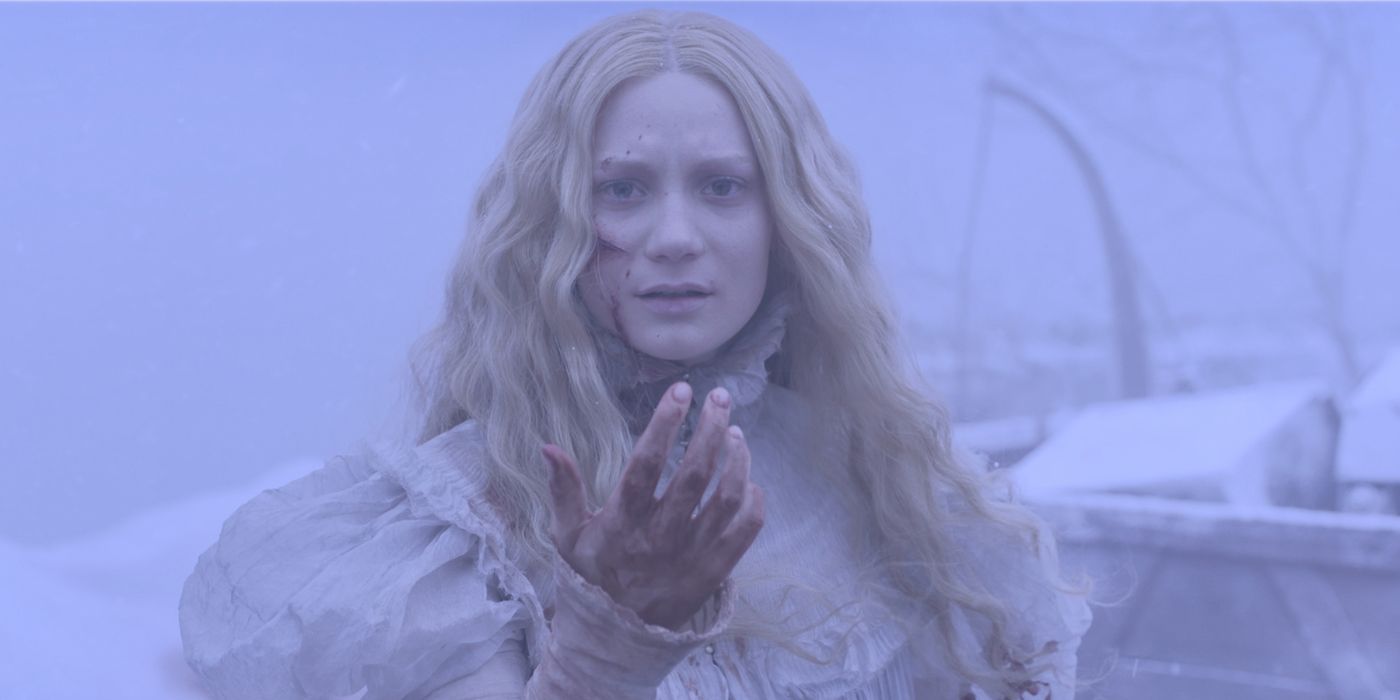
Crimson Peak follows the story of Edith Cushing, a young woman in Victorian times who has channeled her traumatic supernatural experiences to become a writer. She has been visited by her mother’s ghost since she was a child, and the eerie entity just whispers, “Beware of Crimson Peak.”
When a charming man named Thomas Sharpe arrives in New York, Edith becomes infatuated with him. Sharpe is an enchanting Englishman who is always beside his sister, the mysterious Lucille Sharpe. He’s seeking investors for his mining machine, but Edith’s father, Carter, doesn’t think highly of him. When Carter digs deeper into the siblings’ past, he’s brutally murdered.
Edith ends up marrying Sharpe, and moves with him to Allerdale Hall, the Sharpes’ derelict English mansion that is literally sinking into red clay. While the couple seems to be on the right track for an everlasting romance, Lucille always seems to be trailing after them. When Thomas tells Edith that the mansion is also known as Crimson Peak because of perpetual red clay stains, the young writer recalls the advice given by the ghost of her mother.
Eventually, Edith starts getting sick, and begins to wonder if she made the right decision to become part of the strange family dynamic. She starts getting haunted by spirits, but this doesn’t stop her from digging for the truth. Ultimately, she uncovers the dark and disturbing secret of the Sharpes, and what lies in the past of Crimson Peak.
Why Was ‘Crimson Peak’ Divisive?

Crimson Peak wasn’t an easy film to make. Del Toro wrote the script with American New Wave icon Matthew Robbins in the mid-2000s, but he decided to make other films first, like Hellboy II and Pacific Rim. Eventually, the big-budget project stayed in the hands of the director, who set out to make a wildly ambitious haunted house movie. This type of horror film had lost some of its impact with the advent of other subgenres and formats like found footage and torture porn. Needless to say, del Toro did not hold back in his drive to honor his influences.
It was a recipe for success, but the results were not great. If Crimson Peak had all the ingredients to become a major horror hit, why was it so divisive? On Rotten Tomatoes, the critics’ score still sits at 72%, but the audience score registers a much lower score of 56%. Audiences saw it as a beautiful horror film, but it wasn’t like any other modern scary film. Crimson Peak is an intense experience, though del Toro doesn’t like to call it a horror film but a “Gothic romance.” He may have a point with this, at least until people start getting stabbed, and the terrifying ghosts start crawling through the halls.
It is not a traditional supernatural romance movie. It’s a slow-burn haunted house feature with a strong narrative that holds well against a powerful backdrop of Victorian visuals, a beautiful color palette, and perhaps the best blend of CGI and practical effects of the 2010s.
‘Crimson Peak’ Is a Prime Example of Gothic Horror in the Hands of a Modern Master

First, let’s address the visuals. Horror films aren’t supposed to look this good. From the frame composition to the costume design, Crimson Peak is a celebration of color in cinema. While we’re sure that del Toro would have done a great job filming it in black and white, color is almost a theme in the movie. Especially in how the red and the crimson forebode the inherent and inevitable violence in the story.
The film is also a throwback to iconic horror films that take place inside a mansion that has seen better days. It’s perhaps where the influence of Jack Clayton’s The Innocents becomes more visible, as Edith becomes a Miss Giddens-like figure when trying to find some answers in a place where ghosts hold the truth. Today, Gothic horror is not common, and Crimson Peak remains one of the last examples of the subgenre. It sits beside films like The Others, The Haunting, and, of course, The Innocents, as near-perfect Gothic horror renderings.
Although del Toro insists that it’s a Gothic romance with ghosts aplenty, it still draws from horror tropes uncommon in the traditionally melancholic subgenre. The final act is intense, violent and gnarly, making the film a wonderful connection between the director’s influences and his drive to always include graphic violence as a grounding element.
Where to Watch Guillermo del Toro’s ‘Crimson Peak’?
Crimson Peak is not available to stream anywhere at the moment. It is only available for digital rent or purchase on platforms that offer these kinds of options. However, it has been available on streamers like Netflix in the past, meaning that there’s a chance that it could return to the streamer sometime in the future – especially during the spooky season. At the moment, your best option to watch Guillermo del Toro’s unsung horror classic is to get a physical copy or digitally purchase it.