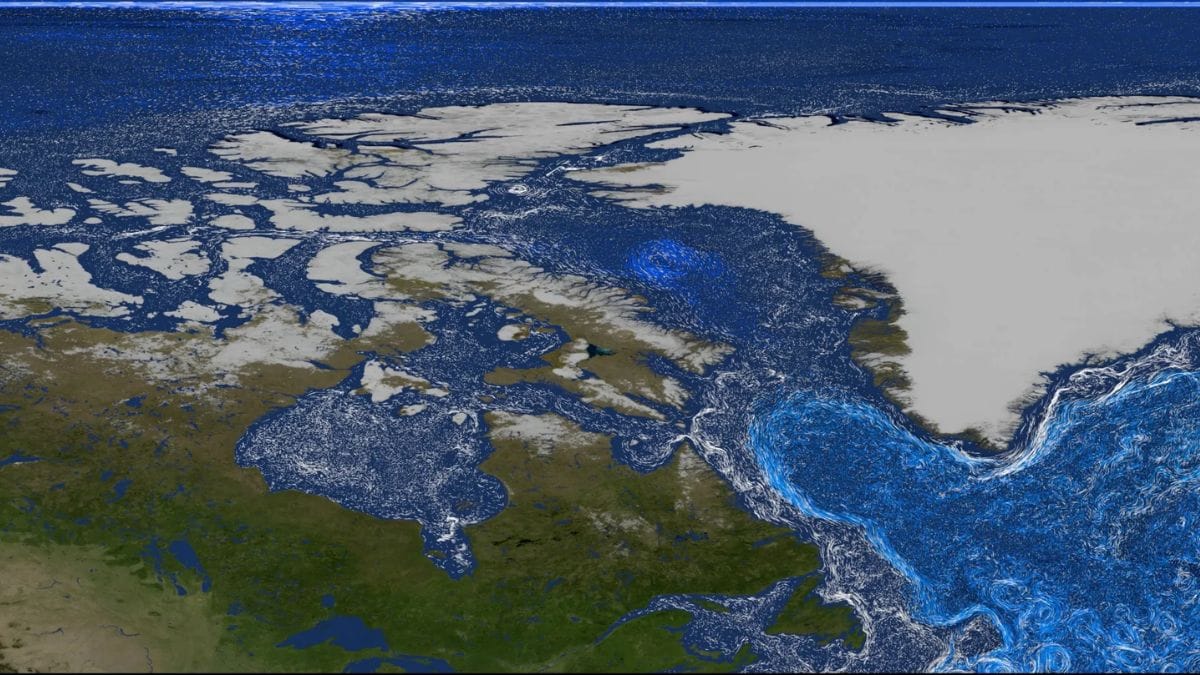

The process of Greenland’s ice sheet melting is not only raising sea levels, it is also feeding life in the ocean. As the most productive for marine life, phytoplankton harvesting energy from this nutrient-filled climate change is altering how this biological pump works in these warming ares. In a new study, scientists employed cutting-edge computer models to simulate the intricate movements of ice melt and seawater with ocean currents and marine biology behaviour finnesing adding more detail to an understanding of these unseen forces between Earth’s shifting polar zones.
Glacial Melt Fuels a Surge in Ocean Life
According to precious study, each summer Jakobshavn Glacier releases more than 300,000 gallons of freshwater per second into the sea. This less-dense meltwater shoots upward through heavier, salty seawater, dragging deep-sea nutrients—like iron and nitrate—toward the sunlit surface. These nutrients are essential for phytoplankton, which are the foundation of the ocean food chain.
In recent decades, NASA satellite data recorded a 57% surge in Arctic phytoplankton, and scientists now have a clearer picture of why. The nutrient boost is especially crucial in late summer, when spring blooms have already depleted surface waters. Without direct access to such remote regions, researchers had long struggled to test the nutrient-plume hypothesis—until now.
NASA’s Digital Ocean Brings Clarity Beneath the Ice
To simulate the chaotic waters of Greenland’s fjords, researchers used the ECCO-Darwin model, developed by NASA’s Jet Propulsion Laboratory and MIT. Fueled by billions of ocean measurements—temperature, salinity, pressure—this model replicates how biology, chemistry, and physics interact. Using NASA’s supercomputers at Ames Research Center, the team calculated a 15–40% increase in phytoplankton growth from glacial nutrients.
Yet more change looms: as melting accelerates, seawater may lose its ability to absorb CO₂ even as plankton pull more of it in. “Like a Swiss Army knife,” said researcher Michael Wood, “this model helps us explore ecosystems far beyond Greenland.”