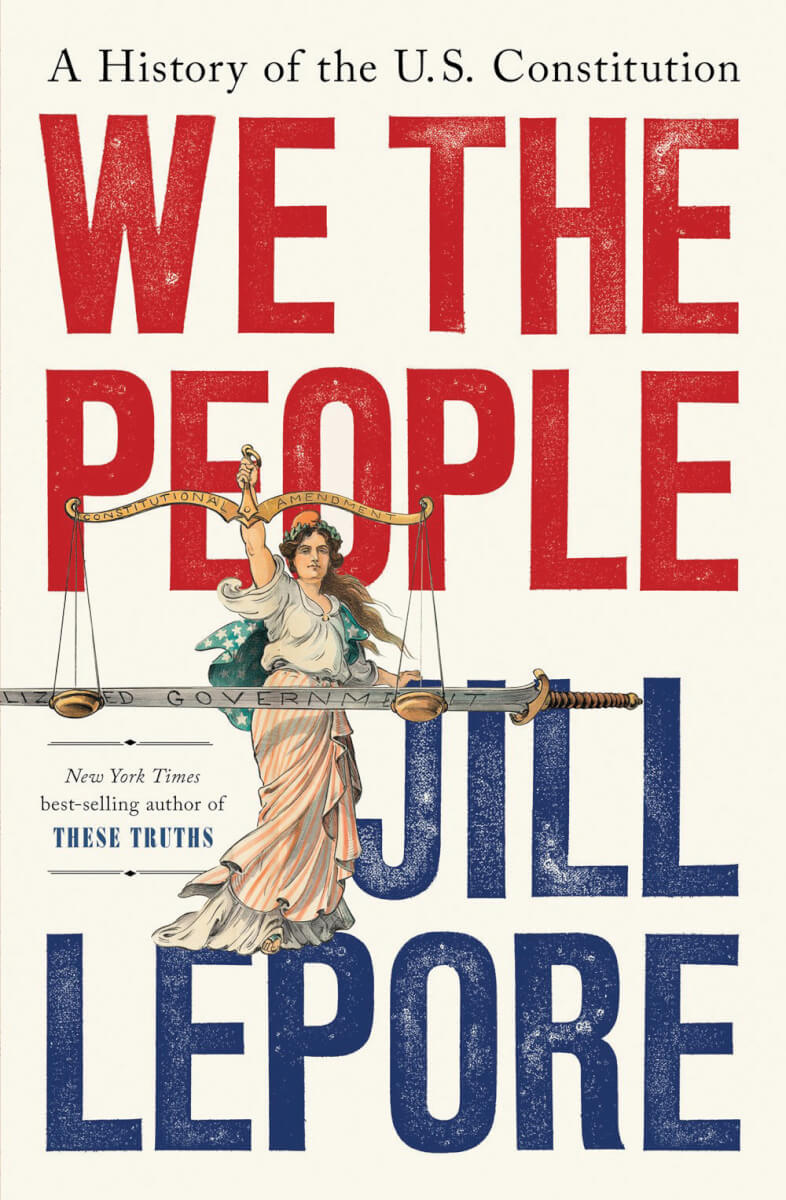

Whether it’s abortion, immigration, gun violence or an array of other divisive issues, amid our polarized politics, debates about the meaning of the Constitution are a constant of American life. Harvard history professor and New Yorker staff writer Jill Lepore’s thorough and thoroughly accessible We the People: A History of the U.S. Constitution provides a useful guide to understand how these controversies have shaped America’s identity.
Lepore (These Truths, The Deadline) examines the Constitution through the lens of its amendment provision, Article V. In her view, “the philosophy of amendment is foundational to modern constitutionalism.” The framers devised Article V to “revise, reform, correct, update, and improve the Constitution,” but in practice, amending it has proven “infinitely more difficult than they intended.”
Beginning with the first 10 amendments (the Bill of Rights), which were ratified barely four years after the Constitution’s adoption in 1787, Lepore offers a comprehensive, highly readable survey of the sometimes arduous path various amendments like the 13th, abolishing slavery, and 19th, women’s suffrage, have traveled to adoption—or to the constitutional graveyard. Despite broad public support, the Equal Rights Amendment and an amendment to end the Electoral College are among the many that never saw ratification. Lepore enlivens these accounts by not confining her investigation to the contributions of the famous. Alongside the stories of well-known figures like James Madison and Thurgood Marshall, she explores the roles that less prominent—but no less consequential—figures have played in both promoting and fighting constitutional change, like 19th-century constitutional scholar Francis Lieber and 20th-century segregationist lawyer David Mays. Despite its length of upwards of 700 pages (including back matter), We the People requires only a curiosity about American history, and not a law degree, to appreciate Lepore’s lucid arguments.
Lepore concludes with an examination of how since the living Constitution philosophy of the Warren Court in the 1950s and 1960s—which viewed the document as adaptable to the needs of contemporary society without formal amendment—was supplanted by Antonin Scalia’s doctrine of originalism, the Supreme Court has acted as a de facto amender of the Constitution through the process of judicial interpretation. Successive rulings have been as likely to ignite political firestorms as they have been to extinguish them. As Lepore persuasively demonstrates, with the passage of more than 50 years since the last meaningful amendment and none on the horizon, the light of popular constitutional change grows ever dimmer.