

What does a manufacture that makes watches out of cheese look like…or maybe that should be what could it possibly taste like, never mind how it smells! What if the same manufacture also made a watch out of plants, which were literally alive on the case so it was less a watch than the world’s first and only wrist garden?
We might also wonder about the smell of such a watch, but we digress… Of course, the benefit of making a watch case out of dairy and one that is alive (affectionately dubbed Moser Nature) is that you automatically know which watchmaker we are discussing…if the pictures and description did not spoil it.
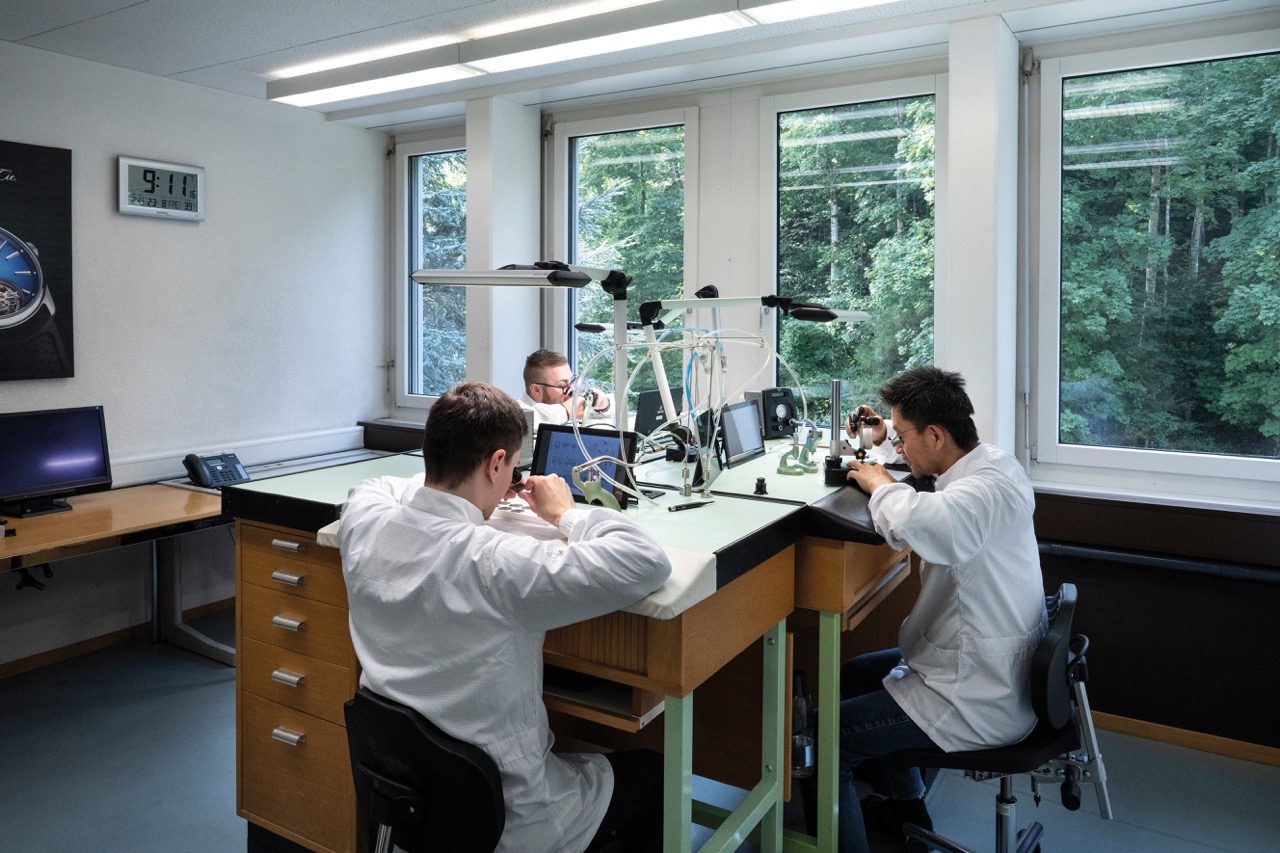
The irony is that H. Moser & Cie’s manufacture at Neuhausen am Rheinfall looks pretty much any other contemporary watch manufacturing facility, minus the bombast of some. In many ways, it is the not-perfect- but-just-right expression of a family-owned brand that is steadfast in its independence. H. Moser & Cie., under the quietly defiant stewardship of the Meylan family, has cultivated a reputation for being technically masterful, audaciously creative and, at its best, unexpectedly funny. It is a brand that honours tradition by tastefully (sometimes) breaking its rules, proving that true luxury is, above all, rare. Alright, that is a bit much, even if it is true. Allow us to back all this up, without the help of any one H. Moser & Cie watch…
From Imperial Russia With Love
In the spirit of irreverence, let us say that the story begins not in Switzerland, but in St. Petersburg in 1828, where founder (the properly Swiss and Schaffhausen- born) Heinrich Moser established a brand that would become a favourite of the Romanov court.
An astute industrialist as well as a master watchmaker, Moser later returned to Schaffhausen, where he harnessed the power of the Rhine Falls to build a dam, powering the region’s industrial growth.
Despite the auspicious beginnings, with the brand’s museum estimating that Moser made hundreds of thousands of watches, history had other plans here. Obviously, we need not explain about the Romanovs (it did not end well) and the Swiss operations faded through a series of ownership changes in the 20th century.
For decades, the name was little more than a footnote in the history of watchmaking until 2002, when it was formally revived. The true turning point came in 2012 when the Meylan family, through their holding company MELB, acquired the brand.
Led by the charismatic Edouard Meylan, H. Moser & Cie. was reborn with a new philosophy: to be “Very Rare.” This is not just a marketing slogan; it is a mission statement reflecting its limited annual production of around 4,000 watches, its mastery of approximately 20 in-house calibres, and a proudly contrarian spirit.
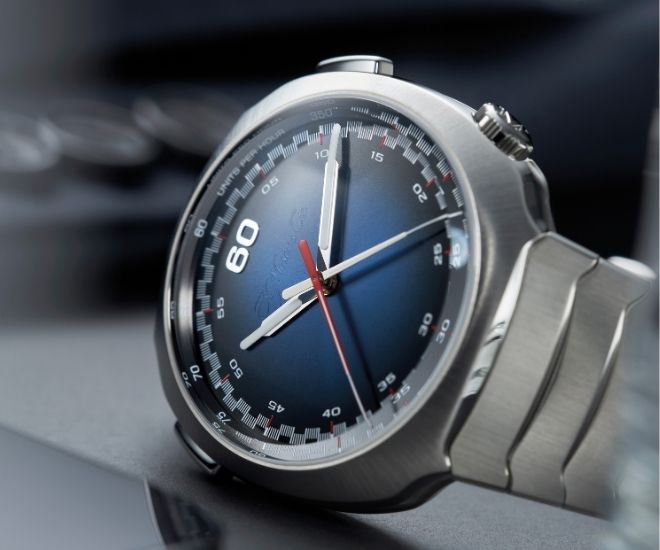
This boldness has produced some of the most talked-about timepieces in recent memory, from the “Swiss Alp Watch,” a mechanical middle finger to the smartwatch craze, to timepieces made of the aforementioned Swiss cheese (the Swiss Mad watch, which was a powerful commentary on the legally protected Swiss Made standard and remarkably prescient about broader global manufacturing concerns). Yet, beneath the wit lies a deep reverence for aesthetic purity.
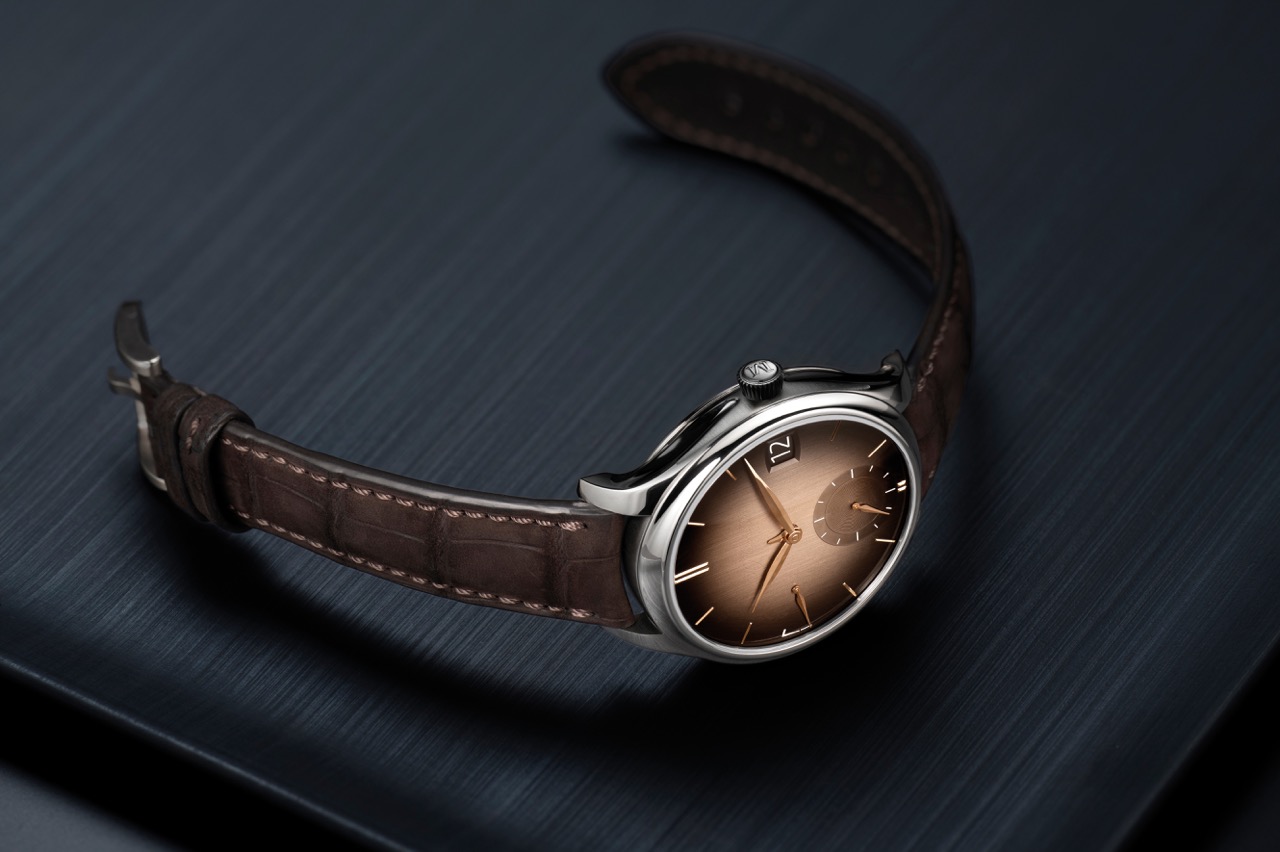
Moser’s signature is the fumé (smoked) dial—a stunning gradient of colour that darkens towards the edges, often left completely sterile, free of logos or unnecessary text. The brand’s design philosophy is one of elegant reductionism, perhaps best exemplified by its perpetual calendar, which cleverly uses a small central arrow and the 12 hour indices to indicate the month, decluttering the dial in an act of horological genius.
Engineering Independence
This creative freedom is powered by profound technical independence. At the heart of the Neuhausen am Rheinfall manufacture is its sister company, Precision Engineering AG (PEAG).
This specialist firm is dedicated to producing the most critical components of a watch movement: the balance wheel and, most importantly, the hairspring. PEAG might also manufacture other escapement components, such as the pallet fork and the escape wheel, but we did not see this ourselves.

The hairspring, a minuscule, spiralled wire, is the regulating organ of a watch—its beating heart, as we have sometimes waxed lyrical about. Its quality dictates the timepiece’s accuracy, yet its production is so specialised that only a handful of companies in the world have mastered it. PEAG is one of them.
The process is a marvel of patience and precision, beginning with a 0.6 mm wire of a proprietary alloy named PE5000 (which is as different to Nivarox as Nivachron is to silicon) that is painstakingly drawn over two weeks to a thickness of just 0.01 mm (we are rounding up so you will have to imagine that it is even thinner, if you can).
This wire is then flattened to be finer than a human hair (0.07 mm, if you are counting) before being meticulously hand-coiled – with the help of special tool, as shown in the images – into a perfect spiral. PEAG not only supplies Moser but also a select group of other high- end independent brands, producing up to 800 of these vital components daily.
Streamlined Production
On this note, even a dedicated maker of watches like H. Moser & Cie cannot claim to make everything. The scale simply does not match up, which is evident when you consider how many hairsprings PEAG can make.
Moser says it makes 80 per cent of its calibres,with the remainder produced by Agenhor and Vaucher. These producers, likewise are intertwined with each other, with Moser owning a minority stake in Agenhor. For its cases, Moser relies on the facilities of a Vaucher sister firm, Les Artisans Boitiers, which you can read more about in our revisit of the Parmigiani Fleurier manufacturing sites.
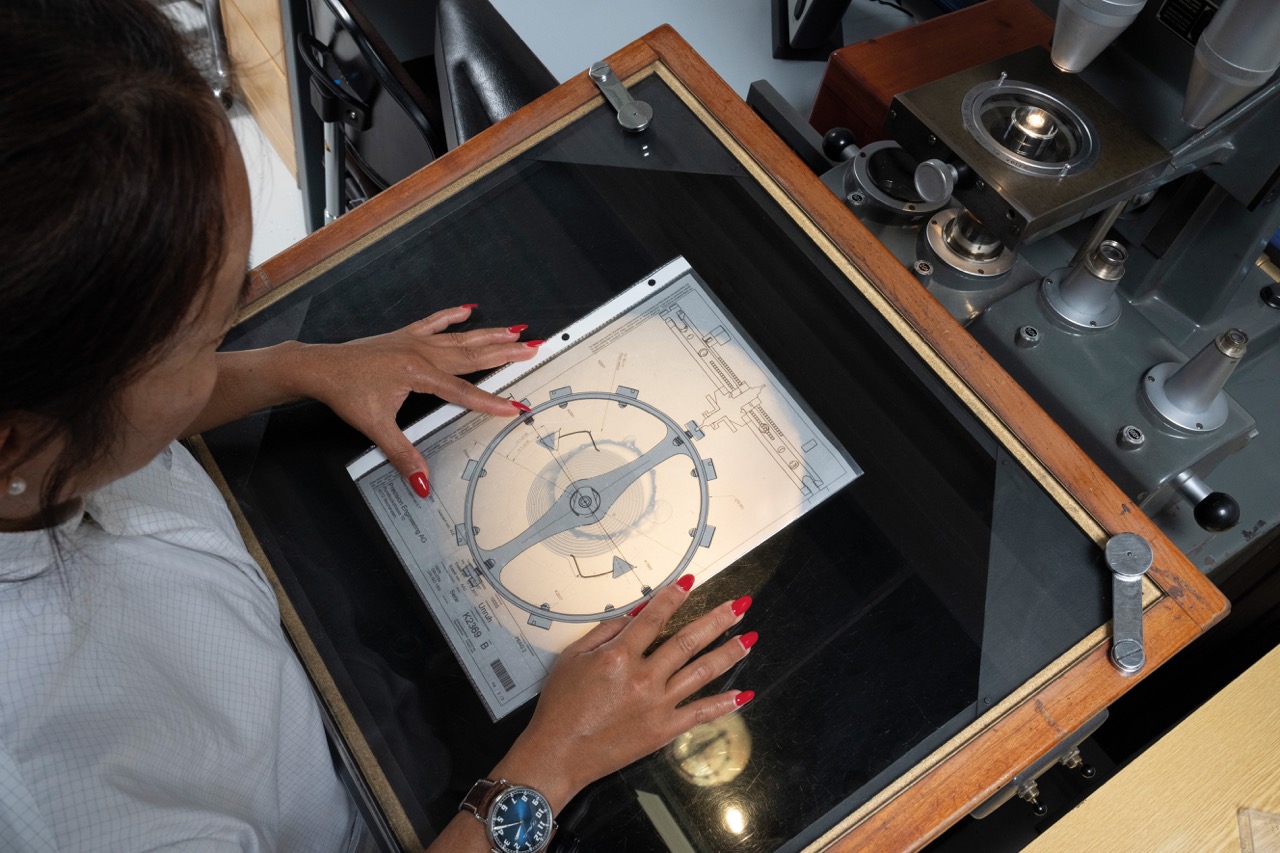
Returning to PEAG, among its innovations is the Straumann Double Hairspring®, where two identical hairsprings (a challenge to find!) are paired and set to oscillate in opposite directions. This ingenious system averages out errors in timekeeping rates, achieving a level of precision comparable to a tourbillon but without its complexity or fragility. Moser also has a modular escapement, where the entire regulating organ can be removed as a single unit for servicing. This is a practical innovation, also seen at other more contemporary watchmakers, that streamlines maintenance without compromising performance.
We have spent quite a bit of time on hairsprings and the like but it should be remembered that it is not only PEAG doing the work of making components. The rest of the bridges, plates, pinions and gears are made in-house at Moser, which also shares its capabilities and capacities with Hautlence, another sister company. Like many other manufactures, there are CNC machines, computers and more traditional lathes and the like. Basically, everything you expect from T1 and T2 stage manufacturing is accounted for.
Arguably, all this is not enough to make a manufacture, and H. Moser & Cie gets the idea that people are at the centre of watchmaking. As it happens, for its anniversary this year, Moser has released a series of videos starring its own watchmakers, machine operators and museum curator.
Reimagining Complications
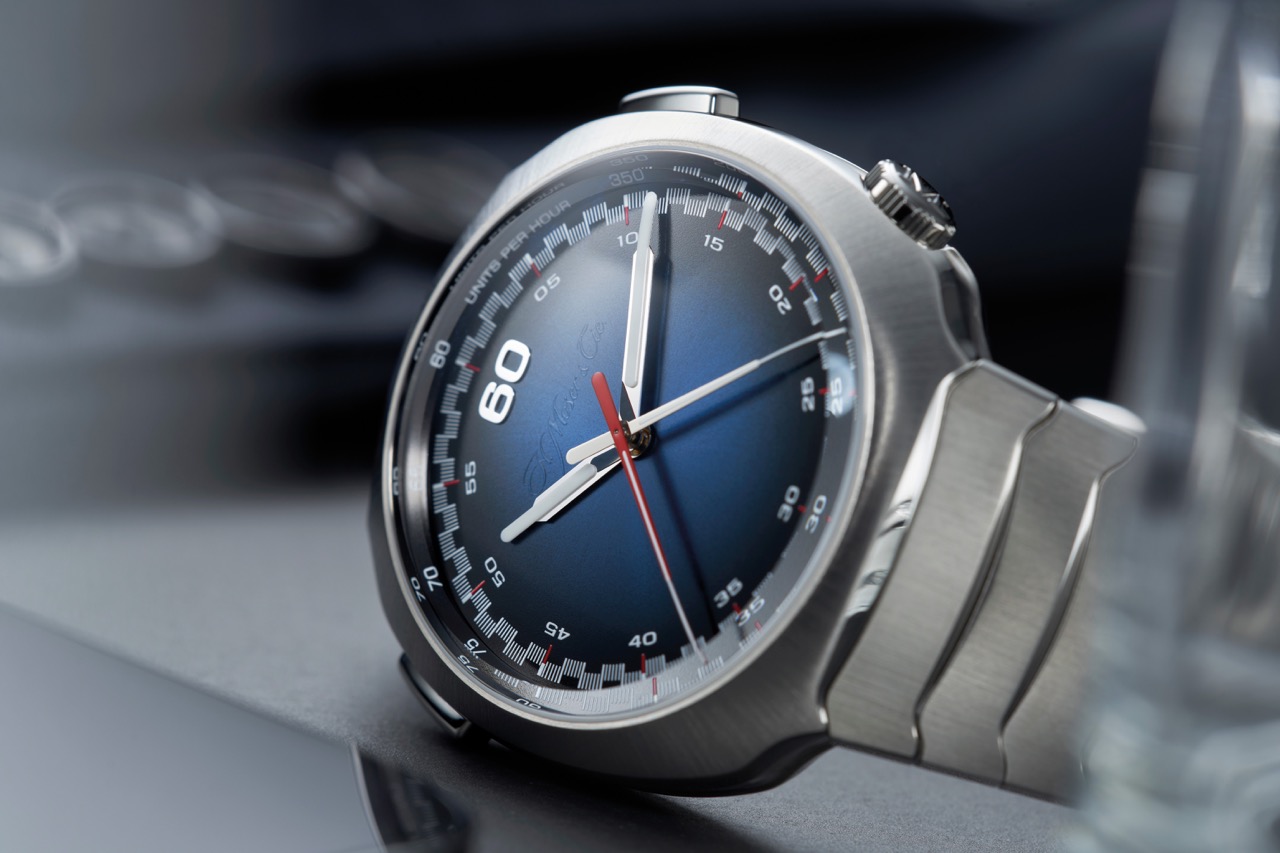
Moser applies its own brand of pragmatism and creativity to high horology. Minute repeaters are engineered with gongs and hammers on the dial side, not hidden within the movement, even if that might be more in tune with the H. Moser & Cie ethos.
Chronographs have been designed with the winding rotor placed on dial side, ensuring that the intricate beauty of the calibre, with its column wheels and levers, is fully visible through the caseback. On the other hand, chronographs have also been made to be to be completely centralised in display style, which is very much in keeping with the Moser way.
Each complication is reconsidered not just for function, but for aesthetic and emotional impact, reflecting the aforementioned ethos: to master time, not just measure it. This commitment to excellence has not gone unnoticed. Moser has earned prestigious accolades, including the Tourbillon Prize at the Grand Prix d’Horlogerie de Genève. In 2026, it will graduate from the incubator section of the Watches & Wonders fair to the main hall, a move that signals its arrival as a major force in independent watchmaking.
With its current facility at capacity, a new manufacture is already under construction, set to be completed in 2028. If you do visit, we recommend not skipping the museum, where the aforementioned curator will delight in telling you about the fantastic history of the Mosers. You cannot make this stuff up, but we had to skip it here, for space.
This story was first seen as part of the WOW #81 Autumn 2025 Issue
For more on the latest in luxury watch reads, click here.