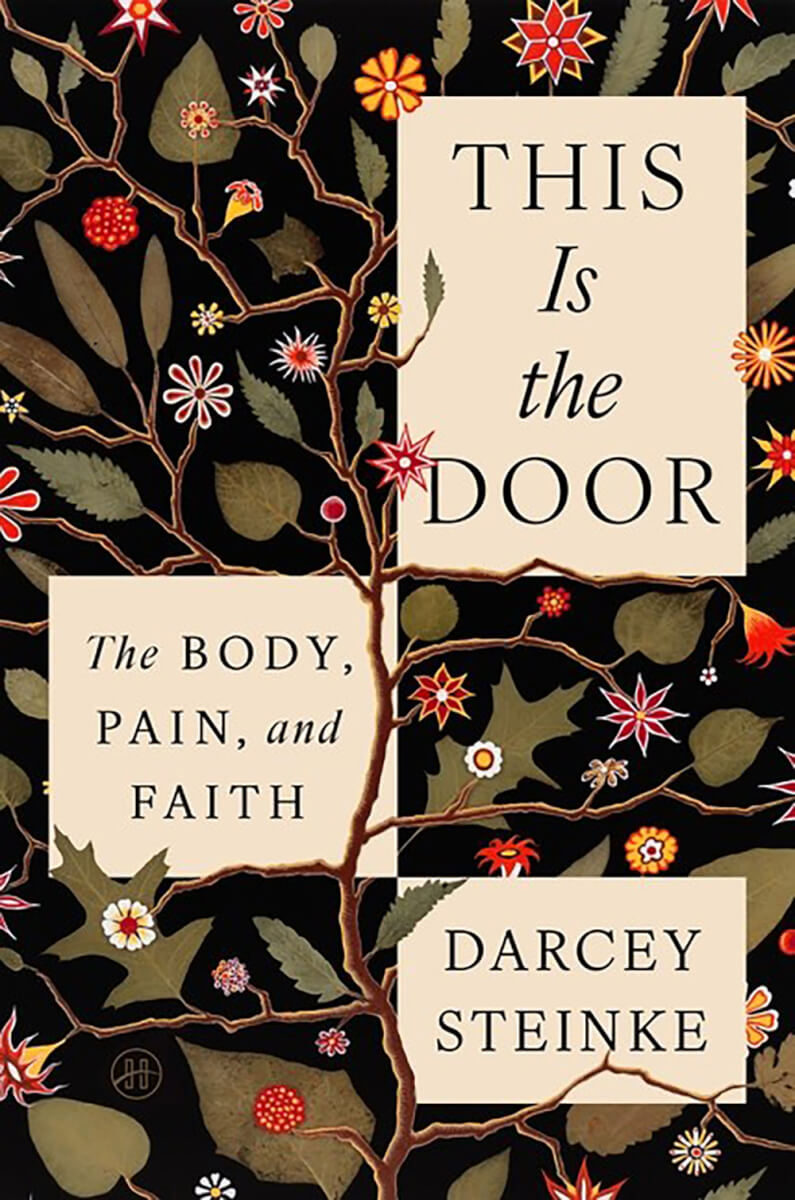

In the midst of tormenting physical pain, we often crawl into ourselves as the world around us recedes. But can embracing pain and suffering act as a door that opens to growth and transformation? With lucid insight borne out of her own experience of back surgery, Darcey Steinke vividly illuminates the ways that pain can be both excruciating and exquisite in her exhilarating This Is the Door: The Body, Pain, and Faith.
Alternating between describing the terror of pain that feels interminable and expressing humor in the face of sometimes superficial explanations of the value of pain, Steinke communes with fellow pain sufferers, some historical and some she interviewed for her book. Employing memoir, philosophy, history, religion, pop culture and reportage, Steinke explores the body part by part—spine, knees, heart, brain, skin, breast—in a luminescent tour that gives pain meaning. For example, like 13% of Americans, and, Steinke notes, Nietzsche and Hildegard of Bingen, Steinke suffers from migraines. They break her down, but have also opened her to the place where the “material and the immaterial intersect, where the divine might make contact.” Some theologians and scientists, Steinke writes, “have speculated that the very idea of a separate soul may have originated from the auras of people who experienced migraines and epilepsy.”
Yet, the vibrancy of pain can also shatter faith, for “Pain is claustrophobic,” trapping us in our physical bodies and shaking our spiritual ideas. For Steinke, “Pain is a theological limbo. It can lead to belief, to stronger faith, or to faith’s transformation or even dissolution.” In a dazzling reading of suffering in the Bible, Steinke ponders Job, who, when covered with boils, “taunts God by implying he is as helpful as a hole in the earth.” In reply, God says, “I am here in the midst of the tempest.” Steinke reflects that God “makes people who are damaged feel healed not by curing them physically but by expanding the definition of what it means to be whole.”
Throughout This Is the Door, Steinke evocatively illustrates how pain connects us to others, both those close to us and those we don’t know. She concludes that her experiences of pain make her more “empathetic, closer to the reality of life’s fragility but also its wonder.” This Is the Door contains moments on every page that illuminate pain like a gem held up to light, a multifaceted power that transforms us all.