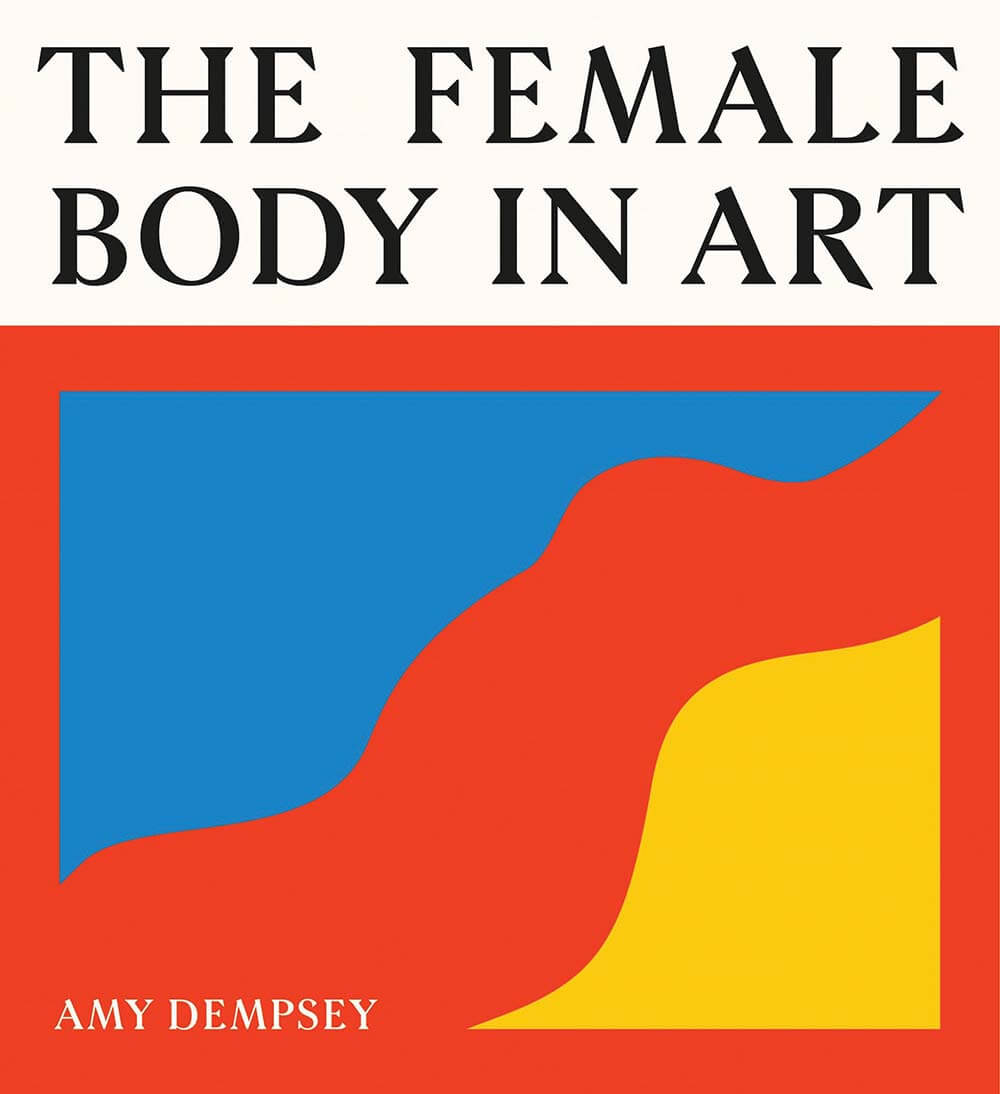

There are few subjects in art history as perennial as the female body. You might think, then, that art historian Amy Dempsey’s new book The Female Body in Art would have too much ground to cover in a single volume. But her close attention to interesting details keeps the prose moving, and the inclusion of some of the greatest art ever created serves as an added bonus. There’s Italian Renaissance master Titian’s 1538 “Venus of Urbino,” for example. Dempsey notes that Titian, like many painters of the time, modeled his figures not on live sitters but on classical statues. Because those sculptures were hairless, less by design than because of their marble material, hairlessness helped define the “ideal” nude body and continues to shape modern standards of beauty. At the same time, by identifying the figure as a mythological goddess, viewers had permission to admire her sensuality without being considered vulgar. Dempsey uses the nude as a kind of art historical Trojan Horse, sneaking in back-to-back examples of art nouveau (Gustav Klimt’s “Adele Bloch-Bauer I”), expressionism (Egon Schiele’s “Nude in Black Stockings”) and dadaism (Hannah Höch’s “Dada-Ernst”), distilling major art historical movements into the peak examples of the forms. By the time she reaches the contemporary era, Dempsey has already hit on great works in photography, video and sculpture, but it is in painting that the breadth of her scholarship is most deeply felt. In the essay devoted to a 1992 painting by British artist Jenny Saville, Dempsey describes the sitter as “Rubenesque”—a reference to Peter Paul Rubens’ portrayal of luscious, voluptuous bodies shown in the Renaissance section of the book. In both painting and life, the standards for women’s bodies have been historically set by male artists. Included in the essay about the painting is a quote from the artist herself: “I’m interested in the physical power a large female body has—[someone] who occupies a lot of space, but who’s also acutely aware that contemporary culture encourages her to disguise her bulk and look as small as possible.” It’s a shift in who defines women’s bodies, and also a statement that beauty is not the point.