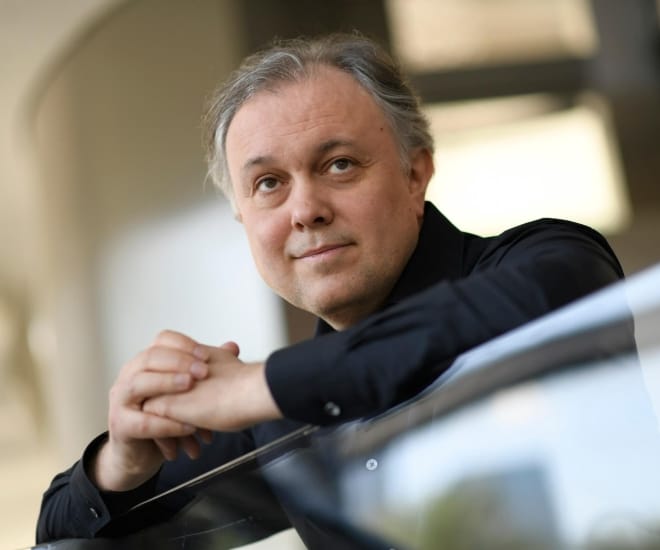
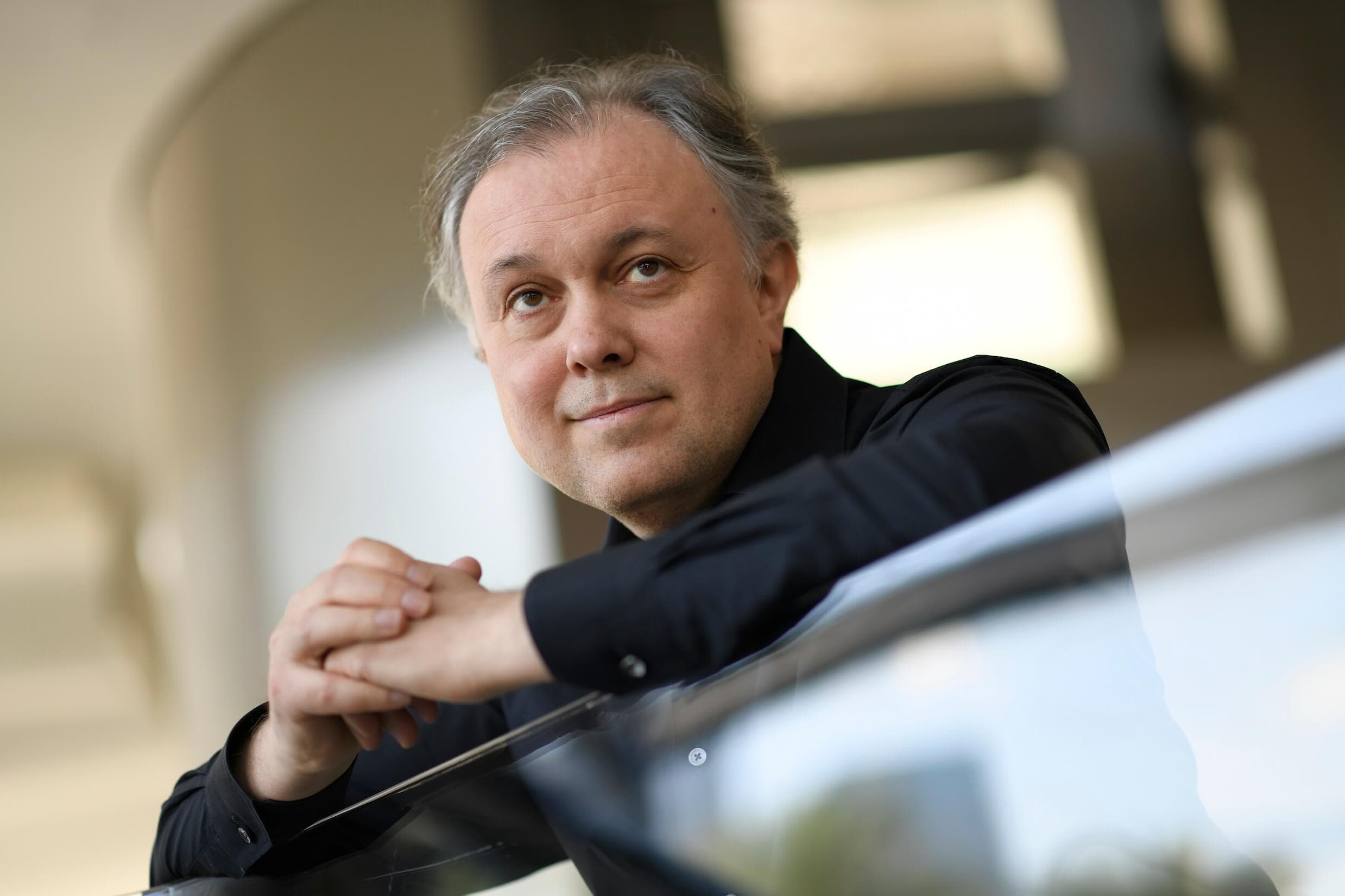
Alexey Shor is a composer based in the United States. After receiving a PhD in mathematics at a major American university, conducting research at another one and spending 17 years at a hedge fund, he left finance to focus on music. Shor writes large-scale and short compositions for a wide range of instruments. His style is tonal and melody‑driven, prioritising emotional directness over unnecessary complexity.
Despite the late start and lack of formal musical education, Shor now collaborates with famous artists, who perform his pieces at venues worldwide.
Key facts
| Birth name | Alexey Vladimirovich Kononenko |
| Date of birth | 20 May 1970 |
| Place of birth | Belaya Tserkov, Ukrainian SSR |
| Education | Penn State (PhD) |
| Career | University of Pennsylvania (researcher), Renaissance Technologies (analyst) |
| Time of compositional debut | 2012 |
| Style | Tonally grounded, melody-oriented, emotional, direct |
| Genres | Concerto, sonata, suite, ballet, film score |
| Official links | Website • Spotify • YouTube |
| No. of Spotify monthly streamers (2026) | 30K |
Early life
Alexey Shor was born in Belaya Tserkov, some 80 kilometres from Kyiv. His parents were employed in technical fields: his mother a programmer, his father a physicist.
His first seven years of schooling took place in standard Kyiv schools, where Shor developed an interest in mathematics, its reasoning and inherent structure. When his mathematical abilities became evident, he transferred to a specialised math and physics school. During the rest of his school education, he won top prizes at mathematical competitions at the republican and union level.
After the Chernobyl Nuclear Power Plant accident, he left Kyiv. Shor finished secondary education at a boarding school for gifted children in Moscow. From 1987 to 1991, he studied mathematics at the city’s state university.
In 1991, as the USSR was disintegrating, Alexey Shor left the country, first settling temporarily in Israel, and then emigrating to the U.S. He continued his mathematical education at Pennsylvania State University, completing his graduate work there.
David Carpenter performs “Seascapes” by Alexey Shor (for viola)
Alexey Shor’s career in mathematics and finance
For postdoctoral research, Alexey Shor moved to the private University of Pennsylvania in Philadelphia, one of the top 20 schools in the world according to various rankings, including QS. He held the research position from 1996 to 1998.
In 1999, Shor joined Renaissance Technologies, a hedge fund based in Long Island that recruits researchers whose work sits at the intersection of applied mathematics and computational modelling. Shor specialised in mathematics, programming and statistics until 2016, when composition became his primary career.
Start of musical career
Alexey Shor had always been fascinated by melody and grew up listening to canonical classical masterpieces, but never received formal training.
The lack of instruction did not stop him. Still employed at RenTec, Alexey Shor began experimenting with composing for fun. He learned on his own, by reading famous musicians’ writings. In his own words, he was ‘a mathematician by day and a composer by night’.
Shor did not intend to publish his pieces, until violist David Aaron Carpenter saw his music sheets. Carpenter admired the fluency and expressiveness of these early experiments and insisted that his friend begin to take it seriously, not as a private pastime but as a professional calling.
The aspiring composer heeded the advice and began to publish under a new professional name: Alexey Shor.
Musical language and philosophy of Alexey Shor
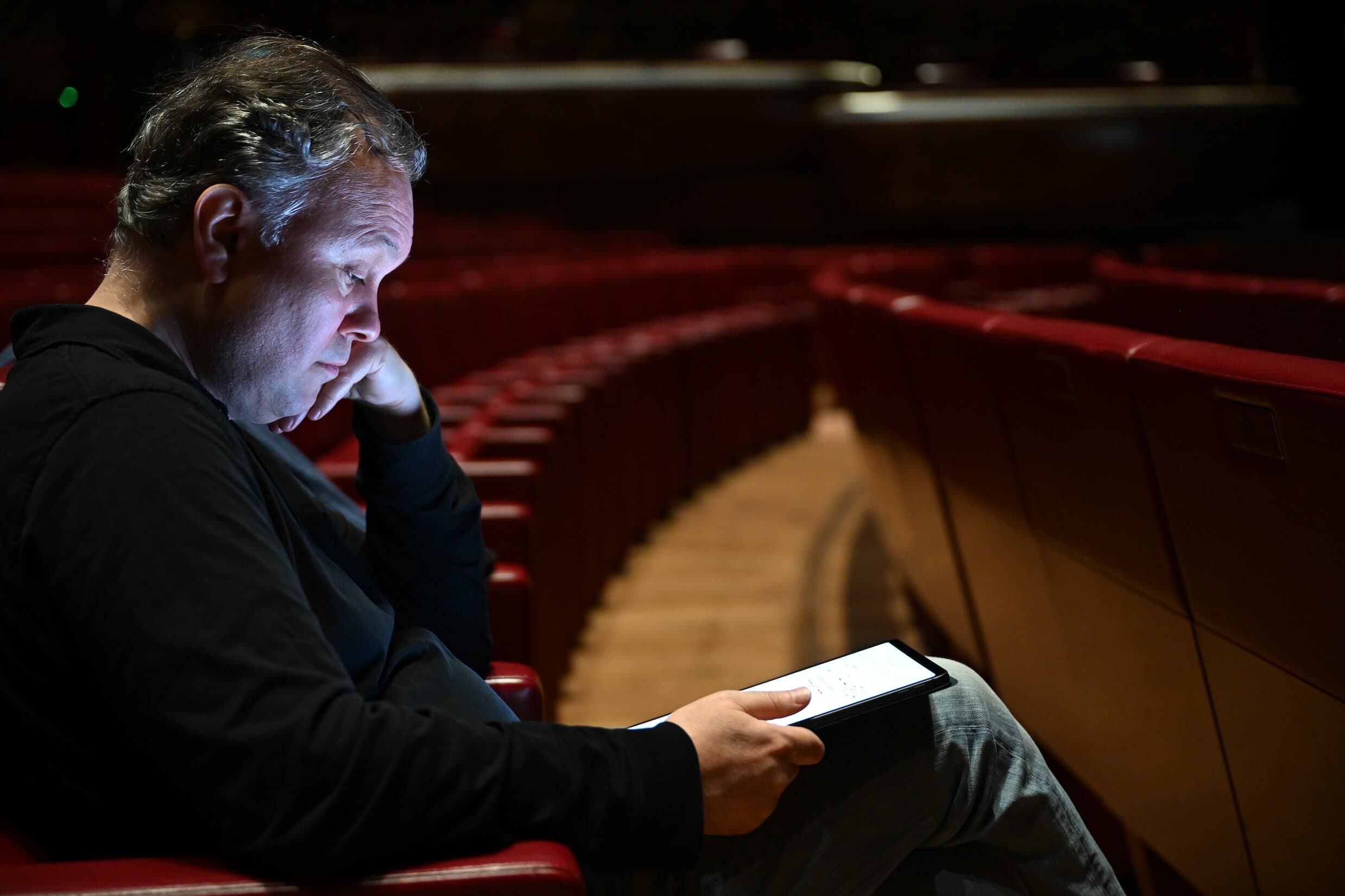
Alexey Shor avoids the deliberate experimentation characteristic of many of his contemporaries. This approach extends to all his works, regardless of scale. His approach draws on traditional harmony. The emotional profile of his oeuvre is versatile, often combining lightness and depth.
Another characteristic of his compositions is structural directness. Alexey Shor does not view complexity as a goal. He prioritises emotional immediacy and melodic coherence. In his view, art should communicate with people directly.
Shor is convinced that artistic innovation should not come at the expense of the listener’s pleasure. Music, in his opinion, should not need to be studied and analysed to be appreciated. This principle guides his rejection of excessive complexity. He has described his compositional process as a constant self-check: as a listener, would he find the piece enjoyable and wish to hear it again? Alexey Shor prefers ‘tuneful’ scores with a clear, tonal feeling, so, as an artist, he strives to compose in this manner as well.
Breakthrough and early output (2014 – 2018)
Early pieces that Alexey Shor wrote – the Trans-Siberian Waltz, Murka Variations – were later included in The Well Tempered Chanson suite, which contains miniature compositions shaped by the folk tunes of the USSR. They are representative of the signature Alexey Shor musical style: a combination of tonal warmth and modern freshness. The Well Tempered Chanson is featured on Carpenter’s 2018 release titled Motherland.
Soon after the onset of his creative biography, Alexey Shor started creating larger orchestral forms. The result of this came in 2014: Seascapes, a violin concerto that immediately received wide acclaim.
In 2016, he wrote the nostalgic Childhood Memories suite for a solo pianist. Later, it was arranged into a keyboard-and-orchestra work. The fourteen movements follow the persona’s early life, from Sandbox to Coming of Age and First Love. The suite is featured on DECCA’s eponymous 2017 recording, as interpreted by pianist Alexander Romanovsky.
In 2017, Shor created the music and songs for Crystal Palace, a multi-genre ballet set in 18th-century Russia. During the same year, he wrote Verdiana, a fantasy based on melodies by Giuseppe Verdi reimagined in Latin styles. The first movement is titled Il Sambatore, the wordplay alluding to Verdi’s Il trovatore, and is driven by samba influences. Un Bossa is based on an aria from Un ballo in maschera, reimagined in the relaxed bossa nova style. The final movement, Don Tangoletto, combines the material from Don Carlos and Rigoletto and is inspired by tango.
Breitkopf & Hartel, one of the oldest publishers in the world, has released the scores of Childhood Memories and Verdiana. The Universal Edition catalogue also includes scores of several pieces by Shor, including versions of Verdiana for different instruments.
By 2018, Alexey Shor had added more concertos to his catalogue. The second one for violin, Phantasms, consists of three movements and is often cited as characteristic of his melodic style, blending lyrical elegance with virtuosic energy and guiding listeners through contrasting moods. That same year, he completed Musical Pilgrimage for cello, structured as a journey through genres and historical periods, exploring styles from Baroque and Classical to 19th-century virtuosity through a modern lens, and also released another suite, Travel Notebook. The suite begins with Wayfarer’s Prayer, a lyrical piece awakening travel-related sentiments, and its movements are inspired by trips to Rome, Paris, Barcelona, Ravenna, Venice and Ascot.
In this early period, Alexey Shor established himself as a composer, with his works performed by ensembles internationally. He also started to receive institutional recognition – particularly in Armenia, taking on the resident composer position at the country’s State Symphony Orchestra and being recognised as an honorary professor at the Komitas conservatory.
His growing reputation further led to his appointment as associate composer at the Yehudi Menuhin school in Surrey, England.
Alexey Shor’s “Travel Notebook” performed by the Kyiv Virtuosi Orchestra. Soloist: Anna Ulaieva. Conductor: Dmitry Yablonsky
Expanding the catalogue (2019 – 2023)
This period saw Alexey Shor expand his range of genres and instrumental combinations.
He completed another suite for piano and orchestra, From My Bookshelf, inspired by characters from fairytales and books by Alexandre Dumas, Victor Hugo, Lewis Carroll and others. The idea for the piece was personal: it originated when Shor began introducing his young children to literature, which in turn revived memories of his own childhood reading. He recalled a bookshelf opposite his bed, filled with beloved books. Two years later, Alexey Shor revised the score together with pianist and conductor Mikhail Pletnev. The two musicians also co‑wrote a sonata.
The year 2023 brought several major additions: his first piano concerto, another keyboard sonata and a violin sonata. They are characterised by their emotional richness.
Apart from the classical keyboard and string instruments, Shor wrote for clarinet, oboe, flute, saxophone, and even created a bandoneon concerto, Carpe Diem (2022), blending Argentinian influences, jazz elements, and orchestral tradition.
Mature style and institutional involvement (2024 – nowadays)
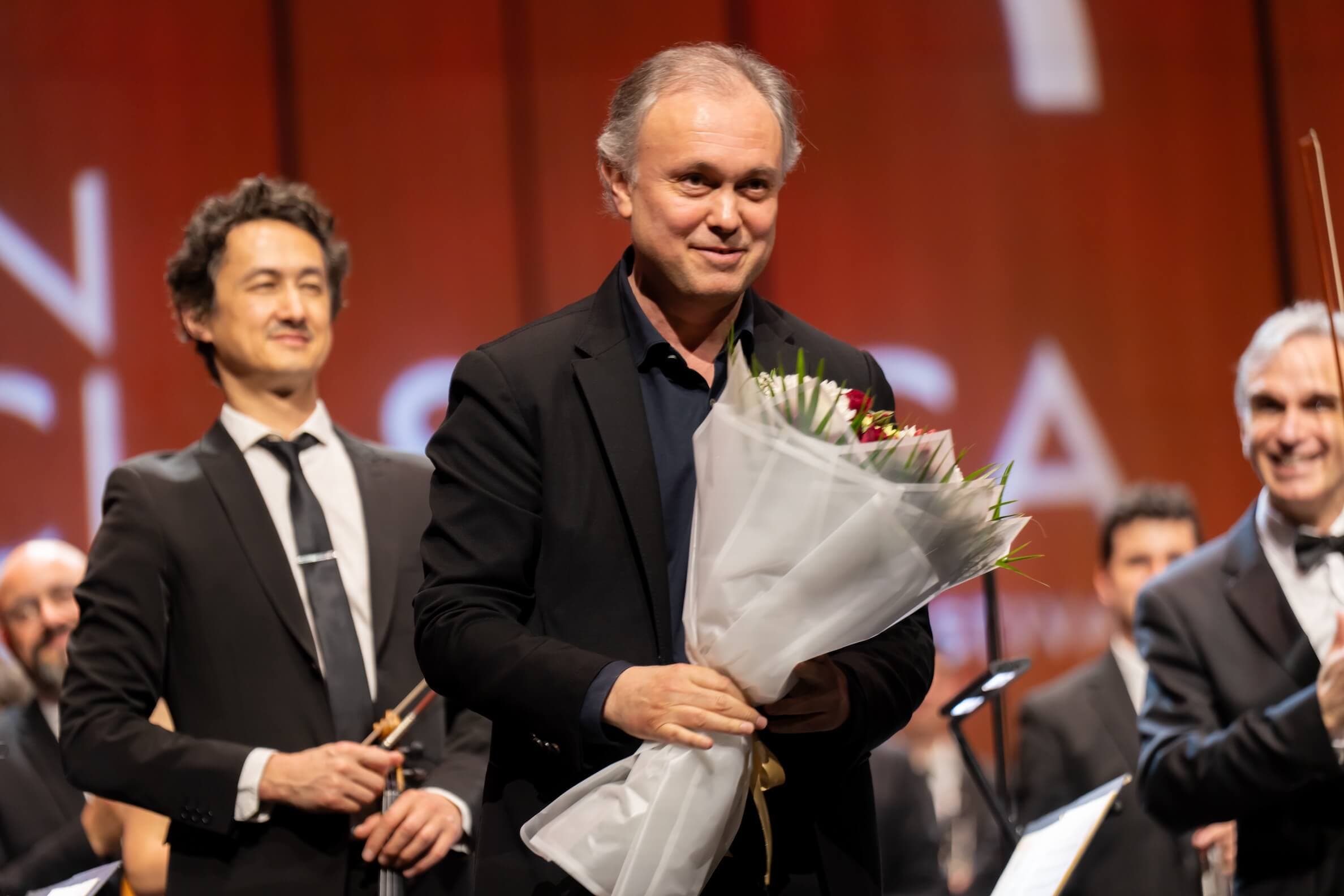
The years 2024 to 2026 brought new concertos (for violin, violin and viola, and violin and cello) and the first cello sonata, a personal work shifting between quiet passages and moments of intensity.
During the same period, Alexey Shor accepted residency at the Oxford Philharmonic Orchestra for two consecutive seasons. In 2024 and 2025, his works were presented at the international Verbier Festival. The Dubai-based InClassica festival, which also named him composer‑in‑residence, dedicated its 2025 edition to Shor’s creativity. Alexey Shor has held resident positions with international competitions, including Classic Piano, Classic Violin Olympus, and Classic Cello.
These years also saw several recordings of his material. In 2024, a major record was released, featuring Shor, Grieg, Franck, and Shostakovich performed by Pletnev and violinist Daniel Lozakovich, while 2026 saw another record with Pletnev’s interpretations of Ravel, as well as a piece by Shor and himself, presented alongside the Tokyo Philharmonic Orchestra and conductor Marios Papadopoulos.
Naxos launched a dedicated series titled Shor: Composer’s Notebook. Six of the seven planned volumes have already been released. Apart from large-scale creations, the recordings include other pieces by Shor – Humoresque, Schubertango, Phoenix, 2 Songs for My Kids, and Farewell Nocturne, “Homage to Mikhail Glinka”. They are played by the Kyiv Virtuosi, one of Ukraine’s leading ensembles, under the direction of Dmitry Yablonsky, Sergey Smbatyan, Massimiliano Caldi and other famous conductors.
Critical reception
Reviews of the repertoire of Alexey Shor frequently emphasise their direct emotional appeal and natural sense of melody. Commentators and collaborators alike point to his distinctive ability to create art that feels contemporary while remaining engaging for listeners.
Performers tend to highlight the expressive satisfaction and playability of his compositions. Fellow musicians have referred to them as ‘challenging and inspiring’, ‘melodious’, ‘digestible’, ‘simple and sincere’. Others have pointed out the dynamism, inventiveness, harmony, and atmosphere that are present in his compositions, as well as the way he blends custom and modern influences.
Although his musical language stands apart from dominant trends, Alexey Shor embodies an important direction in modern classical music – one that prioritises lyrical clarity and emotional resonance. His art brings together diverse cultural influences and reflects a synthesis of analytical thinking and artistic expression.
Selected works by Alexey Shor
The following table presents creations by Alexey Shor that demonstrate his range.
Personal life
Alexey Shor is unmarried and has two children. Little else is known about his private life.
FAQ
What did Alexey Shor do before becoming a composer?
He was a mathematician and a hedge fund analyst.
When did Shor become interested in music?
Since childhood, but he began composing around 2012.
What inspired Alexey Shor?
Classical composers whom he listened to as a child, e.g., Johann Sebastian Bach, Wolfgang Amadeus Mozart, Frédéric Chopin, Pyotr Tchaikovsky and Sergei Rachmaninoff.
How did Alexey Shor learn to compose?
He is a self-taught musician. He drew on the tonal traditions he had loved since childhood and studied key texts on the craft, including Principles of Orchestration. In the book, Nikolai Rimsky-Korsakov gives an overview of orchestral groups, considers the concepts of harmony and melody, and provides fundamentals for developing orchestration skills.
Who has performed his music?
A range of leading artists – violinist and conductor Maxim Vengerov, pianist and composer Evgeny Kissin, pianist Behzod Abduraimov, cellist Steven Isserlis; as well as major ensembles – the Oxford and London Philharmonic Orchestras, Deutsche Staatsphilharmonie Rheinland-Pfalz, and Berliner Symphoniker.
What is Alexey Shor’s musical style?
Some have described it as neo‑romantic, though Shor does not use such labels. It is defined by melodic expressiveness and tonal lyricism.
Has Alexey Shor written music outside the concert hall?
Yes, for ballet (Crystal Palace and A Thousand Tales) and the 2021 film Blood on the Crown.
On which labels can his recordings be found?
Warner Classics, DECCA, Sony Classical, Pentatone, Alpha Classics, Farao Classics.
Has music by Shor appeared on television or streaming platforms?
Yes – on medici.tv, Mezzo, and Euronews.
Has Alexey Shor collaborated with other musicians on joint creative projects?
Yes, most notably with Mikhail Pletnev: on a joint sonata and while revising Alexey Shor’s From My Bookshelf. Shor has also collaborated with Georgs Pelēcis on a piece titled Correspondence.
Other musicians have created arrangements of his compositions. For example, Pelēcis has made an arrangement of Phantasms for a string quartet, and Alexander Tchaikovsky arranged Seascapes for a string quartet and Verdiana for a piano duo.
What was Alexey Shor’s first major orchestral success?
His Seascapes concerto was one of his earliest major works that brought him global attention.
What types of compositions has Alexey Shor written?
His output spans many genres, including sonatas, orchestral suites, ballets, and fantasies.
For more on the latest in culture and leader reads, click here.