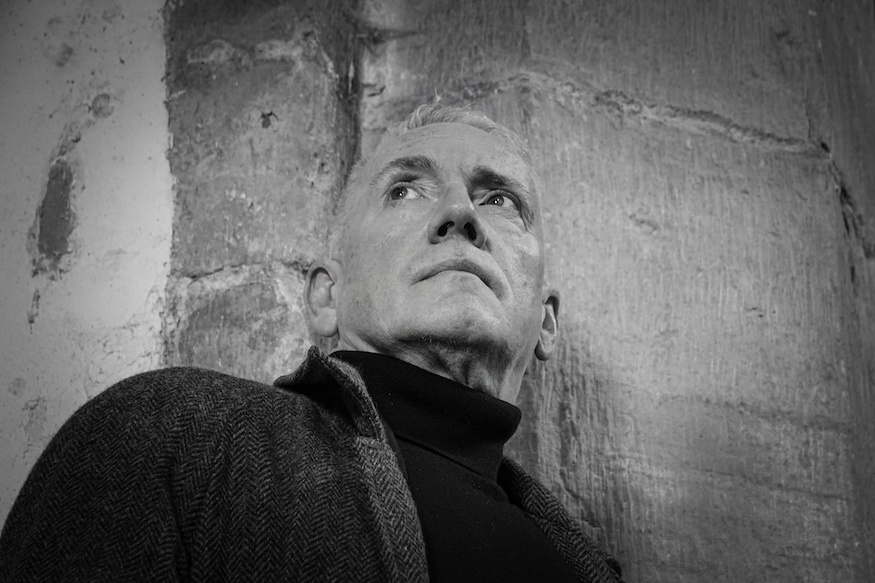
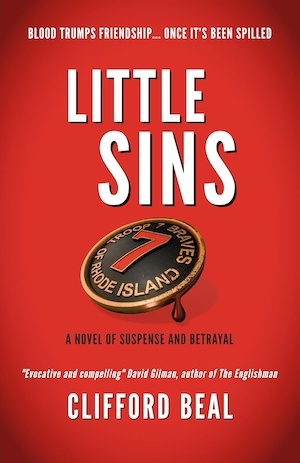
Clifford Beal has been an author nearly 20 years and has dabbled across genres. In fact, his first novel was about 18th century pirates. Now, he’s written his first crime novel and it’s little different to most of the other new releases at the moment. Little Sins is a coming-of-age story about a couple of Rhode Island lads who come across a corpse. That sounds a little like Stand By Me but the story steers hard into crime fiction territory when 16-year-old Billy realises that his own father might have been involved in this person’s death. And, he realises that others might suspect this too.
So there you have a good reason for him to want to sleuth the case himself – understand what really happened – without drawing any unwanted attention. What a setup.
Originally from Rhode Island, Clifford knows his setting well, and takes us back nearly 60 years to 1968. Perhaps this retro aspect adds a little more innocence to the whole affair. For the last 35 years, he’s lived in the UK and now resides near the sea in East Sussex. We decided to find out more about Little Sins and how this book came to be.
What are crime fiction lovers going to love about Little Sins?
I think they’re going to like the New England setting and the slow build-up of psychological dread on the part of the main protagonist as his comfortable teenage world begins to shrink around him with the enormity of what he has discovered. Instant promotion to adulthood!
Who is Billy McCaskill? What inspired and how have you developed him?
Billy is ‘everykid’, a few months shy of his driving license and the keys to freedom from parents. I suppose he’s an amalgam of several friends I had way back when and I’ve purposely made him a good kid to build conflict for the test of morality that he faces in the novel: choose family, friends, or choose what’s right? This isn’t a YA novel by any means. The character of Billy is a lens for adults to look through and back to their own teenage years. The awkwardness, the simple pleasures, the complex choices faced in growing up. More like Stephen King’s The Body or even Catcher in the Rye, if I might be so bold.
What’s he up against?
Billy and his best friend Paulie stumble on the partially buried body of the local parish priest. That’s bad enough but Billy finds something that could tie his father – or his friend’s father, to the murder. Desperate to believe it’s not his father he starts looking for evidence that it is Paulie’s dad or somebody else altogether. But his father is acting strangely and so is Paulie’s. Soon, walls are thrown up by friends and families as everyone struggles to keep certain truths hidden even while they cooperate with the police investigation. And Billy’s probing could even put himself in danger if the real perpetrator figures out that Billy might be getting close.
Many of your previous books are set deeper in the past, but this is set in 1968. Why did you choose this period and what impact does it have on the story and how you’ve told it?
I needed to come up for air after writing three novels based in the late medieval world! Actually, I got the idea on a trip home to the States just before the pandemic hit. Driving through the old neighbourhood and thinking about some rather dark what-ifs. Respectable suburban places can often take a sinister turn. How would my own hometown have reacted to a case of deadly vigilantism occurring?
It feels like there’s a bit of a generational clash in Little Sins. Son doubting father on the one hand, and the idea of a teenager solving a mystery on the other, becoming an actor in an adult world. Is this something you’ve developed in the story and if so how?
You’re right about that. What an awful choice for a teenager to have to make: defend your father even if you think he is guilty? Who can you trust anymore? But it goes deeper. The idea of blood trumping friendship and whether even a close friendship can survive a test of family loyalty and suspicions over murder. I also tried to tackle the mores of the times. The 60s were fast changing but still an age when both children and adults would automatically defer to their ‘betters’ in society, whether doctors, clergy or police. A time also when some things were kept hushed up rather than revealed in order to preserve family honour and propriety.
And the setting is Rhode Island, where you grew up. Have you written with a sense of nostalgia?
My own upbringing definitely influenced the setting of Little Sins even if the events are fictitious. I think it’s a fairly accurate reflection of life there back then and all the attitudes of the times. Stuff that causes more than a few raised eyebrows today. Routine corporal punishment, sexism, racism, generational clashes, and in the background the surreal televisual pain of the Vietnam War. I remember how strange it was that for many Vietnam was just a TV war – until the olive drab US Army sedan pulls up at your neighbour’s house to deliver the news their son is dead.
What are some of the other themes you wanted to explore and why?
Believe it or not, I’ve also got a bit of young romance in the plot. Murder suspects aren’t about to stop raging hormones. But I used this device to show not only the resilience of youth, but to also show how notoriety can influence social standing among teens. And discovering a corpse might just propel one into stardom among peers – even if only for one brief moment.
Who are some of the crime authors and/or what crime novels have inspired you?
For many years, I’ve loved classic noir. Raymond Chandler especially but also Ross Macdonald and James Ellroy. But more recently, I’ve devoured most of Dennis Lehane’s works. His writing is so true to life and sincere and his characters so believable. And, as a fellow New Englander, I really appreciate his Boston settings and acerbic Yankee attitude mixed with a bit of Irish-American stoicism. I never wanted the Kenzie and Gennaro series to end.
What’s next for Billy McCaskill and what’s next for Clifford Beal?
I’m working on a sequel of sorts, the second in a Providence trilogy. It picks up not where things left off, but four years into the future (1972) and brings some of the secondary characters into the limelight this time around. And it’s more of a gritty, downtown setting as opposed to leafy suburbia. Rhode Island is the smallest state in the Union but for much of its history it’s often been considered the biggest in organised crime. For many decades Providence was the headquarters of the New England mafia while Boston was merely a loyal principality! As someone old enough to remember those times, the writing is proving to be an interesting trip down memory lane!
Little Sins is out now and you can grab your copy using the Amazon links below.