
With a wave of new design announcements emerging from Milan Design Week 2026, much of the work remains yet to be fully seen. For design aficionados navigating the sheer volume of output, the question becomes what is truly worth attention. LUXUO has collated a selection of expressive works that stand out for their conceptual and material ambition: Bethan Laura Wood’s gothic, sci-fi chandelier; Kelly Wearstler and H&M’s furniture debut; and Tom Dixon’s Axis tables, which shift perception through sound and reflection. Together, these pieces reflect a broader curatorial moment in which design increasingly privileges sensory experience and conceptual depth, with each work inviting the viewer to look longer and think more critically.
Kelly Wearstler + H&M Home: Modular Gestures in a 17th-Century Palazzo
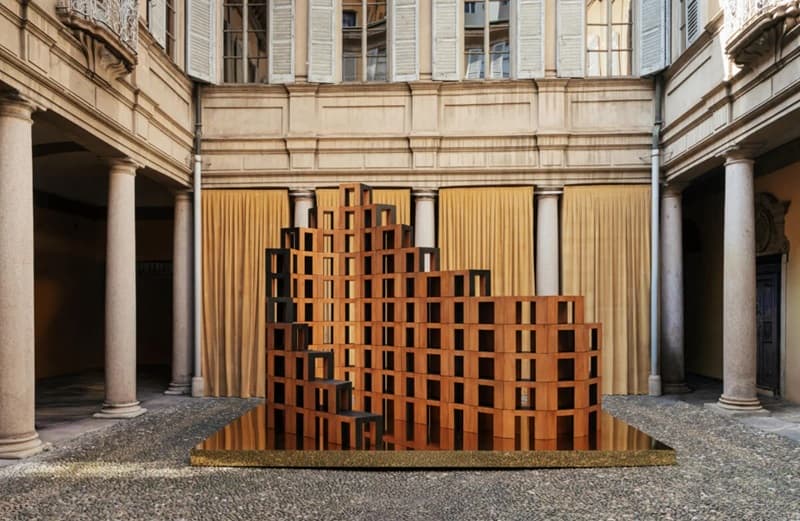
‘Noxen’ stools created a striking backdrop at H&M + Kelly Wearstler exhibition during Milan Design Week 2026. Image: thenordroom.com
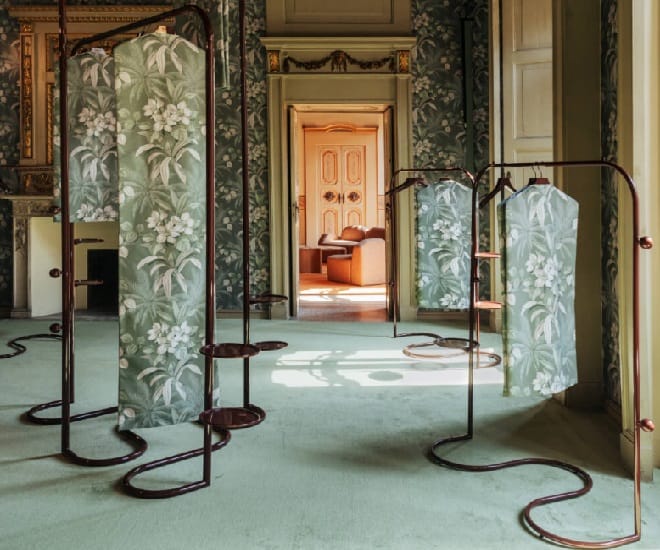
For its official Milan Design Week debut, H&M Home partnered with American designer Kelly Wearstler to transform Palazzo Acerbi, a Baroque building rarely opened to the public. The installation — produced by Studio Boum — unfolded across multiple rooms as a sensory journey choreographed through daily rituals. Attendees encountered ‘Noxen’ stools forming sculptural compositions in the courtyard, while the ‘Mona’ modular clothes rack — finished in dark-brown lacquer — anchored the final room. The ‘Curva’ vase — with its soft sculpted forms — sat at the centre of the lounge.
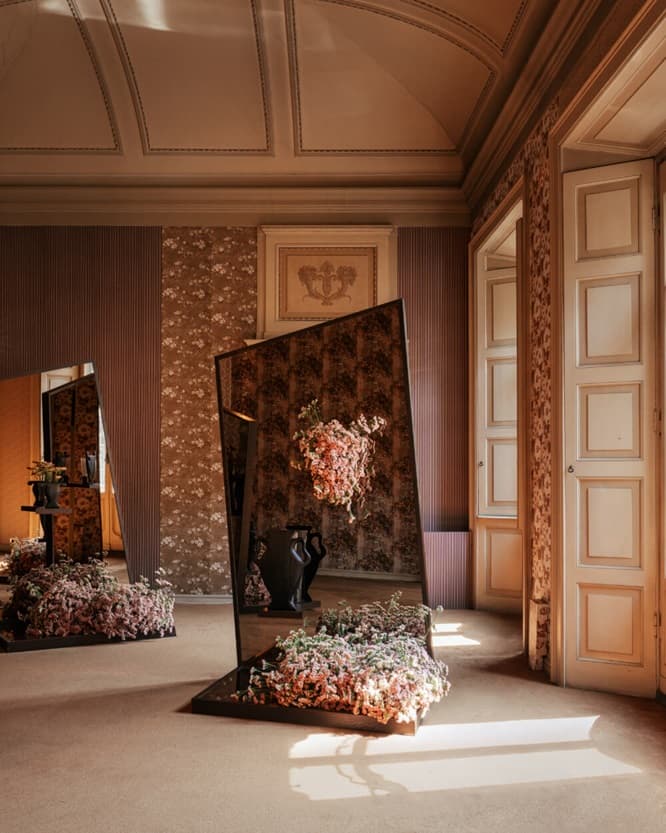
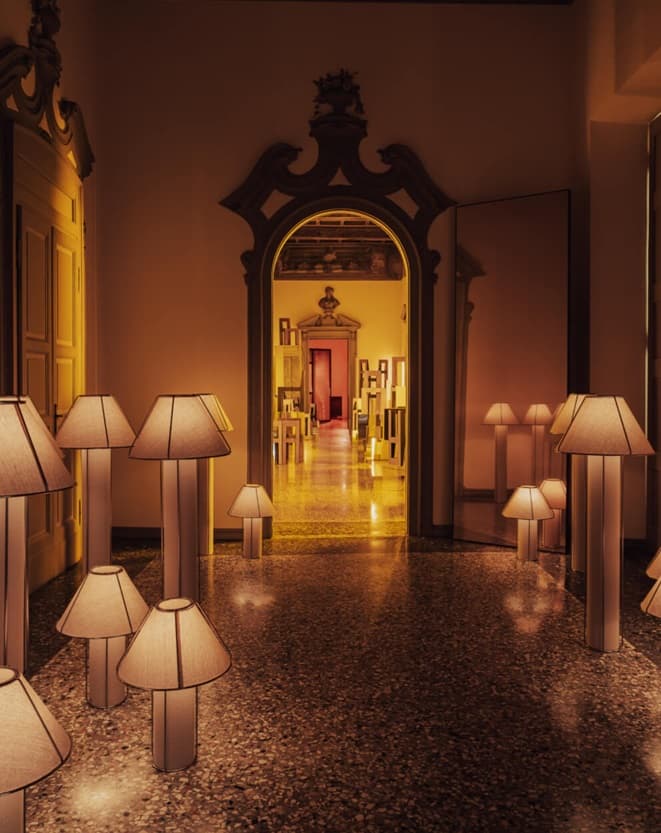
Left: ‘Curva’ vase propped up on a mirror-structure wowed attendees. Image: thenordroom.com. Right: ‘Emera’ lamp collection adorned this space. Image: thenordroom.com
In the same space, ‘Soluna’ seats featuring soft, rounded sculptural forms covered in tactile fabrics were grouped alongside ‘Poma’ seating systems — whose rounded, apple-like silhouettes offered compact perching stools finished in richly textured materials — both layered against striped wallpaper to become an unexpected sculptural presence. The ‘Avers’ armchair — crafted in solid wood with clean angular lines and upholstered seating — furnished the press room together with the ‘Ortra’ table, which paired a marble surface with a carefully proportioned metal base. The ‘Emera’ table lamp series — with a distinctive caged metalwork design in deep, powder-coated tones — greeted visitors at the palace entrance. A bespoke fragrance developed by Wearstler — with notes of orange blossom and Palo Santo — accompanied the walkthrough. The installation demonstrated how modular furniture systems can function simultaneously as architecture and object.
Faye Toogood for Meritalia: The Unhidden Seam

Faye Toogood. Image: Meritalia.
British designer Faye Toogood presented ‘Crease’ — a seating collection for Meritalia — at Salone del Mobile 2026. The collection’s defining feature: visible seams left intentionally exposed, inspired by a sweater worn backwards. Taut wool covers wrap angular, origami-like forms developed during Toogood’s inspirational time in Japan. The sofa measures approximately 7.8 feet long by 3 feet deep by 2.5 feet high, paired with a matching armchair or love seat.
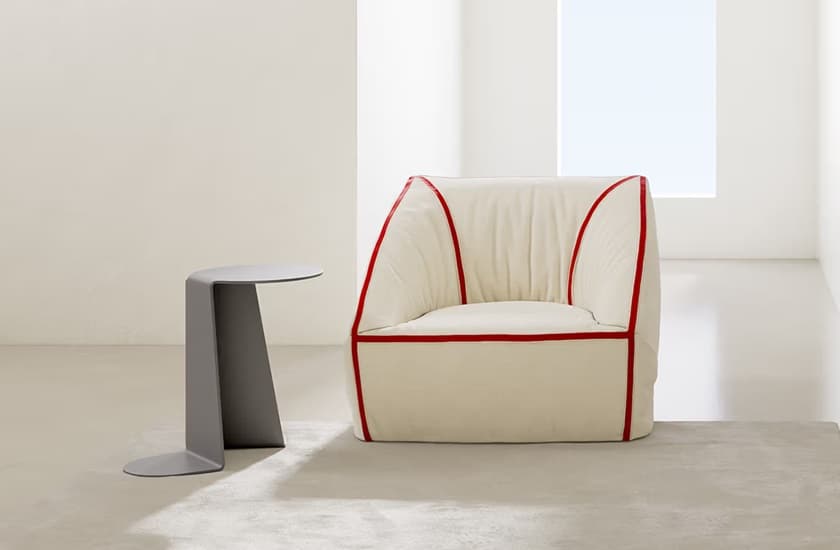
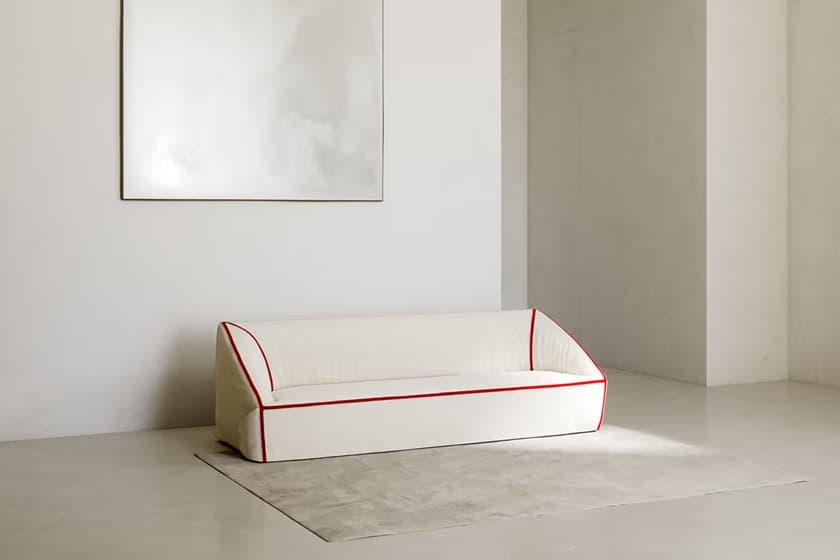
Left: ‘Crease’ armchair with exposed red seams. Image: Meritalia. Right: ‘Crease’ sofa with exposed red seams. Image: Meritalia.
Contrasting slot seams accentuate the graphic folds across each piece. Rather than hiding construction, Crease exposes it — turning upholstery technique into expressive language. The collection launched as part of the Italian Radical Design group’s presentation at the fair.
Patricia Urquiola at Alcova: Albini in Present Tense
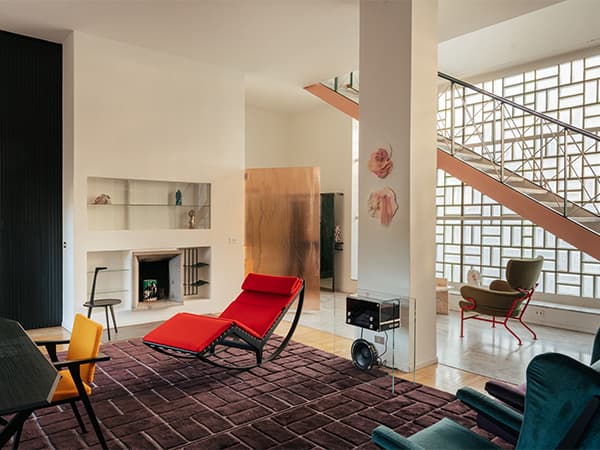
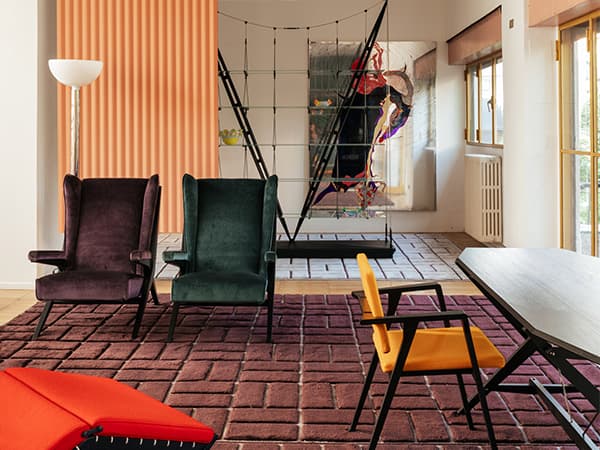
Left: Plenty of curated furniture designed by Franco Albini dots this heritage residence. Image: Haworth. The exhibition showcased Albini’s body of work was elegantly put together by Patricia Urquiola. Image: Haworth.
At Alcova 2026, Patricia Urquiola curated “Albini in Present Tense” at Villa Pestarini, a residence designed by renowned architect and designer Franco Albini between 1938 and 1939. As an inaugural opening to design-loving attendees, the installation worked by subtraction — without superimposing narrative. Albini’s furnishings — reissued by Cassina in collaboration with the Fondazione Franco Albini — found placement within the extended domestic space. A previously unpublished armchair from 1947 — developed specifically for this installation — debuted alongside several special editions. The open-plan villa — a clear expression of Italian Rationalism — established relationships between space, light and objects. Urquiola’s restraint allowed Albini’s principles of relational transparency to surface without interference, demonstrating how contemporary curatorial considerations can elevate modernist architecture.
Front for Moroso: Geometriæ
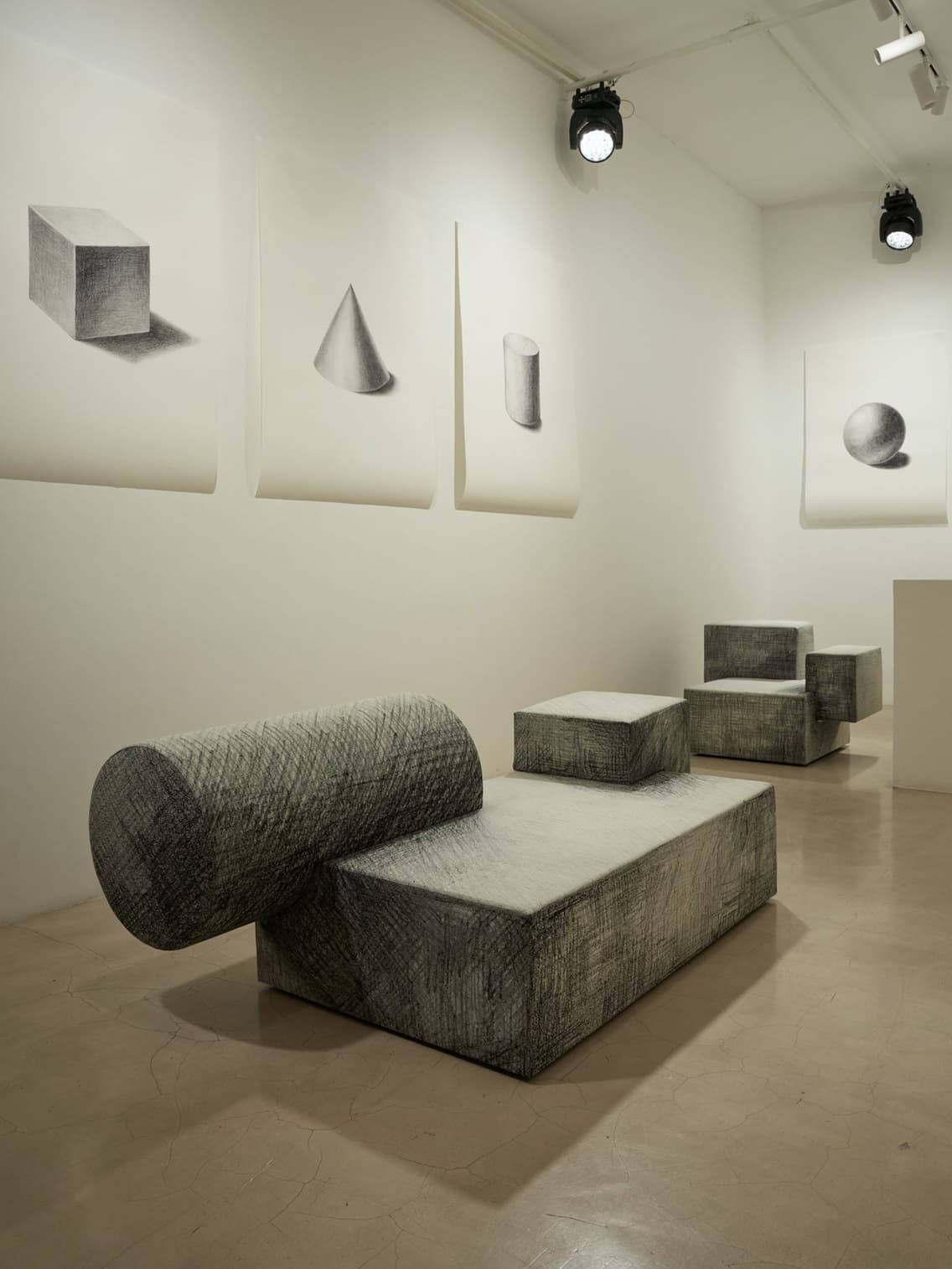
Pencil-sketched effect on the upholstered ‘Geometriæ’ sofa system by Front for Moroso. Image: Dezeen.
Swedish studio Front and Italian brand Moroso unveiled ‘Geometriæ’, a furniture collection where pieces appear as three-dimensional perspective drawings brought to life. Intersecting cuboids and cylinders, upholstered in woven jacquard textiles, replicate the light-and-shadow effects of hand-drawn sketches. Two variations exist: ‘Graphite’ — with the rough quality of pencil markings — and ‘Acquerello’, mimicking watercolour colour transitions. The effect creates confusion, subtly distorting perspective.
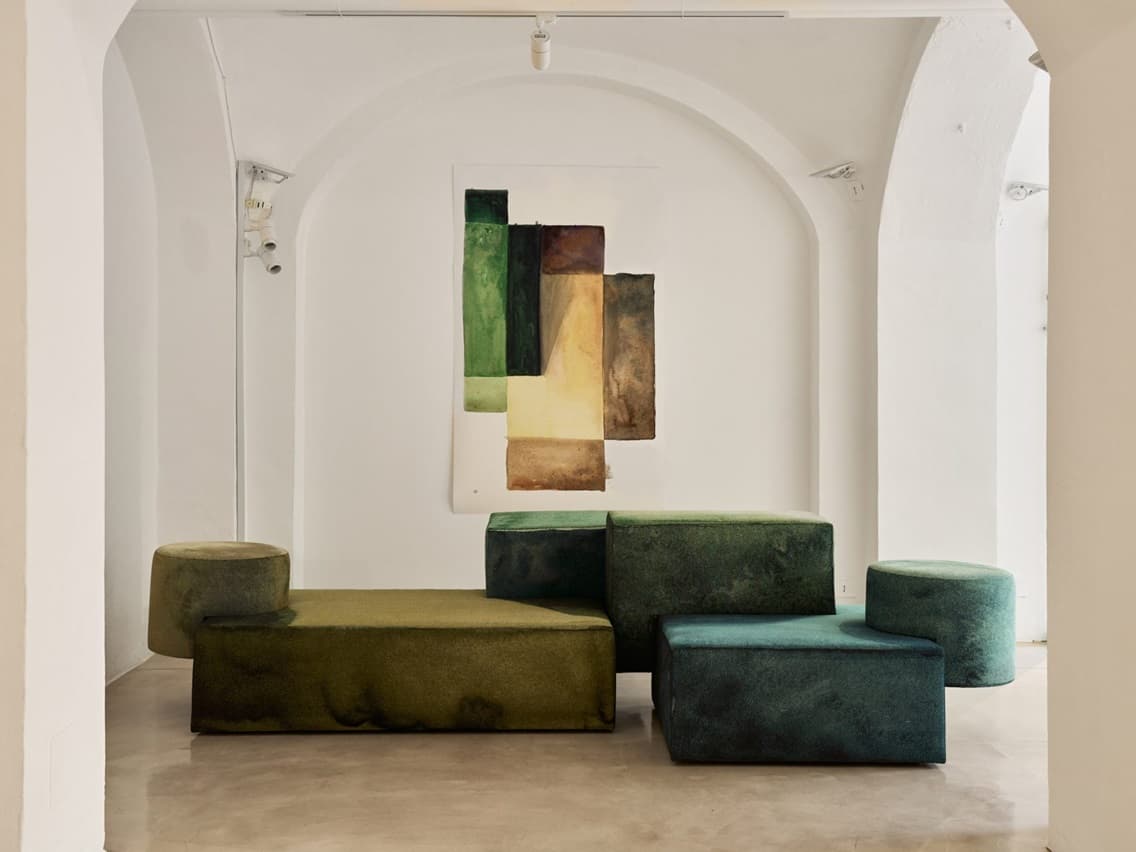
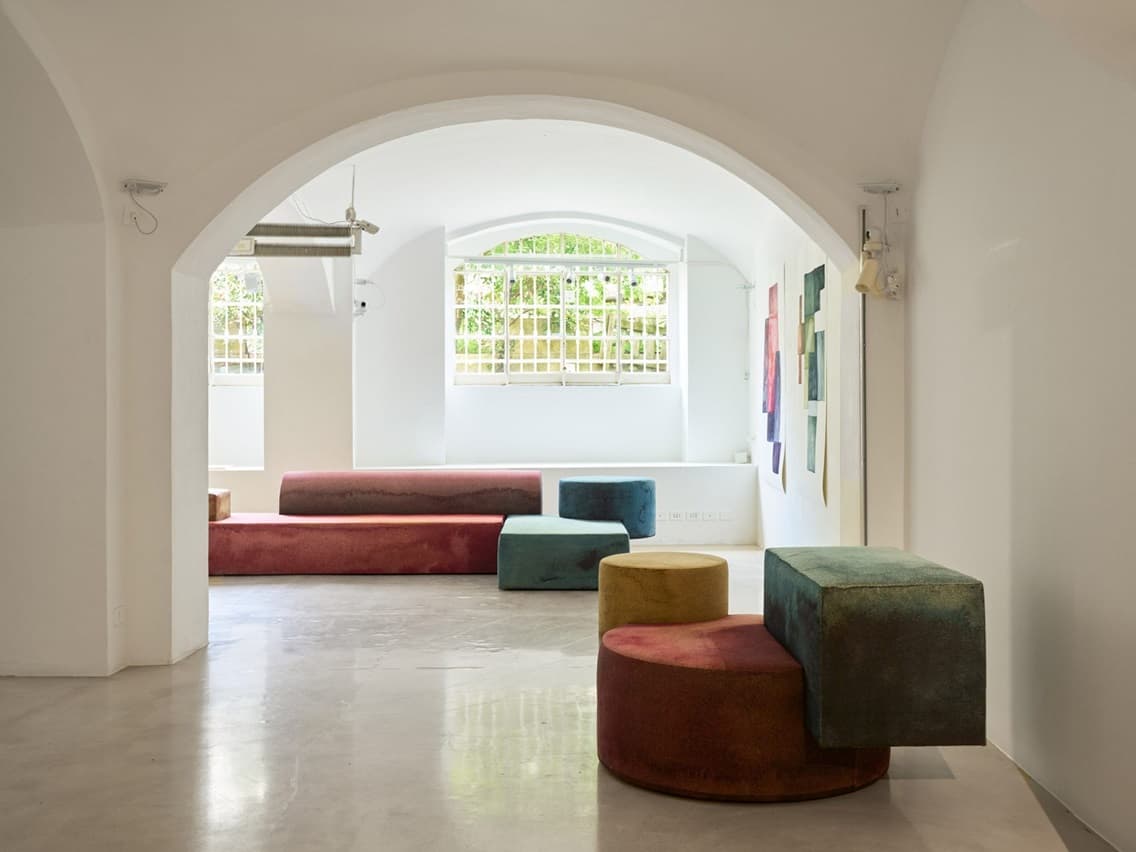
Left: ‘Acquerello’ designs mimic watercolour effect on the upholstery. Image: Dezeen. Right: More ‘Geometriæ’ sofa pieces in other forms displayed at the event. Image: Dezeen.
Sonia Lagerkvist — one-half of Front — described light and shadow as “translated directly into the surface,” creating tension between physical form and perception. The project emerged from Front’s self-initiated research into geometric purity as a counter to amorphous patterns. Moroso’s weavers developed bespoke textiles to wrap each volume, with the Acquerello designs requiring complexity to replicate watercolour’s unpredictable, fluid spread.
Gae Aulenti: Pipistrello at 40
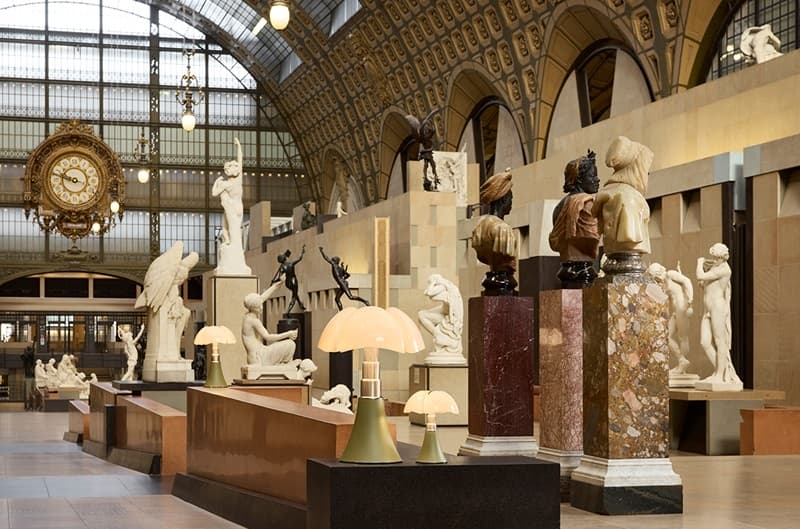
The new material and hue of Pipistrello lights displayed at Musée d’Orsay. Image: ifdm.design.
To celebrate the 40th anniversary of the Musée d’Orsay, renowned Italian lighting brand Martinelli Luce presented a special finish of Gae Aulenti’s Pipistrello lamp, designed originally in 1965. The new chromatic finish emerged from dialogue between the lamp and the spaces Aulenti helped transform in the 1980s, when she designed the museum’s interiors. The lamp — produced for the Olivetti showroom in Paris — originally experimented with methacrylate and a telescopic mechanism that defines its silhouette. The new finish absorbs a hue from the Orsay’s atmosphere — a material echo of an architectural detail belonging to the museum’s identity. Logos of the Musée d’Orsay and Martinelli Luce are engraved on the cone. Produced in three sizes, the edition bridges two worlds: the monumental scale of cultural institutions and objects for daily life.
Tom Dixon: Axis at Casa Manzoni
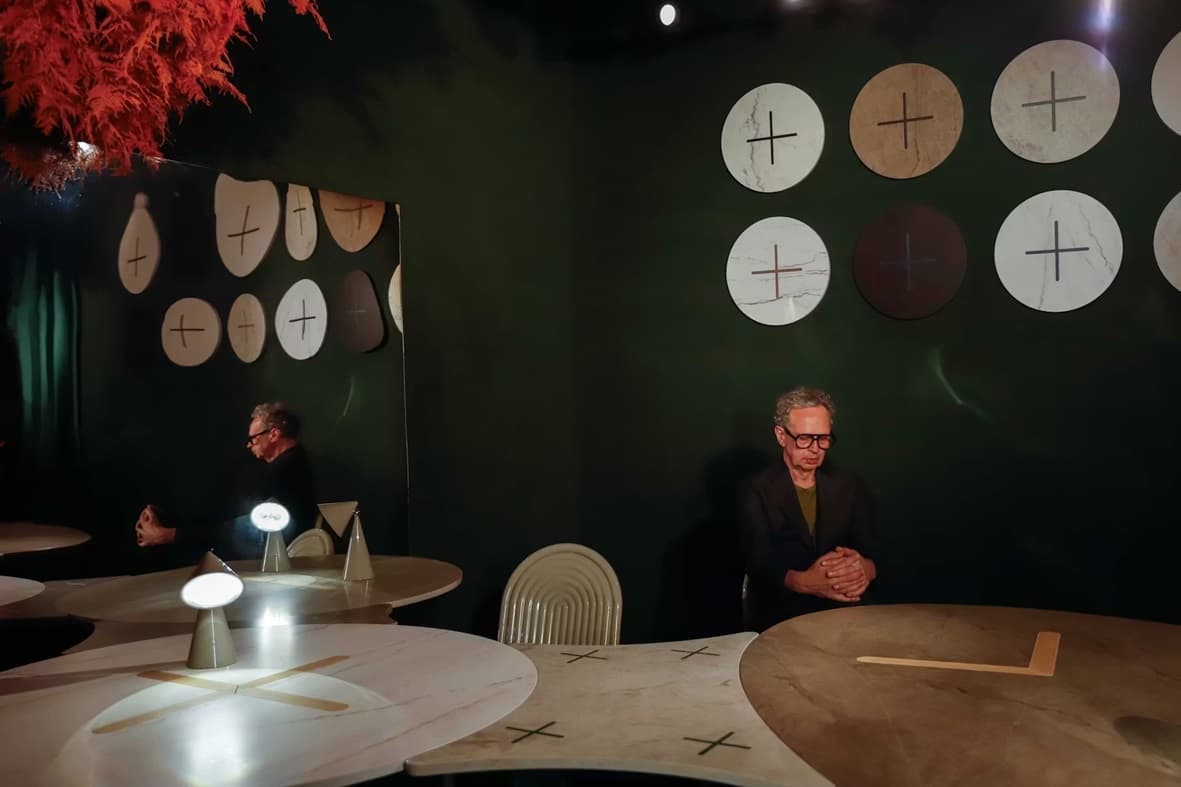
Tom Dixon with his ‘Axis’ tables at his event during Milan Design Week 2026. Image: Cosentino.
Inside Casa Manzoni — a neoclassical landmark located in Milan’s Gerolamo Morone district — Tom Dixon presented ‘Axis’, an installation structured as five distinct spatial environments: The Sanctuary, Dining Room, Sound Bath, Reflection Gallery and Forum. The installation introduced ‘Ēclos’ — Cosentino’s new mineral surface built with patented Inlayr technology — featuring zero crystalline silica and more than 50 percent recycled content. The Axis table collection — developed with ACTIU — a Spanish company specialising in office furniture, combined cross-leg geometries with Ēclos surfaces.
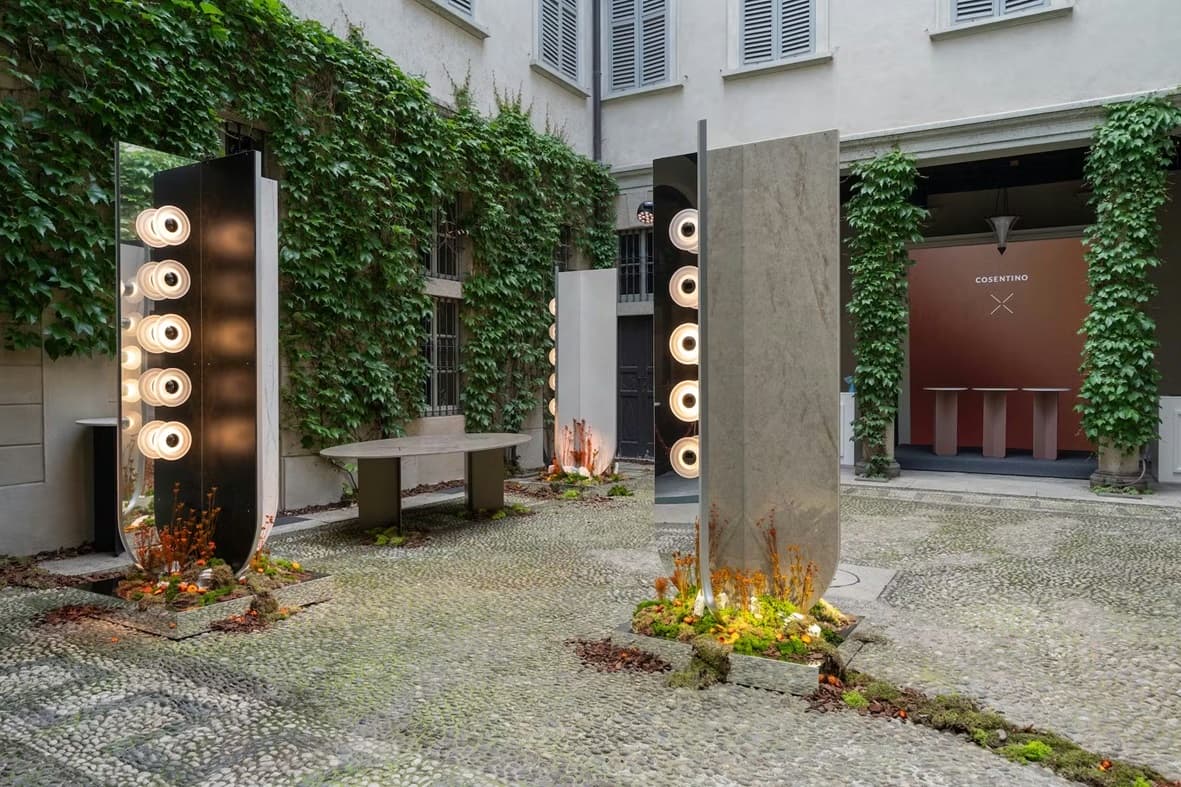
Tom Dixon’s ‘Melt’ lights added ambience to some of the event’s displays. Image: Cosentino.
The Sound Bath immersed visitors in a space where surface, sculptural bathroom forms and Tom Dixon’s chrome ‘Melt’ surface lights added ambience. The Reflection Gallery deconstructed the collection’s geometry through mirrored installations. Throughout the week, the event brought together designers such as Michael Anastassiades and Sabine Marcelis for conversations moderated by Paul Cournet, who regaled attendees with conversations about evolving design trends.
Bethan Laura Wood for Baccarat: Mille Fleurs
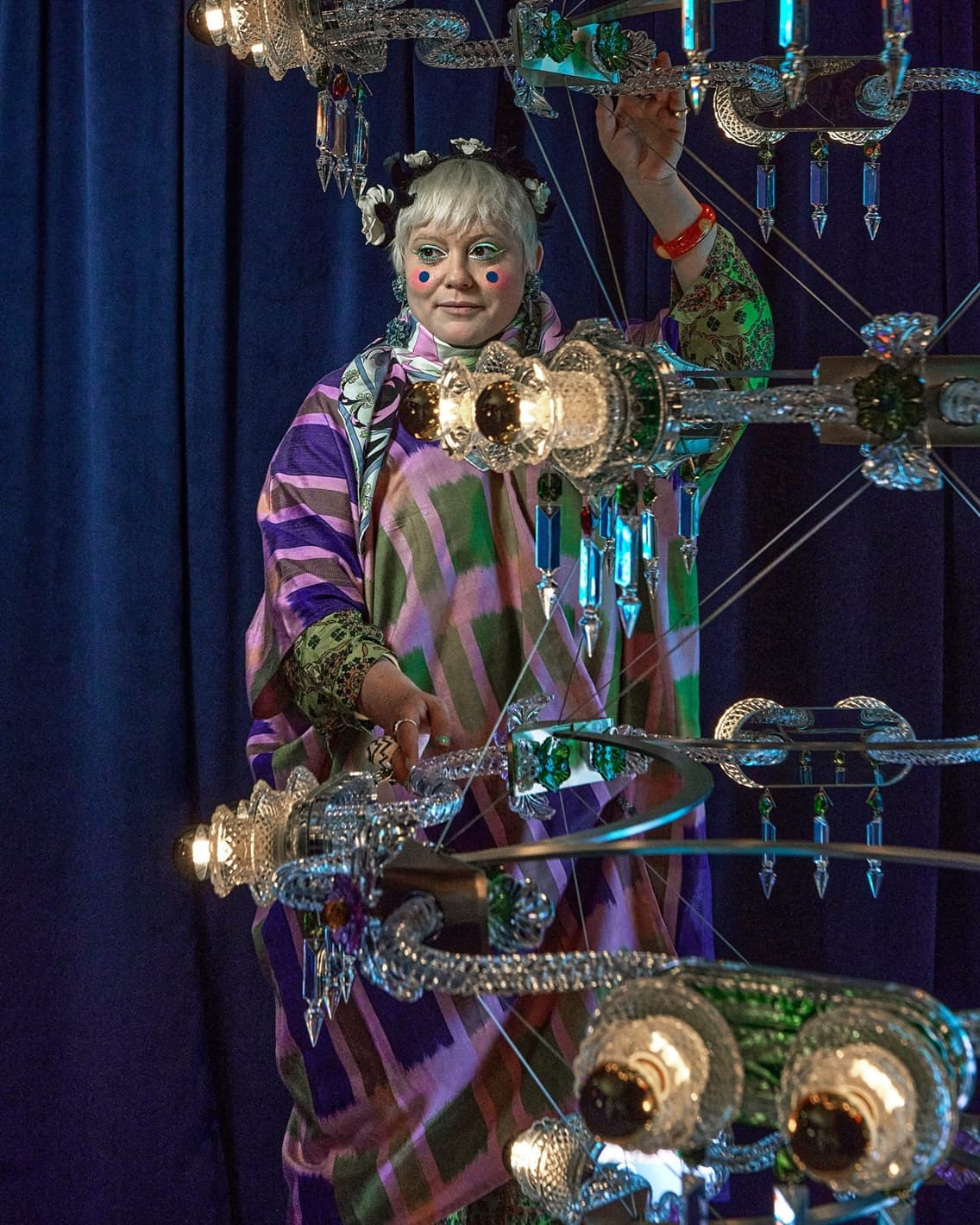
Bethan Laura Wood posing with her modular, sci-fi-gothic inspired chandelier for Baccarat. Image: Dezeen.
British designer Bethan Laura Wood created ‘Mille Fleurs’, a modular interpretation of Baccarat’s emblematic Zénith chandelier — a baroque design introduced circa 1850. Wood became the first designer to turn the chandelier into a modular system, constructing rings arranged vertically or horizontally on tensioned cables. “I was curious what would happen if I removed the centre and opened up that space,” Wood enthused.
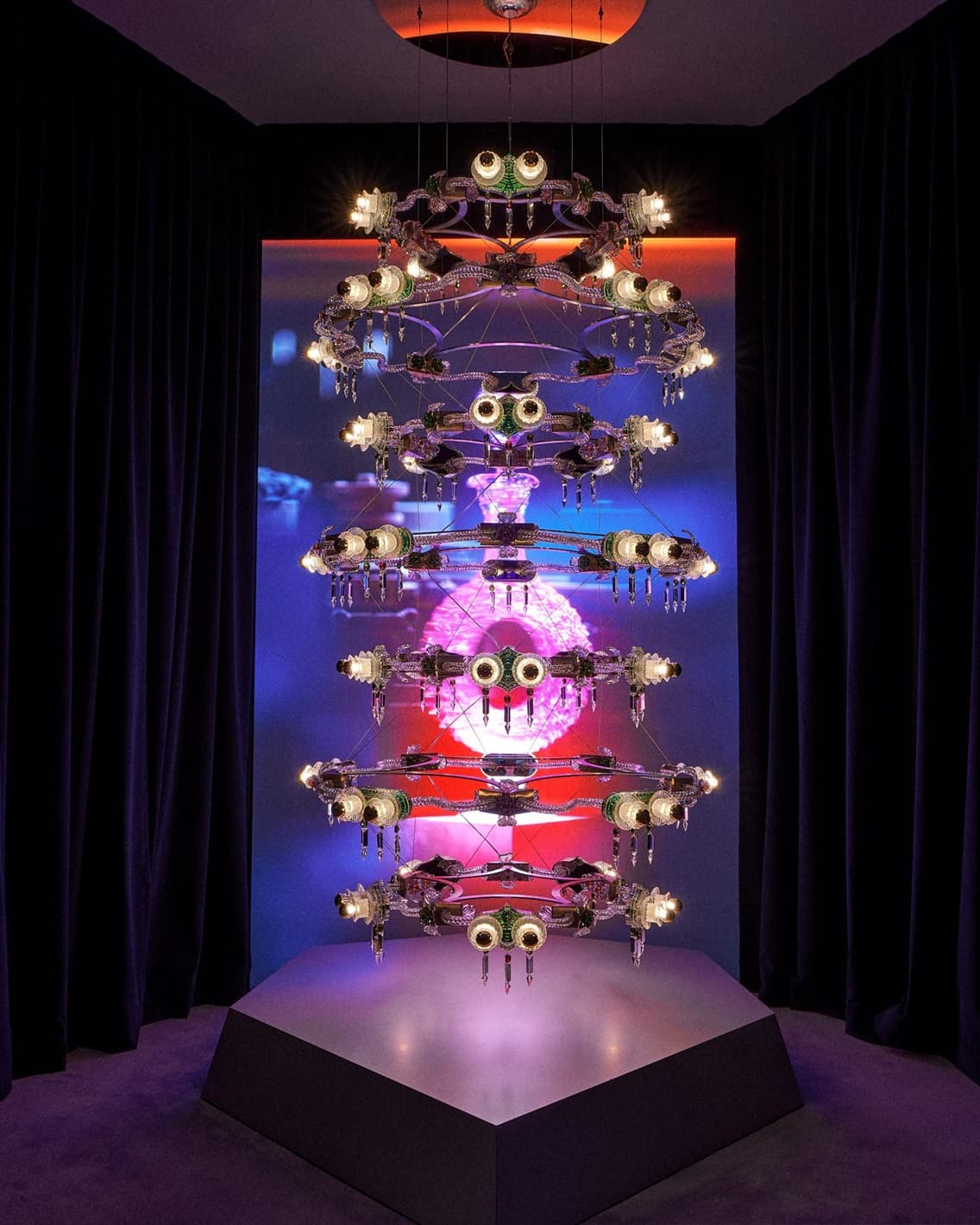
The chandelier can be stacked vertically via modules. Image: Dezeen.
The design combines classic Zénith components with new elements, including a crystal glass version of Wood’s flower motif from her Mexico-inspired Criss Cross collection (2013). The colour palette moves through green shades — forest to emerald — with pops of lilac and gold. Wood described the aesthetic as “Return to Oz, green-emerald madness”. Exhibition scenography by Emmanuelle Luciani placed the chandelier within a cathedral setting featuring neon lights, dancers and a techno soundscape. Matching wall sconces — nicknamed “the frogs” — completed the collection. The memorable sci-fi, gothic soundscape experience left visitors with something to talk about.
Yinka Ilori for Veuve Clicquot: Chasing the Sun

Yinka Ilori at Veuve Clicquot’s “Chasing the Sun” installation. Image: culturalee.art.
British-Nigerian designer Yinka Ilori transformed Mediateca Santa Teresa into an immersive installation and temporary café for Veuve Clicquot’s “Chasing the Sun” installation. The limited-edition champagne collection — launched during Milan Design Week 2026 — celebrated light, joy and human connection through Ilori’s signature language of colour and pattern. Objects included a ‘Sun Holder’, ‘Sun Totems’ and a reinterpretation of the Clicquot Arrow, made from upcycled materials.
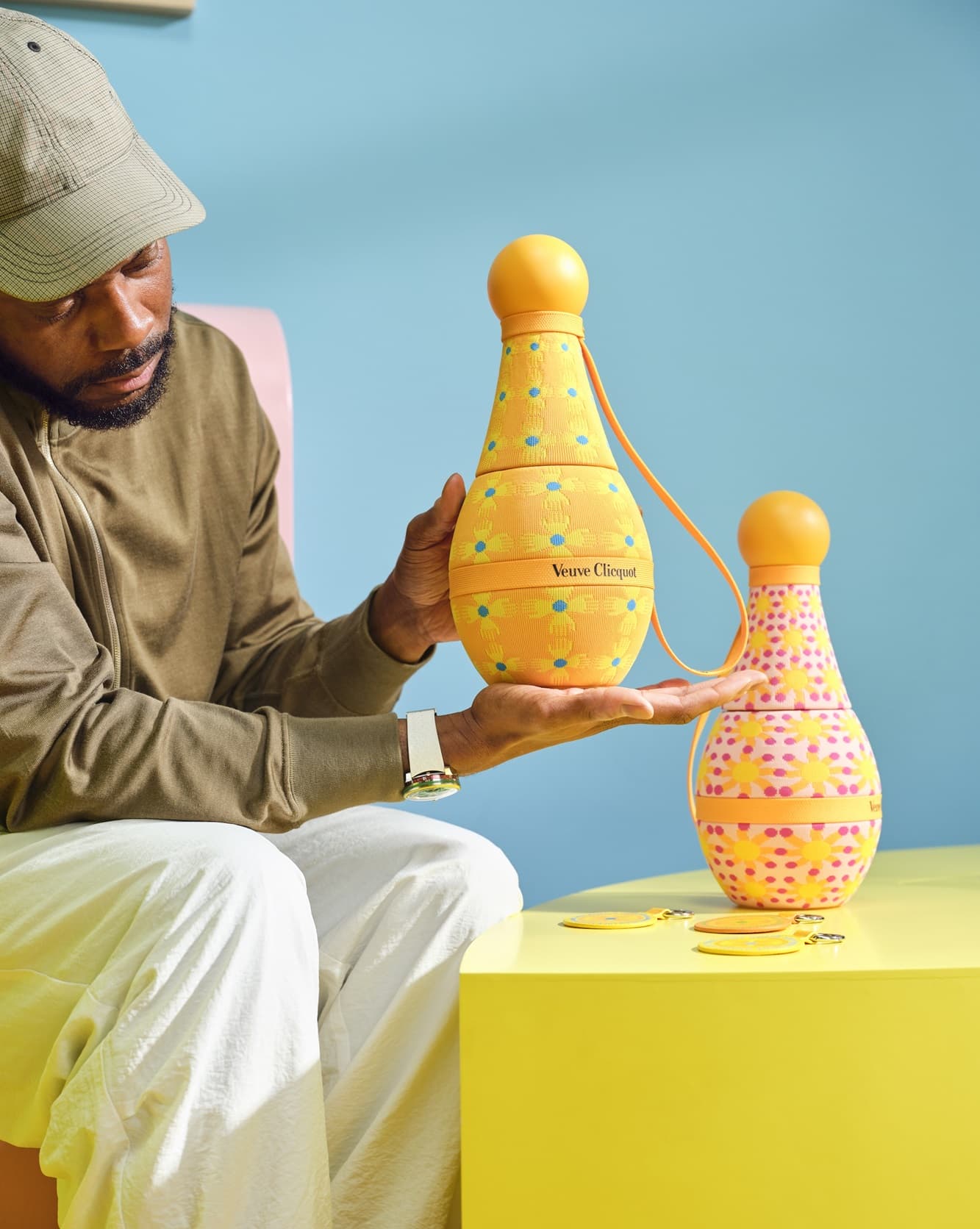
Yinka Ilori showing guests his calabash-inspired champagne holder design for Veuve Clicquot. Image: culturalee.art.
The champagne holder’s shape is inspired by the gourd (calabash) — a symbol of harvest rooted in Ilori’s Nigerian heritage. The bottle’s design sat at the heart of the visual language, threading together African tradition, British context and the Maison’s solar identity. Ilori’s accompanying statement read: “In this world, you are the sun that you chase.” The installation functioned as both an exhibition space and a functioning café, inviting visitors to inhabit and engage with the design.
Expressive Designs That Inspire
Milan Design Week 2026 proved that expression in design is not a vague sensibility but a measurable force. Across eight installations — from Bethan Laura Wood’s modular crystal chandelier for Baccarat to Tom Dixon’s sound-bending mineral surfaces — designers rejected safe repetition and took a dose of dare. What unites these works is risk. Kelly Wearstler placed furniture inside a Baroque palazzo closed for decades. Faye Toogood left seams visible, exposing construction as expression. Front turned upholstery into an optical illusion. Patricia Urquiola chose subtraction over spectacle. Gae Aulenti’s Pipistrello luminaires — forty years on — remain an argument for methacrylate and telescopic ambition. For design professionals, these expressive installations offered not novelty but conviction — the sense that each designer pursued a clear, internal logic regardless of commercial pressure. That is the value of filtering the deluge. Not every installation merits attention. These eight events did, because each one left attendees with curiosity and wonder.
For more decor reads, click here.