
Milan is a fashion and design haven and Milan Design Week is a major annual event, especially for design heads everywhere. During Milan Design Week 2026, LUXUO examined some of the most captivating design events that attracted large crowds. This was a week where materiality, architecture and cultural narrative came together, from Gaggenau’s minimalist haven at a historic villa to a select group of designers representing Singapore for “Prototype Island” and a ground-breaking residency connecting Indian craftsmanship with global audiences. What makes this edition essential for true design enthusiasts is outlined in the following features.
Prototype Island: A Nation by Design
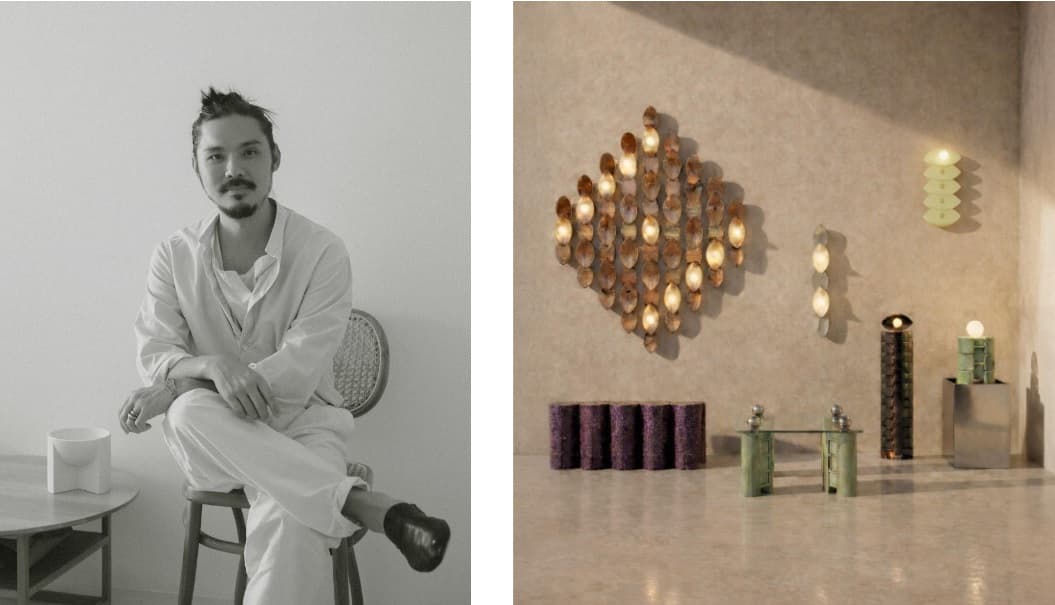
Parable’s “Iris” handmade ceramic sconces. Image: Parable.
The Design Singapore Council presented “Prototype Island”, an exhibition that presents the city-state as an ongoing living laboratory, at Foro Buonaparte 54 in the Brera Design District in Milan. The exhibit, which featured fifteen pieces in three thematic clusters—Care Infrastructures, Technological Ecologies, and Everyday Infrastructures — was curated by Hunn Wai (Lanzavecchia + Wai) in collaboration with assistant curator Eian Siew and global advisor Maria Cristina Didero. Highlights were Melvin Ong, Shervon Ong, and Andy Yeo’s Threads of Becoming, which combined 3D printing with endangered lacquer stitching, and TessaCast, a 4D-printed orthopaedic cast from A*STAR Innovation Factory that conformed to patient anatomy.
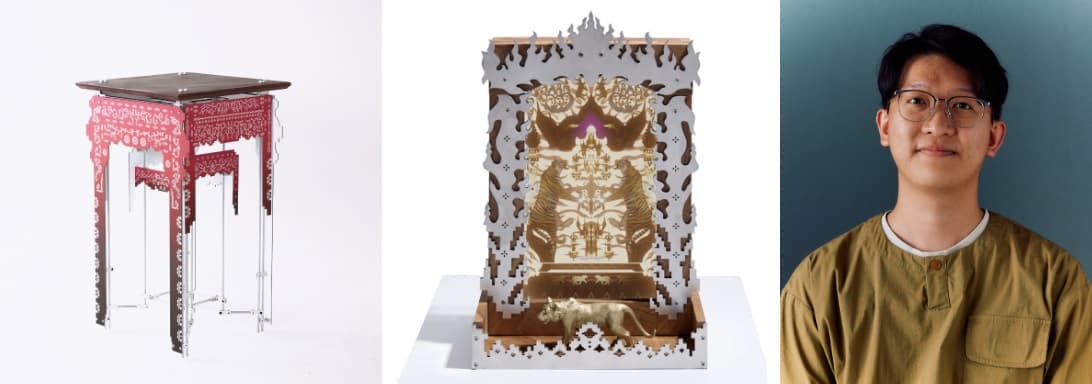
Lustre Series is a reimagined Peranakan tea table and Earth Deity is a modern spiritual altar by Roger Ng Wei Lun. Image: Roger Ng Wei Lun.
Parable’s “Iris” featured a modular light installation that combined handmade ceramic components with phygital (i.e. physical + digital) combinations that connect traditional craft with digital spatial logic. The work was built from local Singaporean clay, some of which had been preserved for up to 40 years. The work illustrated the process of reprogramming native materials for responsive settings. Roger Ng Wei Lun contributed two sculptures: the “Earth Deity” altar, a modern spiritual structure that opens a dialogue on how tradition evolves through new forms, and the “Lustre Series”, a reimagined Peranakan tea table made in blackwood with mother-of-pearl inlay using modern materials and cutting-edge industrial processes (such as UV-printed Dibond aluminium panels).
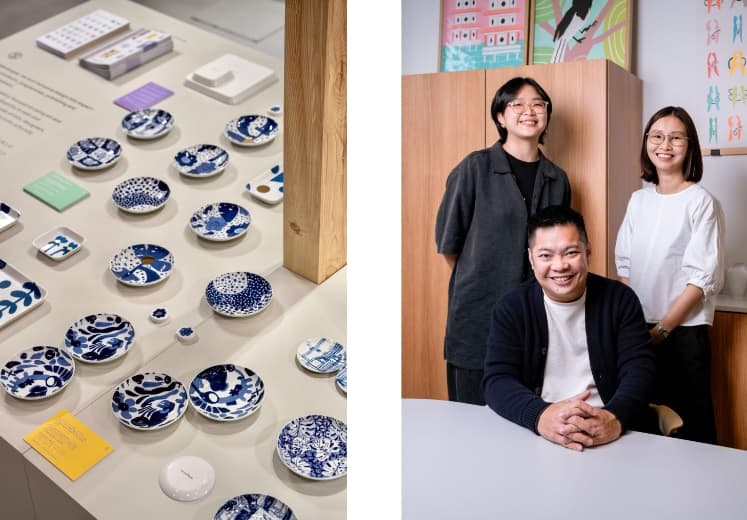
“People of the World” whimsical porcelain plates designed by weareSuper (Left to right: Niki Koh, Edwin Low, Priscilla Tan). Image: weareSuper.
Not to be overlooked were some of weareSuper’s intriguing creations from a collection called “People of the World”. This inclusive design firm in Singapore worked with artists with disabilities to create everything from publications and exhibitions to souvenirs and home goods. Twenty-five cobalt blue and white porcelain plates, each with a quirky, portrait-like visage, are the agency’s proudest creation to display. Instead of adding inclusion as an afterthought, the collection integrates it directly into manufacturing and retail processes, exploring co-design as economic and social infrastructure.
Gaggenau: ‘Presence’ at Villa Necchi Campiglio
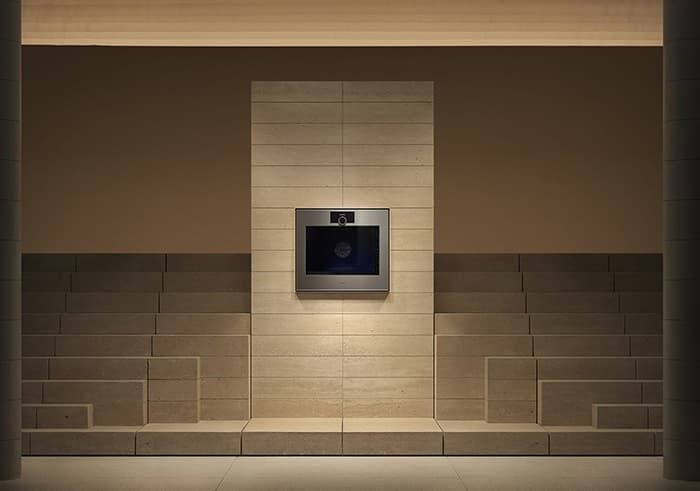
Gaggenau’s booth at MDW 2026 was restrained elegance and being “present”. Image: Gaggenau.
After A Statement of Form (2022) and The Elevation of Gravity (2024), Gaggenau unveiled “Presence”, the third part of the Milan trilogy, in the glass pavilion of Villa Necchi Campiglio. The display, created in collaboration with Munich-based architecture studio 1zu33, eliminated visual clutter to highlight just what was appropriate. The Vario cooktops were set into burntwood and basalt surfaces, while the Expressive Series oven was centred on a travertine staircase controlled by the golden ratio. Vario cooling units were housed in casings made of brushed brass. Tohru Nakamura, a chef with three Michelin stars, finished the sensory arc with a mild dashi. Visitors just entered a state where architecture, not appliances, demanded attention; there was no need for a product pitch.
Shakti Design Residency at Alcova: Indian Craft Meets Milan
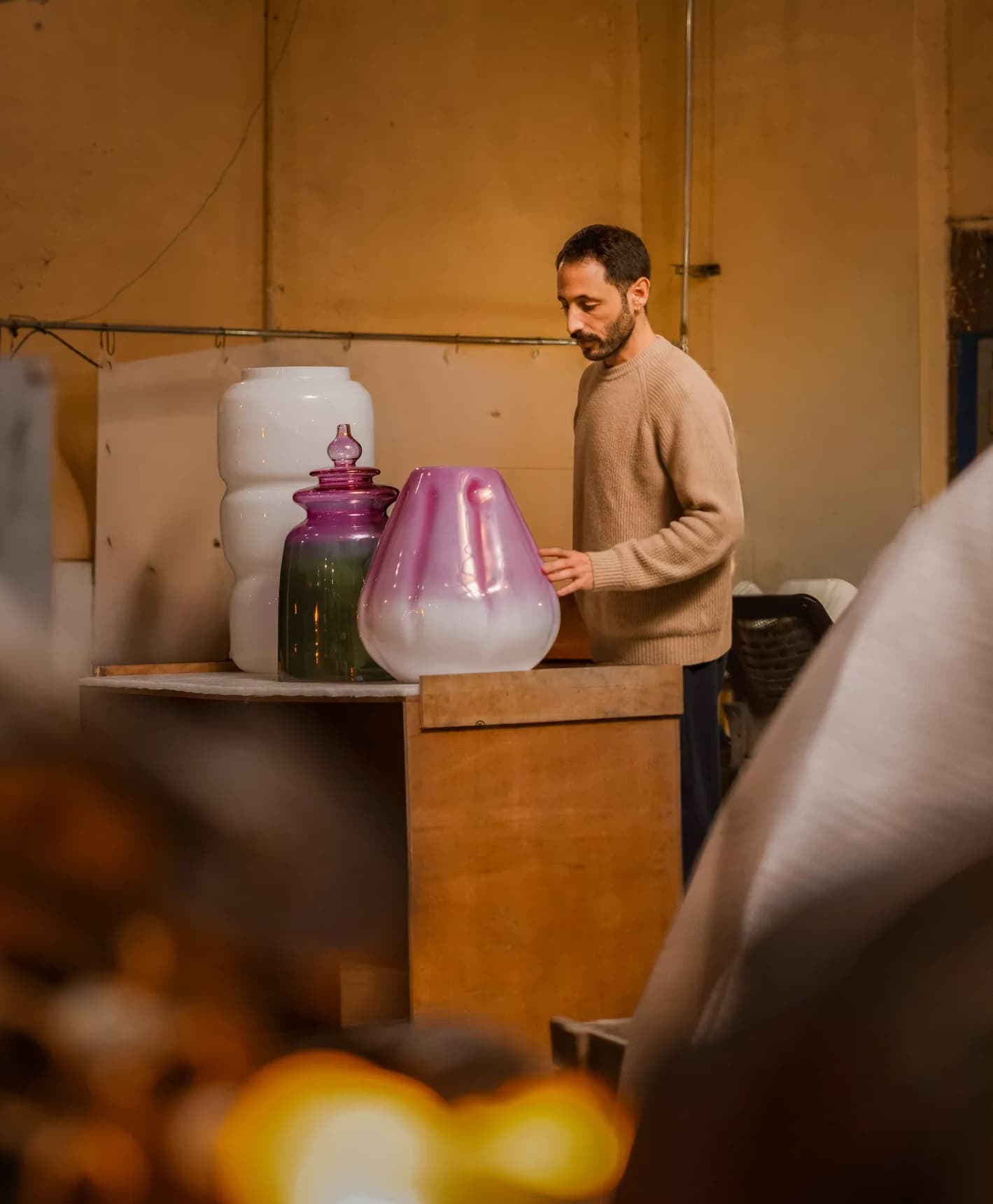
Daniel Garber of Klove Studio, working with handblown glass forms developed during the residency. Image: Deepak Bhatia.
Duyi Han of China, a year-one resident of the Shakti Design Residency at Alcova during Milan Design Week 2026, created this exhibition design. Han is a multidisciplinary designer who creates immersive visual experiences influenced by speculative form, philosophy, and neuroscience. Han was responsible for creating the spatial presentation for the second cohort’s works at Alcova, drawing on his personal experience as a resident of Shakti in 2024. The residency’s philosophy of encouraging continuous creative collaboration after the initial producing process is reflected in this appointment.
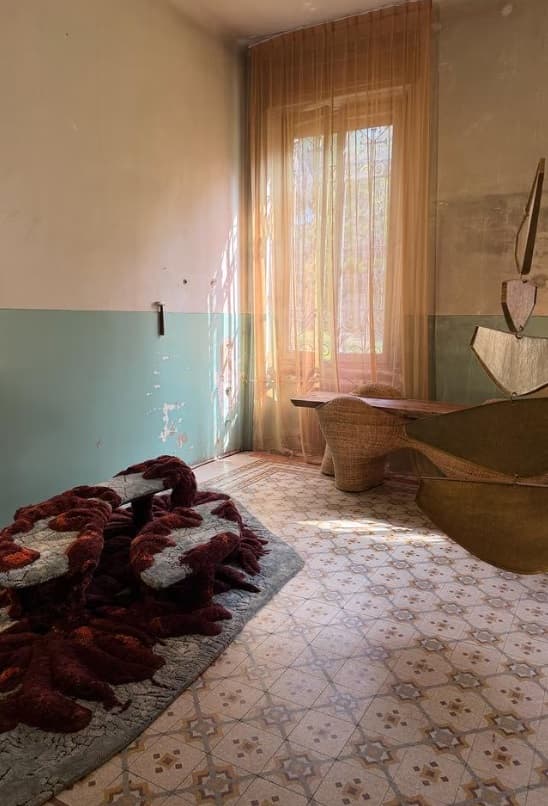
Shakti Residency event at MDW 2026, located in Alcova, Milan, Italy. Image: Vogue Australia.
Six foreign designers are placed in Indian master workshops for a month-long stay as part of the Shakti Residency, creating pieces that are displayed at Alcova. This year, the residency showcased six brand-new pieces that were created under the guidance of an international jury of curators, educators, artists, and creatives. Undoubtedly, these pieces were conceptualised by international designers in partnership with top Indian ateliers and craftspeople. Architect and designer Rodolfo Agrella and Vikram Goyal Studio, product and textile designer Victoire de Brantes and Jaipur Rugs, designer and researcher Daniel Garber and Klove Studio, artist and designer Zofia Sobolewska Ursic and Frozen Music, and sculptor and designer Tadeň Podracký and product and furniture designer Maria Tyakina are among the notable partnerships that each work with Heirloom Naga Centre on specific projects.
Metamorphosis in Motion: Lina Ghotmeh Transforms Palazzo Litta
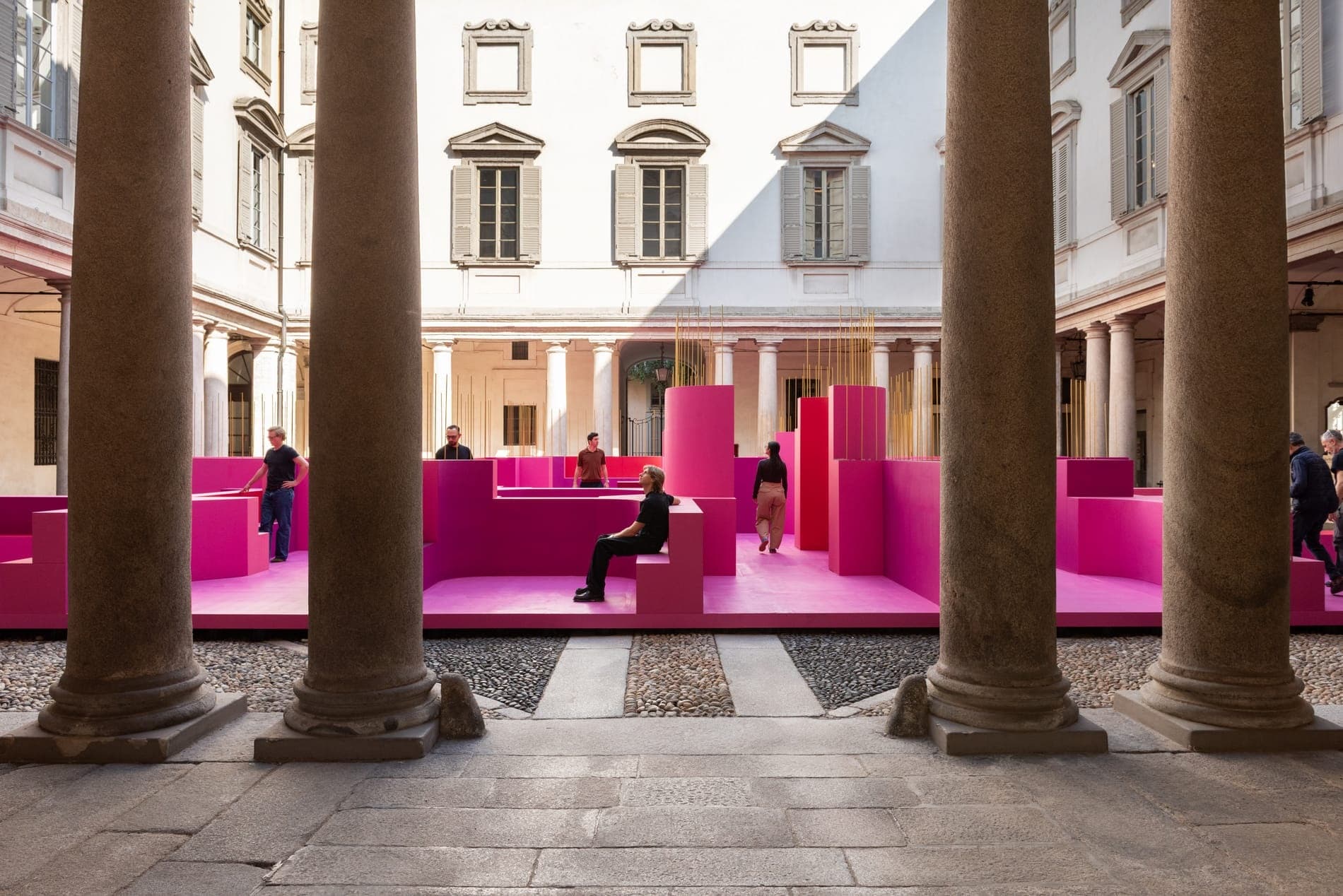
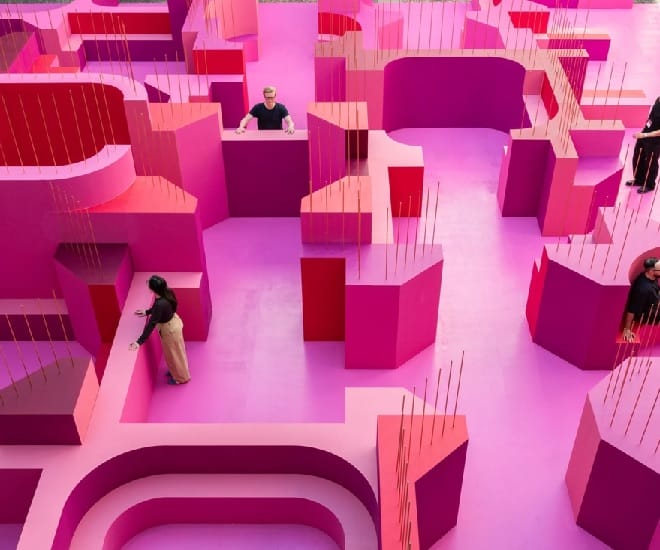
A playful maze dubbed “Metamorphosis in Motion” designed by Lina Ghotmeh for MDW 2026. Image: Nathalie Krag.
Lina Ghotmeh’s first outdoor site-specific piece in Italy debuted at MoscaPartners Variations 2026 inside the Cortile d’Onore of Palazzo Litta, a 17th-century Baroque house on Corso Magenta. The piece, named Metamorphosis in Motion, was a 17-metre-square labyrinth made up of 18 MDF modules coated in five different hues of pink by Milesi Vernici. The static courtyard became a lived-in spectacle as the structure unfolded through curved geometries and changing viewpoints to create a sequential journey.
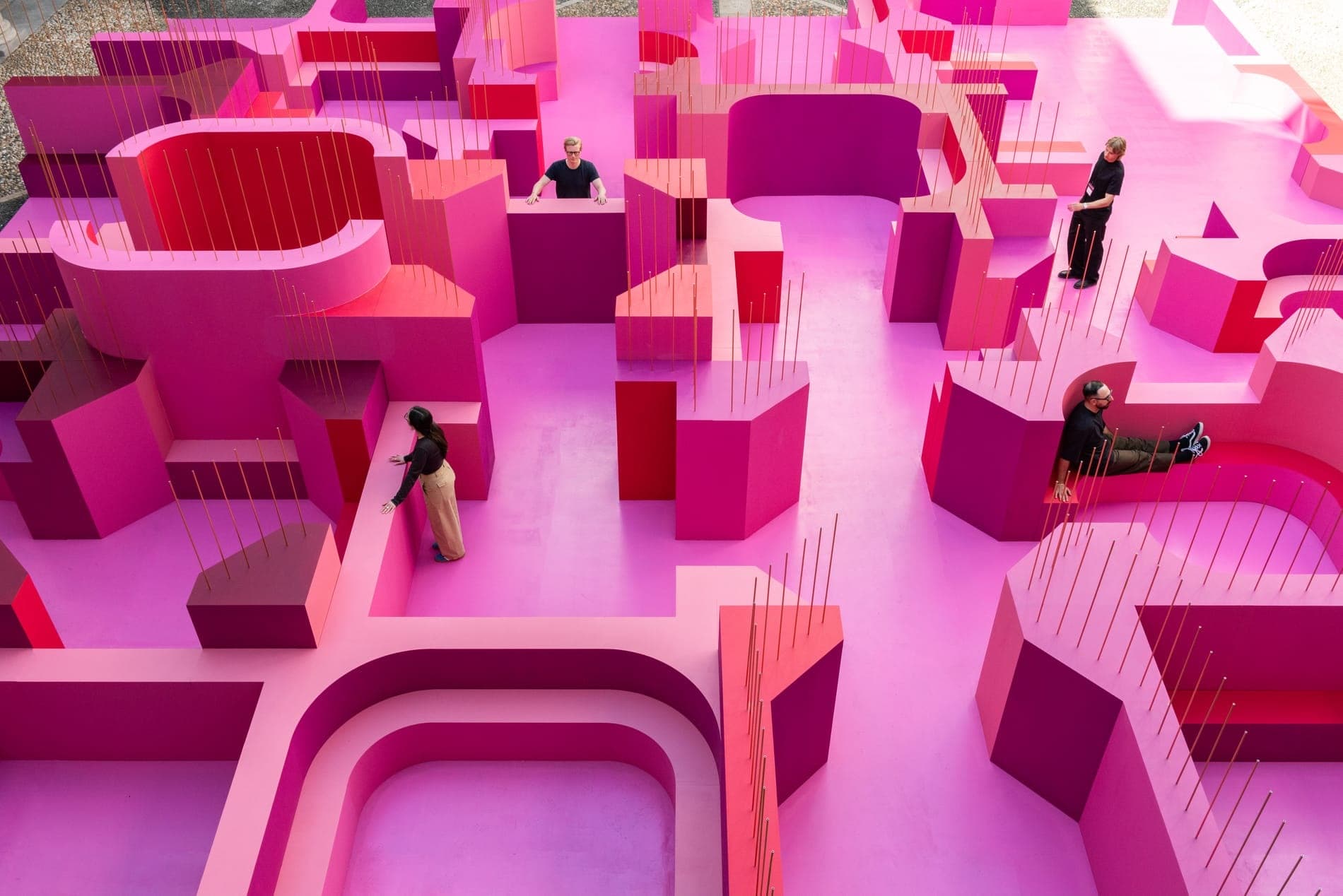
The whimsical maze is made of 18 MDF modules coated in five different hues of pink. Image: Nathalie Krag.
A meditation area, an immersive sound area, a bookstore by Frab’s Magazines, a sampling area with Tre Marie and Vitavigor products, and an olfactory experience by Scent Company with cypress, olibanum, and cedar evoking Lebanon were among the five sensory zones that attendees explored. The participative ecology was finished with Avalon Italia seating and a special conversation area. Ghotmeh, a Beirut-born, Paris-based architect, employed a design theory known as “Archaeology of the Future” that integrates space, memory, and landscape into coherent tales.
Fisher & Paykel: Nature Takes Centrestage
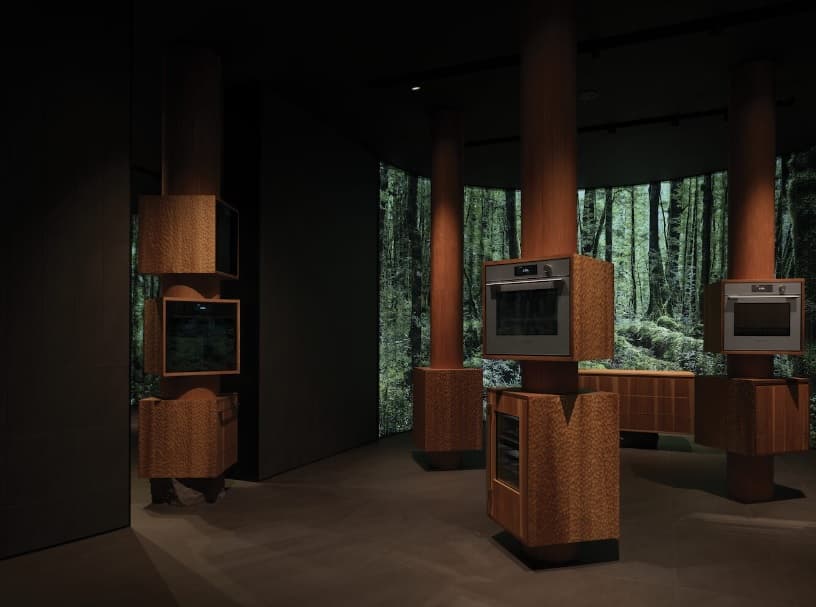
Fisher & Paykel’s booth at MDW 2026 was all about being shrouded by nature. Image: Fisher & Paykel.
Fisher & Paykel showcased Nature — Ritual, a forest-like haven created by Milanese architectural firm Calvi Brambilla & Partners and creative director Dean Poole of Alt Group, within the 450-square-metre installation at EuroCucina 2026. Tōtara, a timber native to New Zealand, and volcanic basalt were the only two main elements used to create the project, which immersed visitors in a cosy, tactile setting. A tea welcome with Kawakawa tea steeped on an induction-heated stone slab, a wine experience with the “61cm Series 11 Integrated Column” wine cabinet, the kitchen as a monolithic composition with 20mm stone-fronted dish-drawer units, and the introduction of the “Minimal Style Fabric Care” cabinet were the four experiential zones. The sensory area was finished with a backlit woodland curtain, bird music, forest aroma, and custom porcelain objects created by artist Aaron Scythe.
Let’s Pause: Come into the Light at Vicolo Via Mameli
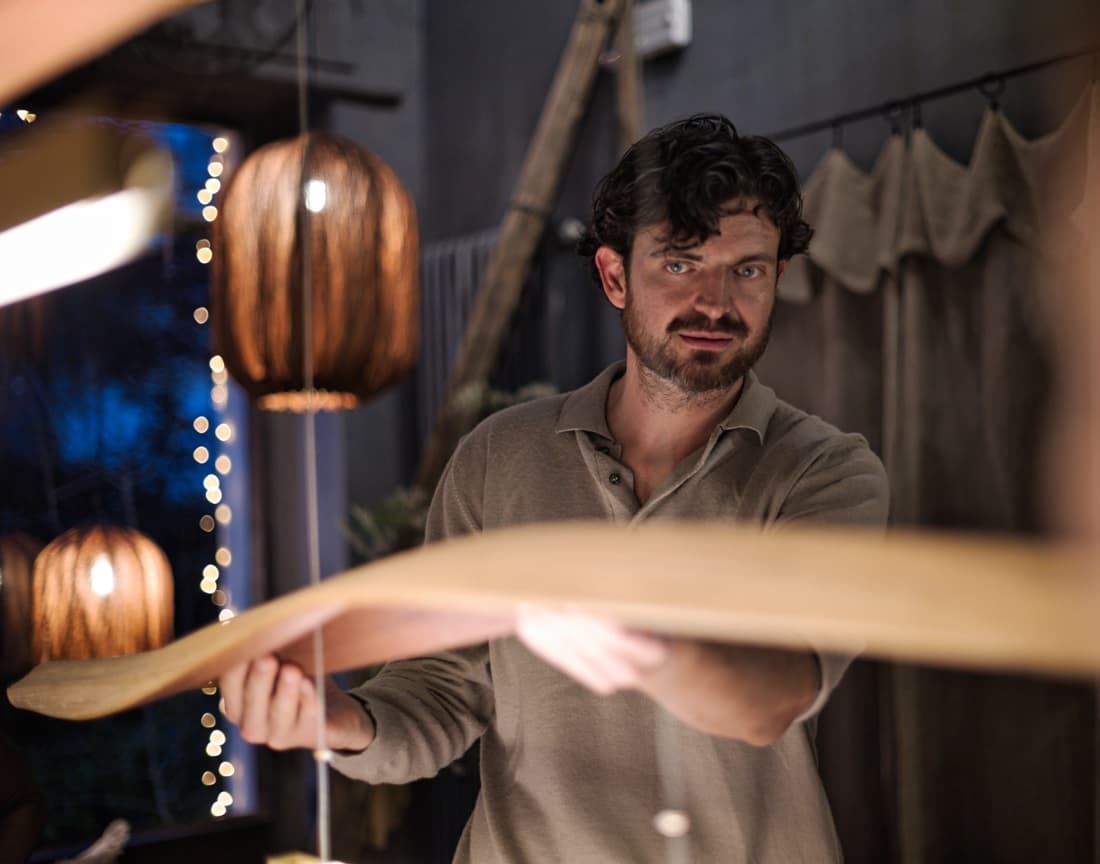
Ryan of Vicolo Via Mameli showed guests some of the eco-lighting designs. Image: Daniele Fragale.
Let’s Pause, a Spanish home furnishings company, and Vicolo Via Mameli, a Milanese concept store, worked together on Come into the Light, an installation that explores dolce lentezza, or a calm, leisurely way of living. The exhibition, held at Vicolo Via Mameli in the Brera design district, included linens and lighting elements that were created through natural upcycling techniques rather than artificial or chemical production methods.
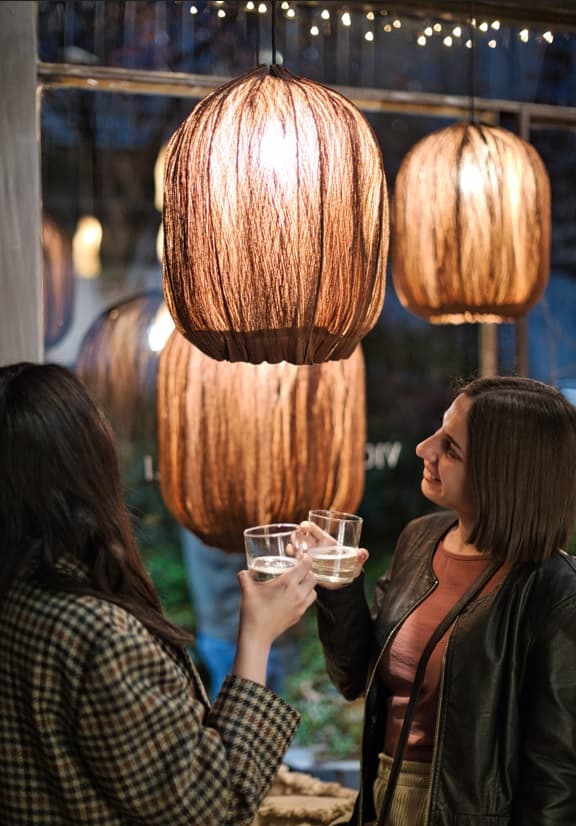
Guests enjoyed viewing some of the handmade lighting designs by Let’s Pause. Image: Daniele Fragale.
The centrepiece of the Coccola series was cordless portable table lights made from hand-spun fique fibre on a manual loom constructed by craftsman Albeiro Camargo, who revived an ancestral method of the Guane people, Camargo’s Indigenous ancestors. Every lamp has an LED bulb that can be recharged. The “Equilibri” collection, made from Mediterranean palm sheaths, the vegan leather Couro Pod lamp, the silkworm cocoon-inspired Bozzolo pendant lamp, and “Gemma”, “Molaris” and “Olivo” wall hooks were among the other items.
BD Barcelona: Two Installations Across Milan
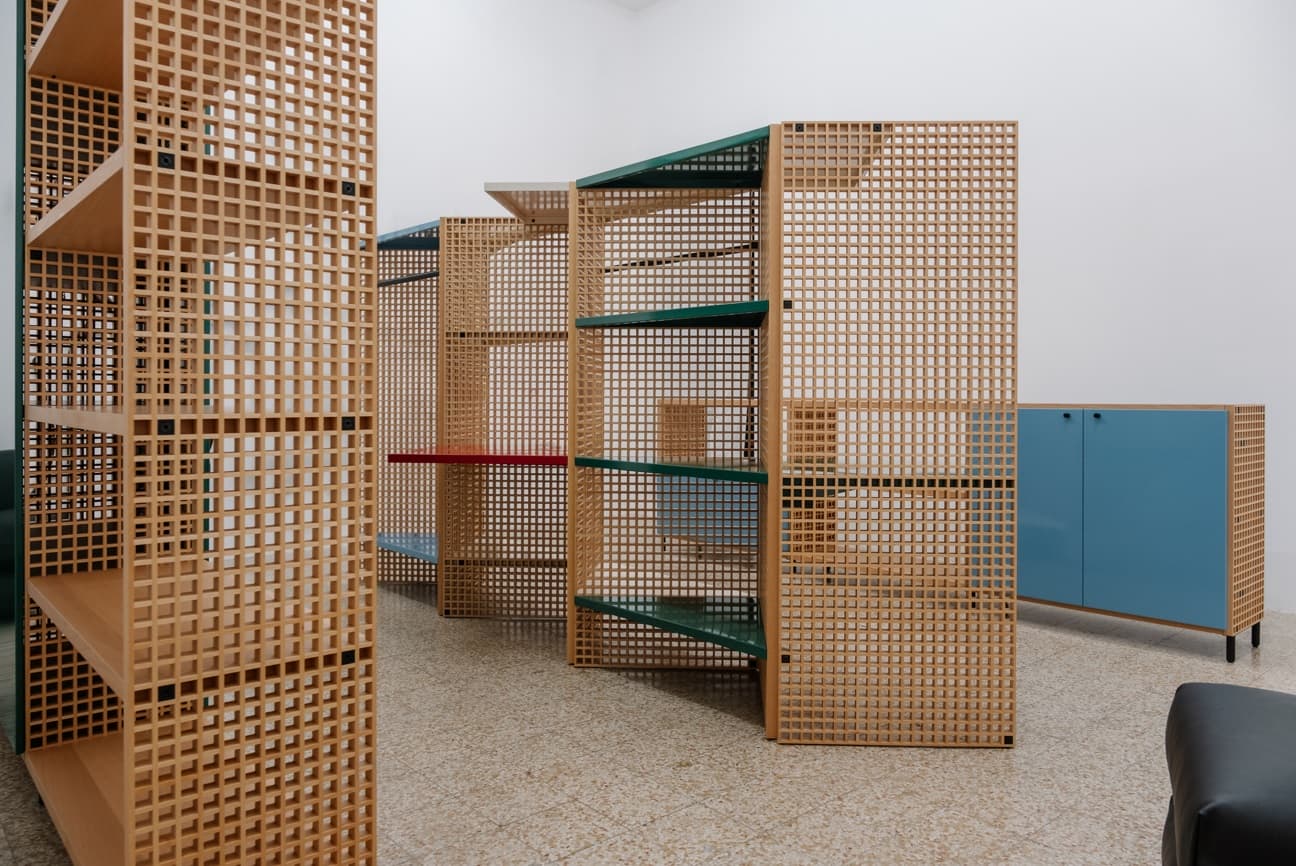
Industrial grids called Rasters were the highlight of the BD Barcelona + Muller Van Severen collaboration. Image: BD Barcelona.
BD Barcelona had two different installations during Milan Design Week in 2026. Office Kersten Geers David Van Severen and Muller Van Severen displayed Rasters as an architectural work at Zaza Gallery on Via Privata Leopoldo Gasparotto. Rasters transform industrial grid technologies into a modular furniture system of cabinets and paravents, initially designed for Bottega Veneta’s Milan headquarters. The open framework made of solid beech was ethically sourced, has black polyamide connectors, and defines space without enclosing it and lets light through its perforated wooden lattice. BD Barcelona took part in Silhouettes: Celebrating 15 Years, an exhibition and book launch honouring Muller Van Severen’s career, at Ordet on Via Filippino Lippi.
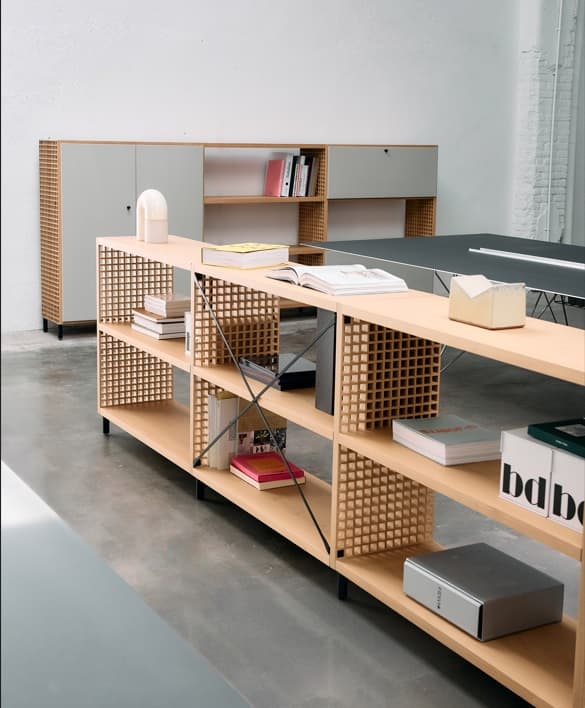
Raster designs were also incorporated in low console creations. Image: BD Barcelona.
Fifteen life-sized aluminium candleholders, each reducing familiar forms such as chairs, cabinets and lamps to essential contours, were presented alongside the monograph “A Lot of Work”. Rasters were used as the display architecture for the new publication, which also included the Pillow Sofa and Bridges Cabinet.
Baccarat’s Crystal Crypt
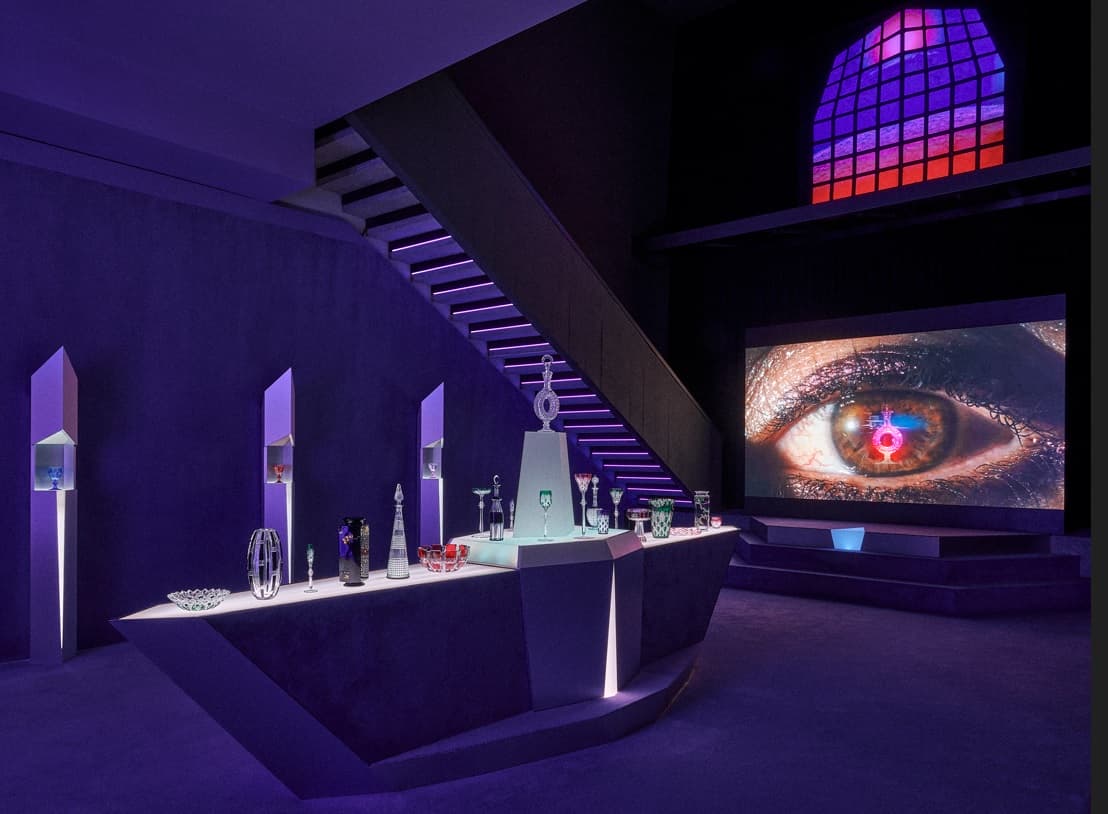
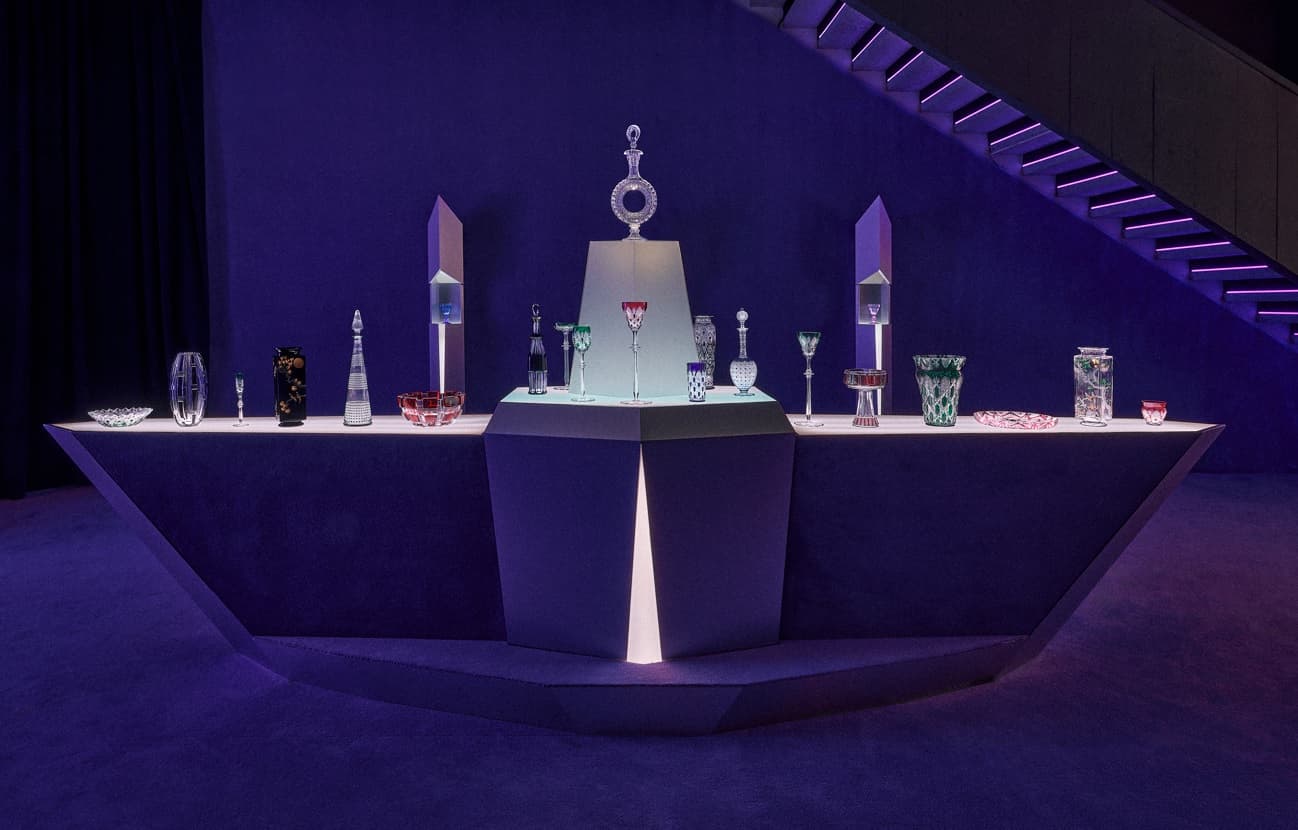
Left: Bacarrat’s “Crystal Crypt” event was mesmerising, mystical and engaging. Image: Philippe Garcia. The event displayed some of Bacarrat’s most iconic creations. Image: Philippe Garcia.
With “Crystal Crypt”, an immersive science-fiction scenography created by artist, art historian, and curator Emmanuelle Luciani, Baccarat made a comeback to Milan Design Week 2026. Situated in the Brera neighbourhood, the project honoured Baccarat’s workers by combining movement, film, scenography, and sound into a cosmic cathedral that embraced crystal as a whole art experience. Philip K. Dick’s short novel The Crystal Crypt, which depicts a crystal as a barrier between reality and fiction, the past and the future, inspired the space’s name. The British designer Bethan Laura Wood’s Mille Fleurs, a modern take on the mid-19th-century Zénith chandelier disassembled into modular rings of transparent crystal with olivine, parma violet, amber, and turquoise, was unveiled by Baccarat inside this time capsule. Two new expressions of the Harcourt symbol (1841) emerged: Harcourt Nomade, which is composed of a lightweight, long-lasting bio-based substance in pastel hues, including a special colour only available to visitors to Milan, and Harcourt Colour, which is crystal coloured in full, blazing red, created using 24-carat gold.
Why Craftsmanship Won Milan Design Week 2026
These events proved that luxury does not need to shout. Shakti Residency offered a repeatable model where social responsibility sits alongside beautiful design. Prototype Island presented Singapore as a testing ground for practical urban ideas. MoscaPartners Variations, through Lina Ghotmeh’s “Metamorphosis in Motion”, turned a historic courtyard into a sensory experience of memory and materials. Fisher & Paykel brought New Zealand rituals to the exhibition halls. Let’s Pause turned natural waste into quiet, everyday luxury. BD Barcelona marked fifteen years of thoughtful, sculptural furniture. Baccarat projected its crystal heritage into a futuristic vision. For anyone paying attention, the message was simple: buy based on how something is made, where it comes from, and what it feels like. The era of flashy logos is over; instead, the era of true craftsmanship has arrived.
For more decor reads, click here.