Like many of you, I wake up each morning with the feeling that they’re coming for us. But then I think, they have always come for the queers. And we have always, throughout human history, stood watch all night over the fire. We have always taken care of each other, and we will keep on doing it.
I’ve been joking lately that I’m just going to get gayer. I’m going to make up new pronouns. I’m going to keep going out, dancing with my friends—which we call Church—and I’ll go on gay marrying my loved ones as an ordained minister with the highest of internet credentials, and I’ll watch Queer Ultimatum if I have to and Heated Rivalry because I want to, and I will honor the memories of our BIPOC queer and trans ancestors. I will fight for trans youth, and I will keep writing and sharing our stories no matter how much they try to silence or censor us.
Electric Lit’s Most Anticipated Queer Books List was launched by Michelle Hart, who centered and uplifted LGBTQ+ writers and the queer stories that “deserve not only to be included but centered” in literary discourse. Michelle tells us, “Let these new books be a reminder: Even in the face of despair and erasure, we’re still here—reading, writing, and refusing to disappear.”
It’s an honor to continue the work Michelle started in 2022. She reminds me—these books remind me—that queer is the future: It has always been the future.
This summer, to celebrate Pride, I invite you to save a queer, read a book. We keep the fires lit ’till morning.
With thanks to Amulya Tadimety, Annie O’Brien, Lennie Roeber-Tsiongas, and Shandela Contreras for their assistance with this list.
Mother Tongue by Sara Nović (May 5)
Following Nović’s novel True Biz, this crip-queer memoir reads as a Deaf manifesto on motherhood. At age 12, Sara Nović began to lose her hearing, but almost no one noticed—not at home, not at school. For much of her adolescence, Nović masked both her disability and her queerness, until an experience of spiritual humility led her to claim not only her deafness, but Deafness: the political act, the community. The book’s raison d’etre seems to be about honoring that experience, resisting erasure, and changing the sociopolitical landscape to be one that celebrates difference, rather than trying to stamp it out. As Nović tells us, no one is a villain in their own story, and in Mother Tongue she sets out to expose the oralist frameworks and audist lobbies that continue to disenfranchise disabled people. Initially conceived as letters to her sons, the work is also a tender examination of family. Nović touches on the challenges of pregnancy, those sleepless nights when her first child S was inconsolable and she’d have to belt out her own rendition of “Take Me Home, Country Roads.” It ends, movingly, on her adoption of her second son, K, a deaf child in Thailand living in an orphanage, and who lights up when he finally learns to sign.
One Leg on Earth by ‘Pemi Aguda (May 5)
“Is it possible to be aware and not feel dread?” asks ‘Pemi Aguda. In One Leg on Earth, Aguda’s debut novel, pregnant women in Nigeria are jumping off of bridges and walking into water to drown themselves—and no one knows why. Yosoye, a recent graduate, relocates to Lagos (“a city looking forward only, hustling forward”) to complete her compulsory NYSC internship; she finds herself working for an architecture firm set to develop the new Omi City out of reclaimed land. Dazed by freedom, Yosoye wanders the dark streets of the city. Following a spontaneous encounter, she discovers that she, too, is pregnant. Amid judgments from coworkers and friends and forces that would seek to mysticize her for having one foot in heaven, Yosoye falls in with the dangerously seductive Beloved. There is a touch of body horror, as there is with all of Aguda’s work—including unforgettable stories of madness in pregnancy—but when the surrounding sand and water start to take on an ominous glare, both Yosoye and the reader find themselves haunted by the dead women. The novel draws on Aguda’s own research with members of the displaced Otodo Gbame community whose waterfront homes were demolished by the Lagos state government. For fans of Samanta Schweblin, Helen Oyeyemi, Rachel Heng; for lovers of Sula.
John of John by Douglas Stuart (May 5)
Departing Glasgow for Scotland’s Hebrides islands, Douglas Stuart’s third novel asks a question quintessential to queerness: Can you ever go back home? This is the tender, sore storytelling we’ve come to expect from Stuart, with some pages reading like a summer shower, others like a squall. Having graduated from art school, John-Calum Macleod (Cal) is called back from Edinburgh to take care of his loving, mischievous grandmother Ella, and to work the family croft and sheep farm in bone-cold winter. Cal’s father—also a John, also running from himself—is embattled in a spiritual reckoning few know about. A leader in the local Presbyterian church that gleefully chains down swing sets on Sundays, John pushes his faith and way of life on Cal, at one point telling him, “You look like a cross-dresser that’s thrown on a coat because he’s run out of milk.” Stuart’s secondary characters are outrageously memorable, as with the set of brothers who live together but refuse to speak, demanding a translator even when they’re at the same kitchen table. The novel, a flurry of domestic violence, is also one of warmth and color (literally: To make ends meet, the men work a loom, following a cultural tradition that has not changed very much since the industrial revolution, and one scene includes an erection knit into cloth). Tensions spike when the son, seeking closeness, reaches for his father’s best friend. In John of John, we witness what it means to live side by side, each inside a lonely secret: the very definition of family.
Turn (W)here by Chet’la Sebree (May 5)
If what you seek is belonging, go to the poets. Following the gorgeous Blue Opening, Sebree’s most recent collection, Turn (W)here is not a mere travelogue but a “travel song,” a panoramic love letter to the poet’s own itinerant spirit. With this project, Sebree takes to the road and searches for home across 16 countries and 38 states, alert to the threat of Black people’s modern day sundown encounters in small towns. Along for the ride, we travel from Jackson, Mississippi, to Dante’s tomb, to the French streets Baldwin walked. Sebree also returns to those places that birthed her people, a father she calls her “guy,” a mother who put herself through law school so that her children might know a different America. She traces her matrilineal line of free Black women in Maryland and asks what owning property means for her family; while the news of the police murder of Orlando Castillo plays through her radio, she grapples with what it means to be a citizen of a racist nation. Sebree asks: What is required to bring a Black child into this world, this country, of rootlessness? But also, there are table gatherings, and food rituals, and visits with friends—unforgettably, that one luxurious, intimate afternoon spent in Wisconsin when, in a surprising act of kinship, she and her friend do up their hair. In the words of Tina Campt, whom Sebree invokes, Turn (W)here “shifts the optics of ‘looking at’ to a politics of looking with, through, and alongside another.”
Again, Harder by Alice Stoehr (May 12)
One of Stoehr’s devoted readers describes this book as “a lightning bolt into my brain . . . I want to hug and run away from every woman [the writer] creates.” Again, Harder chronicles a sisterhood of trans women living in a large Midwestern town. In the linked short story collection, attractions flare and fizzle, polycules rise and fall, texts come hot and heavy until the fetishism starts, nights end in ass slapping. Money is always an issue, girls are continuously honing their emotional maturity. Harsh, sexy, tender, these stories remind us what we love about queer community, even when the closeness is suffocating (e.g. “I love that girl, but she is a stress.”). The dialogue is delicious, as are the hook-ups. One character laments, “Something’s going to break,” another replies, “Breakage comes with transition,” and still another reminds us, “Nothing is bad, everything is dangerous.” Stoehr, beloved cult author, plays with point-of-view and form. She flirts with the epistolary and the confessional but always makes it funny—an allusion to the Brave Little Toaster is foreplay—and keeps to a razor’s edge the pain, regret, loss. Again, harder, please.
Mighty Real by Barry Walters (May 12)
Storied journalist Barry Walters’s extensive history of LGBTQ music from 1969 to 2000 spans genres, regions, and movements to trace a throughline of a revolutionary queer ethos. The chapters of Mighty Real explore artists whose music and impact have bent boundaries and expectations for gender and sexuality, from the Velvet Underground to Whitney Houston to the Indigo Girls. Walters, a longtime writer for outlets like the Village Voice, Rolling Stone, and the Advocate, also weaves in his own stories throughout; as a music journalist and columnist for decades in San Francisco and New York, including during the AIDS epidemic, he captures for us those memories that stay with him. Walters encyclopedically archives moments of queer and trans joy, expression, and resistance, and even spotlights LGBTQ pioneers who have been overlooked in music history. This is the perfect book to read before stepping out onto the light-up queer dancefloor this summer.
Take Me with You by Steven Rowley (May 19)
What do you do when your husband of 30 years literally disappears into thin air and you’re the only witness? Steven Rowley takes this deliciously bizarre premise and spins it into something all-too real: a meditation on how we never fully know the people we love, even after decades of shared life. Jesse del Ruth, left behind in their Joshua Tree home, must navigate not just grief but the maddening ambiguity of abandonment without closure, the not-knowing that’s somehow worse than any definitive answer. Rowley, who gave us The Guncle‘s perfect blend of humor and heartbreak, returns with his sharpest work yet, a novel that lays bare the essential unknowability at the heart of even our most intimate bonds. It’s speculative fiction as emotional excavation, and it’ll wreck you in the best way.
The Maidenheads by Benny B. Peterson (May 26)
If you think texting your ex is toxic behavior, Jamie and Mari take it to a whole new level in The Maidenheads. A debut novel, Peterson sets their story of tragic teenage passion to the soundtrack of early 2000s grunge, pop punk, and indie rock music, appealing to fans of romance and music fanatics. As lonely teenagers in DC, Jamie and Mari start a punk rock band together. Just as the band is about to get its big break, a messy romantic breakup between the young musicians ruins their chance at fame and leaves Jamie emotionally paralyzed. A decade later, an opportunity for Mari and Jamie to reconnect presents itself. Jamie, feeling stuck in her life as a copyeditor in Baltimore, jumps at the chance to sing alongside her first love again. Ensue romantic chaos draped in bold vocals and angsty melodies. The Maidenheads is a balm for anyone who yearns for the recklessness of the teenage years without the soul-wrecking consequences of adulthood.
Inspiration Porn by Ryan O’Connell (May 26)
After years of candid introspection that fueled a popular blog, a memoir, and the Netflix series Special, writer Ryan O’Connell found himself embarking on self-reflection for an entirely new reason. He and his long-term boyfriend had opened their relationship, thrusting him into unfamiliar terrain: What would sex with strangers look like for him as a disabled gay man? This life-altering moment and more are chronicled in his debut essay collection, which seamlessly swings from discussing growing up with cerebral palsy and an alcoholic mother to chronicling wild sexual awakenings and misadventures. O’Connell approaches each of these stories—about social media, sex, disability, and addiction—with a trademark breezy, witty style honed through early internet and television writing. Unabashedly raunchy and hilarious, O’Connell’s essays normalize the messy, beautiful, and complicated intersections of his life.
Mad Eden by Morgan Thomas (June 2)
Publishing too often uses the word groundbreaking, but in the case of Mad Eden, something about this rings true. Mad Eden, a debut, is nearly impossible to categorize yet joyful to inhabit. Ro, a trans, autie patient advocate, lives in Florida with their oh-so patient partner Liam in a partnership that is built on mutuality. Thomas writes, “There was joy, somehow, in our surviving this place that intended to be inhospitable to us.” The two look after their “adoptive son” Quentin, a minor who is looking to transition but, like countless others, is thwarted. Danger comes in the form of constrictive state laws, false allies, and anti-trans legislation. When a TERF influencer targets the medical facility Ro works for, their tiny queer utopia is threatened. The book feels less like a novel and more like genre spilling into other genres. A work of meaningful intertextuality, Mad Eden weaves together an online fantasy series that builds its lexicon from an essay on autism. There are also dragons, alligators, talk of homemade T, and elegant treatises on time.
There’s Only One Sin in Hollywood by Rasheed Newson (June 2)
Old-school Hollywood glamour meets the razor-sharp wit of the HBO dramedy Hacks in Newson’s searing industry takedown. It’s 1958 in Hollywood, and Aaron Touissant knows where all of the bodies are buried. A backlot fixer for Skyline Pictures, Aaron conceals the secrets of the production company’s most renowned actors—whether it be a star’s queerness or a torrid affair with a mobster’s young daughter. He’s good at his job; a closeted Black gay man himself, Aaron has fine-tuned his muscles for secret-keeping. Aaron, however, meets his match in Xavier C. Barlow, Hollywood’s latest dashing Black movie star, who doesn’t care to hide his queerness (and, perhaps, someone that Aaron has known carnally once . . . or twice). When Xavier’s activism has dire consequences, Aaron picks up his pen to tell the real story of Xavier C. Barlow. Pulling tidbits from candid memoirs by Black stars of Hollywood’s Golden Age as well as archival material, Newson’s novel—like most Hollywood stories—is an irresistible blend of fact and fiction.
Earth 7 by Deb Olin Unferth (June 9)
Too many of us queer earthlings have been eagerly awaiting Earth 7 since Deb Olin Unferth’s groundbreaking heist novel Barn 8. The newest work is sci-fi/cli-fi/homosapien criticism in a way only Unferth could write—entirely within and outside of genre. Each sentence introduces us to a vibrant and inescapable future just outside of our imagining, with some of the most moving passages on sand ever written. In a distant (but not too distant) future, after we have completely ruined the planet, two women meet on a fake beach. Dylan, who grew up in a pod at the bottom of the ocean of our de-pop(ulated) world can’t help but be drawn to Melanie, a person so full of plastic and enhanced DNA sequences that people believe she’s a robot. Both Dylan and Melanie are, in their own way, “sidling so far from human that humans didn’t recognize [them] as one of their own,” finding each other, and then coming apart. Meanwhile, Dylan’s researcher mother uploads her consciousness onto a chip hurtling through space. Dylan’s final creative act is one that Unferth, too, seems compelled by: to capture life before it’s too late. Earth 7 is an adventurous, wry, utterly human novel (that “original root of sadness and wildness”), and it will be here long after we’re gone.
Nymph by Sofia Montrone (June 9)
Set in a crumbling hotel in the Italian countryside, Nymph is written for those whose idea of a perfect summer vacation consists of long, slow walks in a rustic setting rather than sunburning at a beach club. Our protagonist, Leo, lives in Manhattan but spends every summer cleaning the guests’ rooms in her family’s agriturismo alongside her rapidly aging grandmother. The summer before Leo leaves for college, her grandmother hires Dolores, a sun-tanned California girl who came to Italy to study violin making. Romance, of course, ensues between Leo and Dolores, an inevitable response to the nutty aroma of freshly-brewed espresso, sprawling orchards, and winding alleys of an old-school village. While the romance brings the cat to the cream—or the tourist to the vineyard—the complex family dynamics keep the pages turning. Smuggled between teenage longing and retellings of The Odyssey, Montrone asks what happens to a family that would rather wipe snot from a stranger’s headboard than clean their own dirty laundry.
What I Made for Dinner by Krys Malcom Belc (June 9)
In the early pages of his memoir, Krys laments, “What was the adulthood I imagined? I hoped it wouldn’t be this, this middle-aged drudgery my mother was in.” Belc, a transgender man, performs most of the domestic labor for his wife, two sons, and daughter. His memoir, following his family during and after the COVID-19 pandemic, structures the narrative around his favorite internet chefs. He cycles through a seemingly endless loop of Claire Saffitz recipes, Ree Drummond’s The Pioneer Woman reruns, and Stella Park’s YouTube oeuvre. When pandemic restrictions loosen their grip, Belc, perhaps desiring to stay in domestic bliss, decides to have another baby. Filled with relatable frustrations about parenthood, as well as well-researched tidbits of food TV history, come hungry to What I Made for Dinner. You’ll leave inspired to try your own hand at making the gorgeous cinnamon bun recipes that look anything but simple.
Villa Coco by Andrew Sean Greer (June 9)
If you take one book to the beach with you this summer, let it be Villa Coco. Fresh from undergrad, fumbling through life as if tasked to do “someone else’s shopping,” a young man takes up residence in the Italian countryside after answering an ad for an adjutant. Instead of cataloging Picassos and priceless artifacts as he’s been hired to do, he becomes an assistant to the Baronessa (known to her friends as Coco), is promptly nicknamed Giovedì, and is tasked with pruning roses, fixing septic tanks, and responding to his employer’s every whim. After many bad choices in love, our young gay protagonist has taken a vow of no more men for a while, has yet to learn that wherever you go, there you are. He enters into an affair with a married man and must choose between want and freedom. The novel, as charming as Greer’s Pulitzer-prize winning Less, is full of witty aphorisms, tall tales, and superstitions: At one point, Giovedì, mistakenly setting a hat on a bed, is ordered to touch a man’s testicles so that nobody dies. In Greer’s world, servants and guests never speak the same language, villains seduce diamonds from Sicilian prices, someone is always related to the queen, and every conversation becomes a delightful conundrum. Each passage is a flirtation with food, or light playing on water beneath a bridge, or the Baronessa’s Italian cousin. Or the Baronessa herself, who holds together her world (the only world) by sheer will and scheming. Villa Coco, laced with wistful, playful nostalgia, reads like youth itself.
As If by Isabel Waidner (June 16)
If your doppelgänger came along, would you be tempted to switch lives? What if the people who love you end up liking them just a bit more? What if you found yourself taking their sadness for your own? In this surrealist work reminiscent of Rivka Galchen’s fiction, two desperate men who appear to be identical are mistaken for one another and decide to swap lives. Lewis is a failed actor and grieving widower, Korine is a failed father and husband; each covets the illusory freedom the other seems to have. After the swap, Korine spends nights beneath an overpass studying to be an actor, while Lewis cares for Korine’s child, who isn’t fooled by the dupe, but still teaches Lewis how to behave like his father. Amid double-bluffs and suspicions, pretense and envy, this is spy versus spy on an existential level—and simmering beneath, a restlessness that has to do with class, grief, and dreams deferred. Queer literature always wants to know if we are brave enough to imagine a life outside of the one we’re contained by. As If is a book that asks: What keeps us alive?
Sourland by Ariel Delgado Dixon (June 23)
Trust a lesbian to tell you everything you need to know about sex, cows, and weed. It’s 2010, and Sapphire, the purveyor of an illegal cannabis farm and a pansexual known for her trysts with much younger lovers, goes missing. In her absence, her ex-girlfriend Frankie, a former ballet dancer, faces off against Fizz, the current male lover, for control of the property. Sourland is a lush, hidden land tended by bands of drifters, some with professorial knowledge of weed: It has the potential to pull in millions. It’s also overrun by rats, runaway bulls, runaway tractors, and wild pigs, all of them out for blood. Additionally out for blood are the rippers who target the outlaw farm, locking Frankie in a barrel. But the story really heats up when JJ, Fizz’s ex-partner, returns for revenge. Sourland, which Delgado Dixon dedicates to “the farm,” is full of sinewy desire, deception, shootouts and chases, and characters you might meet in a Delillo novel. Atmospheric, with an eye for people, it reads like no other crime novel.
Perverts by Mac Crane (July 7)
“We were in love, and we were perverts, and for a while we didn’t have to think about anything else,” Crane writes in their title story. They go on to say that actually, they were not perverts at all, but “human proof of boldness, of desire, of terror.” In 2026, this reads like queer manifesto. These 17 stories are not about perverts, but perversion—resisting boundaries. “Smear the Queers”—told in the sly, wounded voice familiar to queers everywhere—is about a boutique service that allows straight people to hunt queers in role-playing scenarios that become all too real. Other titles include “Alex Adams, the Dyke Who Wouldn’t Grow Up,” “Topping is Not for the Grief Stricken,” and “Have No Records of Your Ass.” There are failed messiahs, sex parties, seashell porn, blackmail, wealth gaps, hatchlings, rebellious Futurewives™, excellent descriptions of hugs and how we fail each other, and so, so much disappointment. Parenthood resembles nothing you’ve thought up before. Even as these stories demand more, more, more, they point to an absence, and everything is distraction from “spooky” pain. Perverts is in conversation with writers like Allegra Hyde and Lydi Conklin; everyone is on their worst behavior. We know we’re at the right party.
Chosen Family by Madeleine Gray (July 14)
Coming hot off of her debut novel, Green Dot, Madeleine Gray offers up a witty and delicious lesbian coming-of-age story. Two best friends who have known each other since high school and do not in any way feel a thing for each other (wink wink) decide to have a baby together in the spirit of queer utopianism. Eve and Nell first meet at an all-girls school in Sydney in 2007, where they are plagued by mean girls, The OC, and having to mask queerness in adolescence. As their families of origins having woefully failed them, they are propelled towards both queer interdependence and emotional isolationism. After a painful falling out, one that asks us how any of us made it through high school, the two reconnect in college, where they find selfhood, art, and chosen family. Plenty of U-Haul lesbian jokes abound in these pages, plus a toying with gay male stereotypes that hints at being in-crowd while reckoning with heteronormativity. (“Straight people raw dog while queers have to actively family plan.”) The book is so funny (and fun!), the quips finally for us, not at us. Gray shows us that chosen family is really about the connections that carry us through our lives.
Living, Together: Reimagining Community in the Age of Disconnection by Samantha Paige Rosen (July 14)
In an era when what we mean by home is constantly shifting—thanks to Covid, ongoing economic crises that make house ownership untenable, private catastrophes—Living, Together celebrates every queer expression of cohabitation. At age 29, Samantha Paige Rosen moved in with her parents, found she loved being part of an intergenerational household, and got her curious about all of the other joyful, creative ways people live in community. In Living, Together, more than 20 writers and activists share how they make new, collaborative spaces. Contributors range from their twenties to their nineties, in varying genders, races, classes, mobilities. The work is structured in three thematic sections spanning from biological and chosen families, to collectives arising from shared ideologies, to radical departures from communal living. Debutiful’s Adam Vitcavage writes about living with his sister as adults—watching Drag Race, arguing over which Thai spot is best—and departing as friends. Sarah Thankam Matthews, relaying the mutual-aid organization she initiated during the pandemic, talks about “the we of Bed-Stuy Strong.” Kristen Arnett gets married and, touchingly reflecting on the power of chosen family, realizes she doesn’t have to do it all on her own.
Dooneen by Keith Ridgway (July 21)
Go down the rabbit hole, wind up in Dublin. In this alternate near-future Ireland, the sidewalks move. There are spinners and clickers . . . whatever that is . . . and the city is hot with protest. The government stalks the streets in shadow, and everywhere is “the fucking noise of the fucking progress.” Mew steps through a portal that connects London to home, where he is to speak at a literary conference—but nothing goes straight in Ridgway’s imagination. Mew writes to his beloved, whom he aches to see again, and the novel becomes an unrequited epistolary love story. One black night, he gets (eagerly) claimed by the insurgency. Dooneen is full of absurdist tautologies, counterfactuals, mysterious figures, mysterious horses, songs sung, parents disappointed, gay soldiers, ripped trousers, boy ghosts, and clandestine missions through city tunnels. Ridgway draws on The Troubles without ever quite naming them, and speaks to ones we have yet to face. To Americans, the book will read all too close, with extrajudicial killings and housing disparities, but it is also very funny, spry, reminding us that the Irish are the best at getting through periods of absolute intolerance. For fans of Mohsin Hamid’s Exit West, Anna Burn’s Milkman, John Kennedy Toole’s A Confederacy of Dunces, and resistance even when it’s futile.
The Most Anticipated Queer Books of Spring 2026
Don’t forget to check out the following titles, published January through April 2026!
Genderqueer Menopause by Lasara Firefox Allen (Jan 13)
This groundbreaking handbook, written by a genderqueer doula and accredited menopause coach, offers tools, insights, and solidarity for queer individuals going through menopause. Author Lasara Firefox Allen foregrounds perspectives that have been sidelined and systemically erased in mainstream medical care. They identify resources that are both genderqueer and binary-gender-oriented, integrate quotes from real people they have surveyed, and include an appendix for health practitioners. Firefox Allen centers queer experience, affirming care, and community support, moving beyond heteronormative conceptions of menopause to empower, relieve, and demystify.
Hemlock by Melissa Faliveno (Jan 20)
In this gothic novel dedicated to Faliveno’s parents, a woman fleeing her own life escapes New York for her family’s cabin in rural Wisconsin, leaving behind a boyfriend, an apartment in Brooklyn, and a job as an editor. After almost a year of sobriety, Sam, grappling with her family’s history with alcoholism—and her mother’s disappearance into the nearby woods—begins to drink again. The book is full of shadows and longing, a prolonged sense of uncertainty about where the danger lies. There are poison plants, conversations with a doe, and flirtations with a cute local named Gina. Faliveno’s crisp prose evokes an ambiguous haunting that will be instantly familiar to anyone who has been through it: “It’s like I’m turning into something else . . . like something is opening up, or making its way out.” This “butch Black Swan” captivated Austin Carter at Pocket Books Shop, the queer-feminist indie bookstore owned by three best friends (with a new second Lancaster, PA location!)
Two Women Living Together by Kim Hana & Hwang Sunwoo, translated by Gene Png (Jan 20)
Two Women Living Together is not a queer book—technically. Kim Hana and Hwang Sunwoo use the language “cohabitants” to define their relationship, and the best-selling Korean memoir clearly casts the two as women who value their independence. After turning forty and being confronted by the loneliness of living alone, the two move in together. Still, there is undeniable intimacy in these pages: their four beloved cats, shared playlists and guilty pleasures, the little noticings of habits. During a hospital stay, Hana stays by Sunwoo’s side. One section is titled: “If We Broke Up.” In switchback chapters, Hana and Sunwoo create a new domestic sphere that is undefined by patriarchy and social expectation. Sly, subtly subversive, a wonderful companion, Two Women Living Together is anything but straight.
Just Watch Me by Lior Torenberg (Jan 20)
For seven days, across seven chapters, Dell Danvers live-streams her life for the internet, eating hotter and hotter peppers for cash donations. This self-exploitation might sound all too familiar, and at best, Dell is “a morally gray heroine” who would undoubtedly be played by Natasha Lyonne. (Even Torenberg admits she probably wouldn’t like her protagonist in real life!) Nevertheless, like her followers on Live Cast, we readers are eager to know if Dell will do it: will she eat the ghost pepper. Like Dell, we anxiously count every coin that passes through her hands—we’ve seen her paycheck ($0) and her apartment (formerly a closet, no bathroom); most of all, Dell has allowed us a glimpse into her pain, how she is grieving for her comatose sister and reaching for the impossible. Funny, chatty, weird, and at times unexpectedly poignant. You can devour Just Watch Me in one gulp, but, like a habanero, it’ll be sitting with you for hours.
One Aladdin Two Lamps by Jeanette Winterson (Jan 20)
“Stories are there to change what is into what if,” Winterson tells us. This is feminist manifesto, literary criticism, personal narrative, oral storytelling—a book that refuses to be categorized, much like its author. Fans of Winterson know she grew up as a lesbian adopted by ultra-religious Evangelical parents: That is, she was told one story about who she was, and the only way she could be saved was to go out into the world and tell another. Many others. Calling on One Thousand and One Nights’ Shahrazad, who tempts and tricks her would-be executioner, the Sultan Shahryar, Winterson tells us tales to keep us on the hook, all while confronting issues like capitalism and consumerism, climate change, and “everything-bagel liberalism.” In One Aladdin Two Lamps, Winterson reminds us that stories are a way to reshape our world, by which she means: our future.
On Sundays She Picked Flowers by Yah Yah Scholfield (Jan 27)
Yah Yah Scholfield’s simmering debut is arriving hot off the heels of her selection for The Best American Short Stories 2025. The book follows Jude, who flees her childhood home and abusive mother, finding solace in a house whose dark history is immediately familiar to her. Developing a solidarity with the spirits of the house, Jude becomes a healer, although the darkness of her past continues to lurk in the shadows. When a mysterious, alluring woman arrives at the house, Jude must come to terms with her desire, demons, and the legacy of violence within herself and the walls of the house.
Murder Bimbo by Rebecca Novack (Feb 10)
The incomparable Catherine Lacey calls Murder Bimbo “Gone Girl for the Luigi Mangioni era.” A sex worker is recruited to become an assassin at the hands of the US government—and on page one, she’s running for her life. We are seduced by this unreliable queer narrator, caught up in her ex and writing late-night emails about justice and a man named Meat Neck! Propulsive, electric, Murder Bimbo conceals and reveals and conceals again, as any disruptive queer act must. The political assassination at the heart of the book is eerily resonant, though the novel was written before Charlie Kirk was killed. Rebecca Novack, who has a master’s degree in theological studies from Harvard divinity school, plays with our readerly expectations about motive, audience, authorship, and the genre of true crime.
Last Seen by Christopher Castellani (Feb 17)
Last Seen, a speculative literary thriller, follows four young men—Caleb, Steven, Matthew, and Leo—each of whom disappeared between 2007 and 2020, and whose bodies were later found in icy rivers across the United States. The book alludes to the true-crime theory proposed by retired NYPD detectives, suggesting the series of deaths might be linked murders rather than accidental drownings. Many people are convinced the boys are victims of the Smiley Face Killers, an insidious group targeting white, college-aged men who have been drinking. Castellani’s writing tenderly captures the voice of the four boys, and all they’ve lost, as they watch over their loved ones in death: “I am one of those boys they keep finding in the river . . . Caleb Aldrich who was too beautiful to live.” An exploration of grief, masculinity, and homecoming, Victor LaValle calls it “a ghost story, an elegy, a love letter to young men who go missing without a trace.”
So Old, So Young by Grant Ginder (Feb 17)
What’s more queer than following a group of friends to five parties over twenty years? In this tragicomedy full of wit, wisdom, and sizzling dialogue, Ginder shows us how tender and complicated chosen family can be. Six friends try to find each other as they drift apart. Pick the hard adult thing: unrequited love, bad taste in men, job loss, infidelity, binges, unrealized potential. “While this is a distinctly millennial set of characters, their stories of heartache and searching is a universal one,” says Claire Benedict of Bear Pond Books, Montpelier, VT. Ginder’s fourth book, follows Honestly, We Meant Well and The People We Hate at the Wedding, which was adapted into a major motion picture starring Allison Janney and Kristen Bell. Reading it, one realizes that nostalgia is a decidedly queer emotion. At heart, it’s about the little fights between friends that become great distances to travel, and the ways we find our way back to one another.
Evil Genius by Claire Oshetsky (Feb 17)
It’s 1970s San Francisco, and nineteen-year-old Celia Dent demands her freedom from her domineering husband. After Vivienne Bianco is murdered at the phone company where Celia works “the elephant graveyard of jobs,” she begins to seek “revolutionary changes . . . violent changes, even.” Celia buys a knife, she fires a gun, she seeks real love. “We can take forever to arrive at the most obvious truths about ourselves, because the will to conform is mighty in us, and the fear of somebody find out we’re not normal is a mighty fear.” This dark, unconventional comedy is quirky, surprising, and sharp!
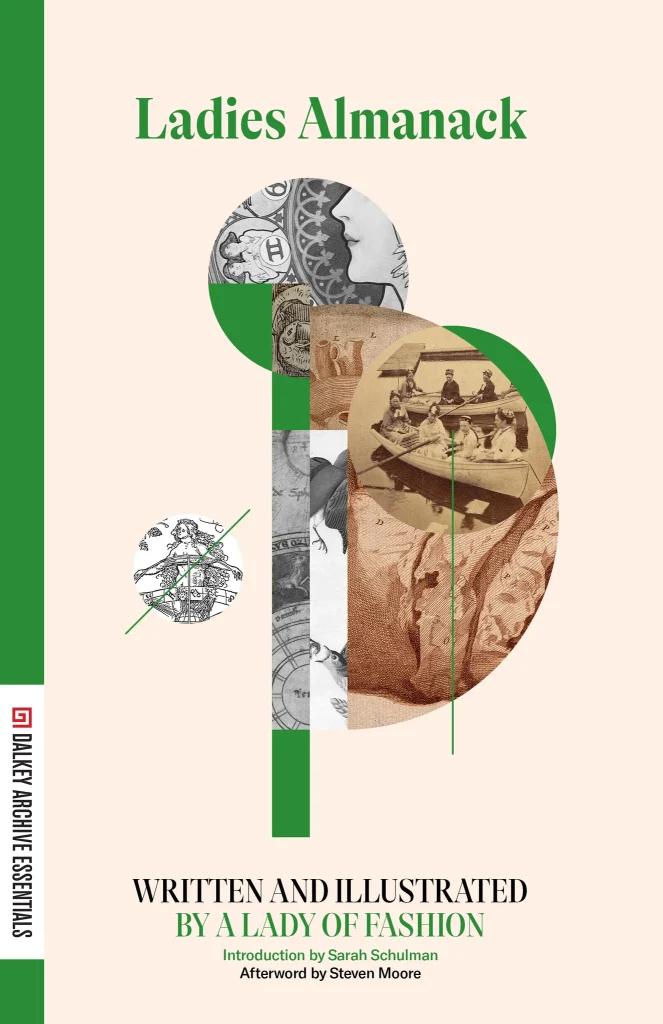
Ladies Almanack by Djuna Barnes (Feb 17)
In her introduction to this new edition of Ladies Almanack, Sarah Schulman tells us, “No one loves the lesbians as much as a lesbian in love.” The Ladies Almanack proves that lesbians have always been sly, pissed off, underpaid, but also funny and innovative. The work is a roman à clef about the vibrant lesbian expatriate community in 1920s Paris, focusing on Natalie Clifford Barney’s salon. The mock almanac celebrates and only thinly veils the real people at the heart of the work, including Thelma Wood, Djuna Barnes’s impossible, often drunk, charismatic lover (who apparently also seduced Edna St. Vincent Millay). This is all at once high queer court, social satire, love letter, and flirty literary gossip written in a pastiche of Restoration literature that asserts, “We don’t feel about men the way they feel about themselves.” Reissued by Dalkey Archive Press nearly a hundred years after it was re-written, the work now comes complete with Elizabethan-style woodcut illustrations. Shoshana Bockol at The Head & The Hand bookstore in Philly put this one at the top of her list. She says, “This is the one I’m most excited for!”
Night Night Fawn by Jordy Rosenberg (March 3)
Night Night Fawn is undoubtedly the Marxist, trans, comedic dystopia we need in 2026. Initially conceived as nonfiction, Jordy Rosenberg’s second novel subverts form to become an inherently transgressive unauthorized fictional “memoir” that reads as hysterical manifesto. Barbara Rosenberg, a character modeled loosely on Rosenberg’s own mother, is a terminally ill Jewish “yenta.” High on opioids, looking back at her origins in post-war New York—where she grew up with aspirations to be a wealthy Jew—Barbara wonders where she went wrong with her estranged trans son and her ex best friend. As Barbara takes an “unrepentant account of all her failures,” she seeks to understand how her child ended up becoming her greatest fear—queer, unrecognizable, anti-capitalist, manly. As with Rosenberg’s first book Confessions of the Fox, the prose crackles.
Whidbey by T Kira Madden (March 10)
I’ve been eagerly awaiting this title since I heard T Kira Madden read from her manuscript at the Disquiet International Literary Program in Lisbon. The book opens with Kira’s letter to the reader, explaining that this revenge story is fiction but also revealing just how much she had to live through. Whidbey, in many ways, is unfinished business for Madden, who wrote about her assailant in “Feels of Love” in the memoir Long Live the Tribe of Fatherless Girls. Her debut novel begins on a boat to an island: A woman running from the man who abused her as a child, a chance meeting with a stranger who promises to kill him—and then, days later, the murder. But in Madden’s hands, this is so much more than a noir story. The sentences are exquisite. The novel gives voice to survivors of sexual abuse and rape, claiming power not only from assailants, but from a broken justice system and the media. Madden, unflinching as ever, even drops us into the perspective of the mother of the convicted sex offender.
A Lady for All Seasons by TJ Alexander (March 10)
From the Lambda Literary Award finalist comes the sequel to A Gentleman’s Gentleman, named one of The New York Times’ 100 Best Books of 2025. It’s 1820s London, and the cunning Verbena Montrose at the heart of this queer Regency romance tricks her newly rich best friend Etienne into marrying her. This is a comedy of errors full of yearning and hijinks and genderfluid lovers. You can expect scheming, gossip, a lavender wedding, genderplay, and even a cameo by Lord Byron. Just in time to pre-order from BookWoman for Valentine’s Day, you fans of trans historical romances!
Spoiled Milk by Avery Curran (March 10)
This lesbian gothic horror set in 1928 at the “pash” Briarley School for Girls is set in the long boarding-school tradition of young people being forced to rely on no one but themselves. The rules are different, the food is terrible, the mood is always brooding. Everybody is always watching, but nobody sees the two girls kissing on the grounds. Emily Locke, who is “not good at discerning the contours of what to be afraid of” is in her final year when her best friend falls mysteriously to her death. Violet, a cunning beauty envied by students and teachers alike, is the first to die, but certainly not the last. This lesbian phantasmagoria has everything: silk gloves, sour milk, clandestine visits to mystics, potentially evil yet sexy French teachers. It brings to mind Meg Wolitzer’s Belzhar, Tana French’s The Secret Place, and even the salty teen-girl quips of Christine Schutt’s All Souls. This one was a favorite of Emerson at The Head & Hand bookstore.
Hell’s Heart by Alexis Hall (March 12)
Described by Sarah Gailey as “Moby Dick meets Treasure Planet by way of Fleabag,” Hell’s Heart is a sapphic journey through the depths of space and human desire. Earth is abandoned and its remaining inhabitants have taken to the stars, where they survive by harvesting spermaceti, a hallucinogenic fuel produced by massive whale-like creatures. Society has deteriorated into a desolate landscape of corporate accumulation and morally bankrupt religious institutions. With no other options, the narrator—called “I”—joins a voyage hunting for spermaceti, and quickly becomes infatuated with the ship’s female captain, “A.” As the hunt progresses and the captain’s delusions mount, the narrator’s grasp on reality and her sense of self is thrown into question.
My Lover, the Rabbi by Wayne Koestenbaum (March 17)
In this much anticipated novel, nearly two decades after he published his first, Wayne Koestenbaum performs for us the inexhaustible gaze of the lover. “All I ever wanted,” our speaker says of the rabbi, “was to be smothered by his nakedness, to be walled off from the world by the sheer interfering magnitude of his flesh . . . between my body and the rest of existence.” This is a gay, gay book, often told in poetic, staccato chapters, with some sentences going on for pages. One conversation about “the best dermatologist” gets interrupted by “quaint” fellatio and an allusion to Odysseus, ending many lines later in a recommendation to go to Charlottesville. Fans of Garth Greenwell will delight in Koestenbaum’s demonstration of the sublime against corporeal obsession, play, need, humiliation, grief, desire, camp, refusal to engage in any heteronormative norms.
Ruins, Child by Giada Scodellaro (April 7)
From the incomparable New Directions comes a gorgeous work of collective witness set against an urban landscape. Giada Scodellaro, whose debut Some of Them Will Carry Me was listed by The New Yorker as one of its best books in 2022, archives Black women’s experiences in this poet’s novel. Scodellaro writes, “The community is made up of predominantly black people . . . it’s a place we’ve created for ourselves, okay? Or a place we were forced into and have reimagined.” Conjuring the spirit of Gloria Naylor’s The Women of Brewster Place, Jeanette Winterson’s Written on the Body, and Virginia Woolf’s The Waves, Ruins, Child weaves folklore, botany and the body—always the body. One chapter is entitled “groin,” another, “sole of the foot.” Ruins, Child is a surrealist, cinematic telling with an eye towards the future.
Honey in the Wound by Jiyoung Han (April 7)
Set in the 20th century during the Japanese occupation of Korea, this multi-generational, historical novel follows a family of women with astonishing gifts: one who disappears and returns a tigress, one who can force a liar to speak the truth, one who can see into dreams. The work centers on Young-ja, who infuses food with her emotions, and ultimately uses that power to resist colonialism. In 1931, after Japanese soldiers crush her family’s defiance against the Empire, Young-Ja is taken by a Korean resistance fighter to Manchuria, where she joins a clandestine world of teahouse spies. Han’s writing is lush and moving, and the work is both inventive and deeply researched—sometimes reading as fable, other times as historical account or ancestral narrative. Kirkus describes this stunning debut as “a revelatory work of harrowing fiction . . . [that] validates the hidden powers of ‘powerless’ women.”
Surrender by Jennifer Acker (April 14)
Jennifer Acker’s Surrender is a tale of reinvention, baby goats, and grown up teenage love. After decades of city life, 47-year-old Lucy returns to her childhood home in rural Massachusetts to take over her father’s farm. Almost immediately, challenges arise: Lucy’s lack of experience is compounded by loss and the worsening health of her husband. Lucy finds a light at the end of the tunnel in the form of Sandy, her childhood companion-turned-more-than-a-friend, but Sandy’s presence at the farm also draws the attention of her employers, a solar energy company. Exploring grief, desire, and the second adolescence of middle age, Surrender is a must-read of 2026.
Harmless by Miranda Shulman (April 14)
Two years after the fact, Bea is still reeling from the death of her twin sister, Audrey. Where Bea is brusque, driven, and deeply lonely, Audrey was bright and extroverted, and her absence has become a ruling force. Now living in Brooklyn, Bea throws herself into an old dream she shared with Audrey: to start a dog kennel. When old friendships rekindle, desires spark, and the lingering weight of Audrey’s death threatens to sink Bea’s budding dream, she must come to terms not only with the loss, but with the secrets it has brought to the surface.
Fat Swim by Emma Copley Eisenberg (April 28)
It’s easy to see why the short story is Emma Copley Eisenberg’s first love, even as Fat Swim follows the author’s wildly successful debut novel and memoir. Eisenberg treats her characters with such tenderness, whether it’s young Alice at the pool (or grown-up Alice at camp), or Jules, the trans assistant to the famous elderly gay writer, or Mama, trying hard to migrate to her queer child’s elastic definition of love. Or, for that matter, any minor character that, in Eisenberg’s loving gaze, is celebrated in all their fulness. The collection resists the erasure of fat bodies in American letters, mostly by giving us all too rare portraits of pleasure and desire. Grace Paley is in these pages, as is summer, and ice cream, and Ray’s Birthday Bar, and refusing to be defined in binary terms.