Spain can rapidly expand renewable energy, but the study shows this is only sustainable if overall material and energy demand is reduced
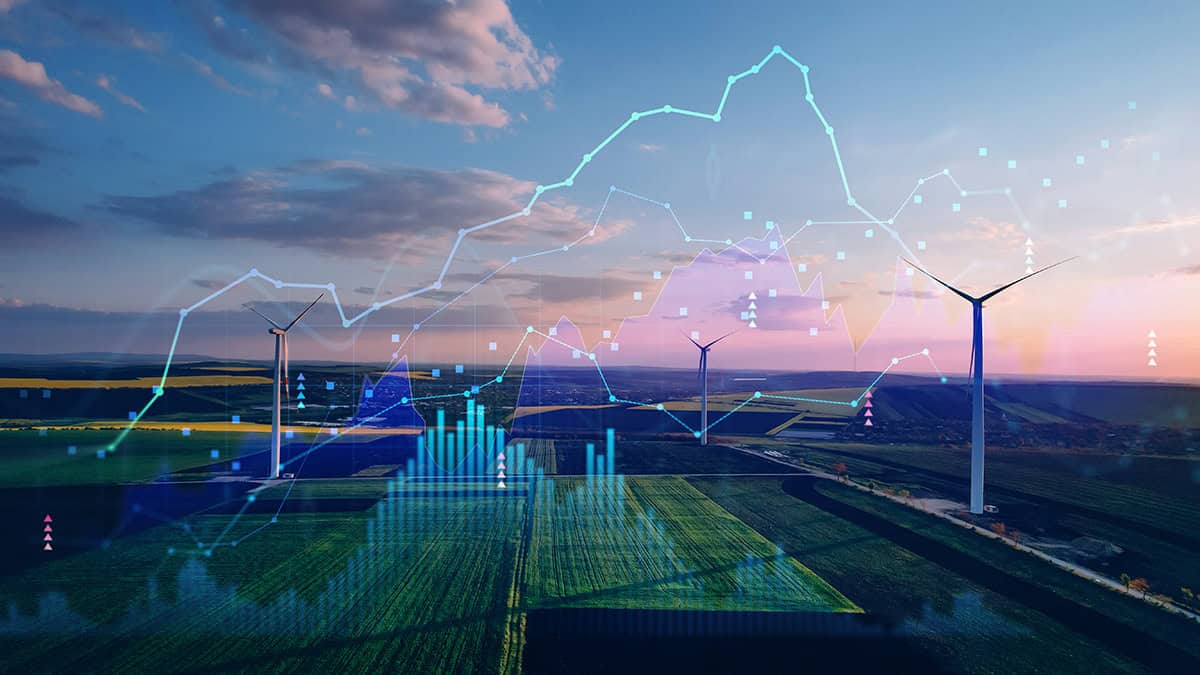
Spain’s transition to a low‑carbon economy requires expanding renewable technologies such as wind, solar, and electric vehicles. These technologies depend on specific materials, and demand for materials, such as cobalt, lithium, and nickel, already represents a significant share of Spain’s total use.
The researchers analysed how much materials Spain would need up to 2050 under different decarbonisation pathways. They enhanced the MEDEAS‑Spain model by adding sector‑specific material intensities, improving the tracking of material stocks and flows, and expanding coverage to more than forty materials, a comprehensive assessment of the material requirements of decarbonisation.
They evaluated three scenarios: Spain’s official energy and climate plan (PNIEC‑LTDS), a scenario where economic demand stops growing after 2025 (CappedEcon), and a Sufficiency scenario where consumption is reduced in a sectorally explicit manner to levels consistent with decent living standards.
While low-carbon technologies require large quantities of materials, most material demand comes from wider (unrelated to decarbonisation) economic activities. As a result, and as shown in the figure below, the PNIEC-LTDS, which features a high level of economic growth, increases the material footprint by 51% between 2025 and 2050. In contrast, the Sufficiency scenario reduces the material footprint by over 50% while reducing greenhouse gas emissions by 93%.
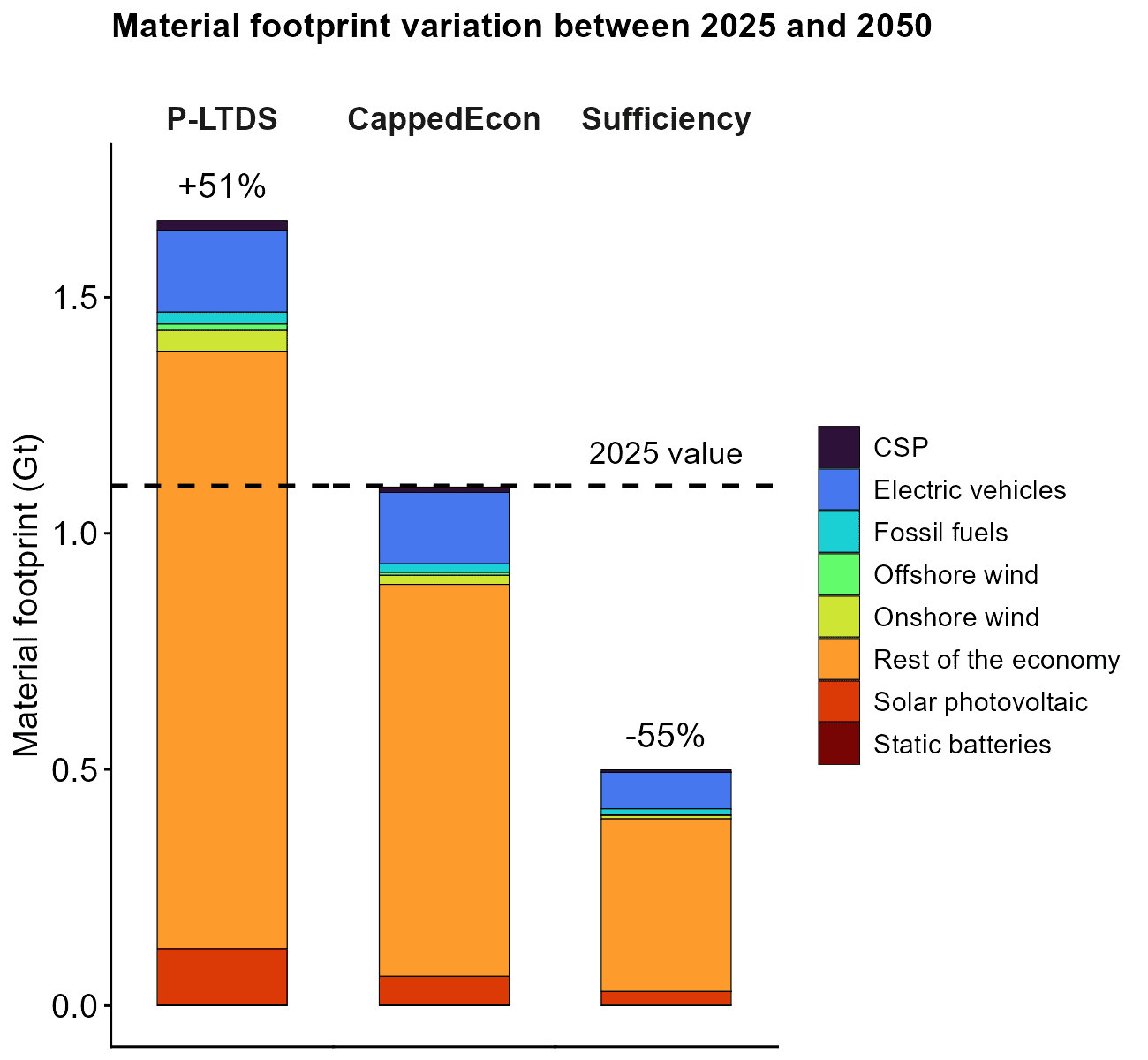
The study concludes that a rapid expansion of renewable energy is only environmentally sustainable if overall material and energy demand is reduced. Green‑growth pathways sharply increase material use, whereas sufficiency‑based post‑growth approaches enable deep decarbonisation with far lower resource pressure. Ultimately, consumption levels determine the sustainability of the transition.
Do you want to learn more about this topic?
Africa’s critical minerals can power the global low-carbon transition N S Ouedraogo and J M M Kilolo (2024)