“Inborn” by Colleen Morrissey
My daughter was born gasping. Throughout the first 14 hours of my labor, Nora was in the ideal position for birth: upside down and facing backwards, towards my spine. But as she entered the birth canal, she corkscrewed. As though she wanted one last look around the only home she’d ever known, she turned her head and slowed everything down. The doctors kept telling me “one more push” for four hours. They hadn’t meant to lie to me—Nora just kept turning, rolling, delaying. But her own stubbornness worried her too. She released her meconium, her first bowel movement, while still in the birth canal. A stress response. She aspirated the sticky, green-brown waste while being born, and so when they put her in my arms, all gray-pink and big, much bigger than I expected, she was gasping and coughing, and they had to take her away after only a few minutes to give her oxygen.
The hospital room filled with people. Dazed, I pushed out the placenta and lay there while they stitched me up, my daughter somewhere beyond the wall of doctors at my feet. My mother took photos of what I couldn’t see: Nora on a warming pad as they measured her blood oxygen level, eyes closed and brows dark, not crying, passive. They brought her back to me with a thick, ribbed tube strapped to her nostrils and told me she would need to spend some time in the NICU to receive help breathing and ensure the meconium did not lead to a lung infection. Because I had asked her to beforehand, my doula took photos throughout my labor, delivery, and aftermath. There are photos of me, naked and sobbing as I hold my newborn daughter, bombarded with my first rush of maternal terror.
In my early 20s, I became anorexic without realizing it. Because I was not a teenager skipping meals, because I was eating organic and local and homemade, because I was lifting heavy weights and doing yoga, I did not think I had a disordered relationship with my body or with food. I failed to recognize it when a depression formed beneath my breastbone or when my period stopped for a year and a half. Even when I began binging, my starved system grasping for the things I was depriving it, I considered this shameful development a product of my weakness. I didn’t keep anything binge-worthy in the house. No sweets, of course, but no bread or cheese, either. But instead I binged on apples, almonds, Wheat Chex. It was only when I started doing undeniably absurd things—microwaving a coffee mug of flour and water to binge something approximating bread—that I began to wonder if I needed help.
I was eight years into recovery when I got pregnant, a planned and wanted child with my husband, Sean. I had been in therapy since I was 25. Before getting pregnant, I talked extensively with my therapist about what it might be like to gain the baby weight, to enlarge intentionally.
Some pregnant women, when they first begin to show, gain an obvious pooch in their lower abdomen which no one could mistake for fat. These women, usually petite to begin with, look like their normal selves with a round protuberance out front, like they’ve swallowed a beach ball. That was not me. Late in my first trimester, my bulge was not obviously from pregnancy. I joked—“joked”—that I wanted to tell every stranger I passed that I was “not fat, just pregnant.”
Once my second trimester ripened and it was clear I was pregnant (not fat, not fat), for the first time I could remember, I actually, improbably, genuinely liked how my body looked. I wore bodycon dresses, which I’d previously only dared to do when underweight. I gave into cravings for Dairy Queen with minimal guilt. I received more compliments on my appearance than at any time since my anorexic period, when I was almost universally lauded for my weight loss. You see, I was supposed to be big now; I was encouraged to grow. Despite being a decade into recovery, the validation was just as potent as when I was anorexic.
I felt prepared to protect Nora from the inevitable body shame that would come for a girl in 21st century America.
Though I had many other worries about the demands of motherhood, I felt prepared to protect Nora from the inevitable body shame that would come for a girl in 21st century America, having clawed out of the cold pit of an eating disorder myself. I imagined talking to her from the earliest possible age about valuing and nurturing her body—how it is her vehicle through life, how eating is one of the beauties of existence and food is pleasure as well as fuel. I knew what I would need to say, because it was what I had needed.
Then, during a routine prenatal visit late in my second trimester, my obstetrician found my fundal height—the measurement of my stomach bulge—a little low. For the second time in my life, I was too small. I scheduled an ultrasound to check Nora’s growth, where the OB told us Nora was in the 14th percentile for size, right above the danger line. In other words, Nora was fine, “just a petite little girl.”
Despite my relief, I was shaken by what should have been an obvious possibility: Nora might not look like me. Her body might not be like mine. I was born weighing nine pounds. Throughout my childhood, I was never one of those wispy little girls, all legs and elbows. I was stocky, solid. Chubby, yes, at times. Sean was also a chubby child before puberty reworked him into a slender colt, so we both expected a doughball daughter. I was aghast at the possibility that I might not be prepared for my daughter’s body woes after all. Instead of spending a lifetime trying to be smaller, she might be one of those girls I envied, the ones who couldn’t put on weight, who wished for bigger boobs or rounder hips. It was the first rebuke of my parental projection. I tried to learn from it.
At the hospital, the attending staff told me I could nurse once I was moved out of the delivery room. Sean spent the day of Nora’s birth wheeling me to and from the NICU so I could breastfeed her. Nora latched well despite the heartbreaking nest of tubes and wires attached to her, which tangled or dislodged as I negotiated her to my breast. A little cyborg baby. Still, I loved breastfeeding. Friends of mine recounted excruciating pain, but I was never uncomfortable. It was like having a superpower. If Nora cried, I had a foolproof answer. And while I envied Sean’s ability to sleep through his off-shifts while I had to pump, I pitied him for not having this built-in pacifier, let alone this primal-spiritual ability to feed our daughter from his own flesh. Plus, with breastfeeding, the pregnancy weight would surely melt off.
I “fed on demand” as I’d been instructed by the lactation consultants. They’d even praised the amount of colostrum, the earliest milk, that I’d produced. But at her first pediatrician appointment, the doctor expressed concern over how much weight Nora had lost since birth and advised supplementing breastfeeding with formula. It seemed I was no longer producing enough, and there was no discernible explanation. Only out of the haze of the doctor’s office did I realize I may have been to blame.
By nightfall of Nora’s first day, Sean and I were nearing almost three days straight without any sleep. The prospect of waking up multiple times that night to breastfeed was crippling. We opted to feed her on donor breast milk overnight, not realizing that since I also didn’t wake up to pump, I may have signaled to my body that there was no demand, stagnating my supply.
Or maybe not. I don’t actually know. My impulse is to blame my own choices rather than entertain in this new context the lesson that recovery taught me: the willfulness of the body, its refusal of transactionality. In the weeks following Nora’s birth, I did everything short of the pharmaceutical to increase my supply. I ate brewer’s yeast and flax seed, I drank Guinness, I pumped after every feeding, as often as five times a day and at least once overnight. I never pumped more than three ounces, from both breasts combined. I envied the women in my new-mom group who gathered that much from leakage alone. With perspective, I can look back at my post-labor exhaustion and see that my choice of sleep probably didn’t doom my milk supply, which should have increased with the demand that came mere hours later, when I resumed nursing Nora. Should have. But didn’t. My body, which had formed Nora’s perfect bones and flesh and hair, decided that that was enough.
In the early days of my recovery, as I haunted eating disorder support blogs, I’d come across a sentence that settled into me like a stone in the gut: You can’t fight your body because your body will fight back until you die.
The first time Nora refused to nurse, she was just under two months old. I knew she was hungry, but when I put her to my breast, she only cried harder and turned her head away. It was baffling; Nora was far too young for a “nursing strike.” When offered a bottle instead, she guzzled down the formula like she’d been starving.
My doula, who was aiding in postpartum care, told me it’s easier to drink from a bottle—they don’t have to suck as hard, so bottle-fed babies may refuse to nurse in favor of the easier option. I worried it was my low supply. Nora was getting bigger, and I just couldn’t keep up. I tried to suppress my irrational devastation, but Nora’s refusal to nurse felt like a repudiation.
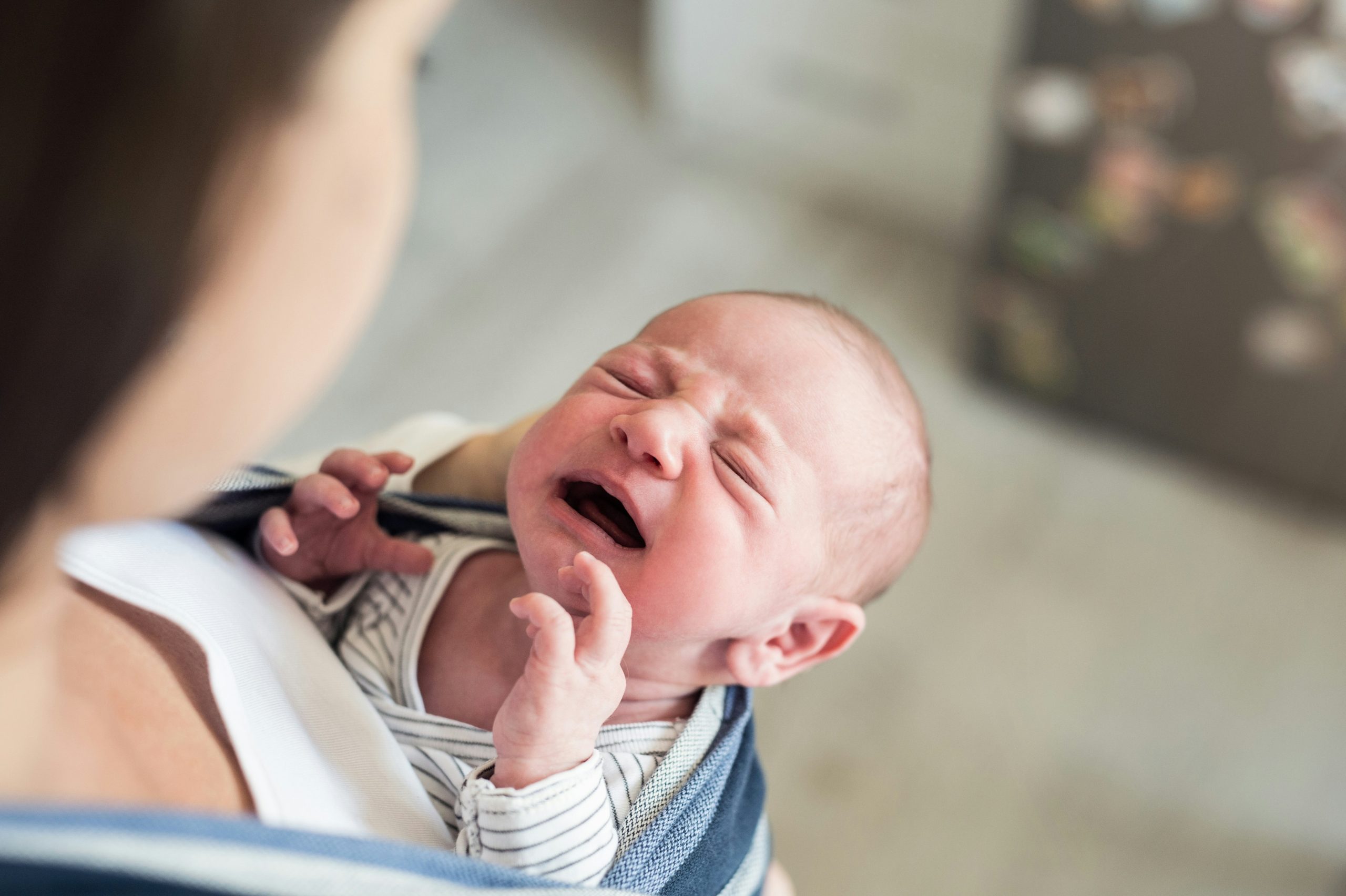
Soon after, she began to periodically refuse bottles too. We were forewarned about “the witching hour,” the tendency for colic to worsen at sundown, and indeed, as each afternoon wore on, Nora cried and cried, and when we tried to feed her, she cried harder. She seemed to fight us, her back arching, her little limbs striking out. We would swaddle her tight to calm her, and then, sometimes, she’d eat with an air of exhausted submission. We warmed the bottle. We gently rubbed the nipple—flesh and silicone—over her mouth. We tried to put the nipple in her mouth, as we’d been shown by the hospital staff. Nora cried around it. One afternoon, as I held my sleeping daughter on the rocking chair in her darkened nursery, my phone in one hand, I did what I’d done so many times these past few weeks: I researched.
Prior to this point, I had been prone to attempting to research my way out of what was, essentially, normal newborn behavior—such as quizzing my doula and combing Reddit and baby-care blogs for tips to find out why Nora’s naps were short and erratic, not recognizing newborn naps usually are short and erratic, and all I could do was endure. But this was something different. I searched baby refusing to eat and found a term I’d never heard before: feeding aversion. One of the results was an e-book by an Australian nurse, Rowena Bennett, called Your Baby’s Bottle-Feeding Aversion. I read the sample chapter and realized no other explanation fit so well: “appears hungry but refuses to eat . . . becomes tense, cries or screams when a bib is placed around her neck . . . takes a few sips or a small portion of milk and pulls away or arches back and starts to cry . . . feeds only while in a drowsy state or asleep.” That last one really got me. Nora did only feed well at night. When she woke from sleeping and I breastfed her, she displayed absolutely no tension and drank long and eagerly. According to Bennett, the root cause of Nora’s aversion was a negative association with feeding, brought on initially by something like reflux or gas and reinforced by parental pressure to eat when she wasn’t hungry. Nora fed well while drowsy because her defenses were lowered; she was too sleepy to resist.
I bought the book, and as I read on, I sank into a disorienting mix of relief at having figured it out and utter, utter shame. I had pressured my tiny baby daughter to eat. I had created an aversion to food, to eating, the most basic of human activities, the very thing I was so staunchly determined to nurture. I was ready to shield her from all the negative cultural forces that would come for her young, too young. But I never imagined this could happen before she was able to hold up her own head. Feeding my baby was one of my only jobs as a new mother, and I’d fucked it up.
Nobody told us that, at a certain point, Nora would need to be the one to choose when and how much to eat.
I manically explained all this to Sean once Nora woke from her nap. He stood, grimly changing her diaper while I laid out the evidence. I said, “I actually feel better, having figured this out.” But as we reeled with understanding, we also grew angry. Feed on demand, we were told, and newborns demand a lot. Feed before naptime to prolong the nap. Feed every three hours, even if the baby is not cuing hunger or is sleeping. Place the nipple into her mouth. A lactation consultant all but shoved my breast into Nora’s face. “Is that too rough?” I asked. “No, she needs help finding it,” the consultant said. Nora’s previous tendency to calm as soon as I put her to my breast was smiled over at my new-mother’s group, agreed to be a universal panacea. Nobody told us that, at a certain point, Nora would need to be the one to choose when and how much to eat.
Treatment for a feeding aversion is painfully simple: When the baby refuses to eat, take the bottle away. All the things Sean and I had been advised to do before, we were to stop doing. Instead, when Nora exhibited hunger cues, we were to show her the bottle or breast. If she opened her mouth, we could place the nipple inside. But if she cried, turned her head, or arched her back, we were to remove the bottle or breast from her sight and wait at least half an hour before offering it again. If she refused a second time, we were to wait until the next feeding. Even if she cried, even if she exhibited all her hunger cues, if she refused to eat, we were to remove all pressure. Eventually, the infant will see that the negative association she’s formed with feeding—the parental pressure—is not being applied, and she will eat voluntarily.
One of the core tenets of eating disorder recovery is to get reconnected with the body’s “natural” hunger and satiety cues. Every therapist, every therapy group, every recovery-oriented book will at one point argue that we are born with the ability to know how much and how often to eat, along with what to eat. Then outside factors—a parent, a sibling, peers, pop culture, addictive processed food—begin to interfere with those biological signals. Many people with eating disorders lose touch with these cues to such a degree that they no longer feel them. When I was in the thick of my anorexia, I temporarily lost the sensation of hunger. Food knotted my stomach. I wasn’t otherwise sick, and the campus health center doctor didn’t see anything wrong with me. I didn’t realize at this point that I was anorexic, so I was disturbed by this strange vanishing of appetite. Though I’d severely restricted my diet, I still relished the foods I did allow myself. I had developed a Sunday-dinner ritual of making a large bowl of oatmeal with chunks of peach and strawberry (before I banished fruit for having too much sugar, then carbs for being carbs). The combination gave me an intense pleasure that I now chalk up to the extreme constraints I’d imposed on my palate. Losing my appetite for my limited safe foods shook me.
My satiety cues, on the other hand, were long since dampened. As many of us were, I was raised on the “you must eat X bites of your vegetables before you get dessert” model. Dessert foods, then, were placed into a covetous, rarefied category, enshrining them as high-value and making any consumption of cookies or ice cream before dinner feel thrillingly naughty. It’s not our parents’ faults. This thinking saturates American culture—this sense that, if given free reign, children will eat nothing but sweets all day and wither from nutrient deficiency. Their eating habits must therefore be regulated by adults. In childhood, we learn to calculate the social risks/benefits to eating certain foods (parental disapproval, peer judgment, etc.) at certain times (no desserts before dinner) and in certain quantities (clean your plate), with taste and degree of hunger as second-tier concerns. I had a brownie with lunch so I should just have a salad for dinner. We learn to distrust our bodies.
Regaining that trust is an essential part of eating disorder recovery. I had to shift my conception of my body from a bad child who must be controlled to a partner, or, as Mary Oliver put it, a soft animal to care for. The orthodoxy of recovery would argue that, in its pure state, our bodies want fruits, vegetables, and lean proteins because we are wired to crave what we need. But the bloated processed food industry has made billions counting on the opposite: our craving for sugar, fat, salt. Once the body gets rewired by whatever—social pressure, junk food, starvation—can it ever be trusted again? As a child, I sought opportunities to eat high-value foods in secret, where I wouldn’t be judged. I scarfed Gushers and Hot Pockets in the unsupervised hours after school. Somewhere along the way, merely eating unwatched and unjudged became enticing, no matter the food. I would binge baby carrots, not knowing why.
A NICU stay and “anxious parents” are two high-risk factors for the development of a feeding aversion in an infant. Nora was only in the NICU for three days. “Only” is a traitorous word. It was hell. I can’t bring myself to call us “lucky,” but at least we got to hold her, to feed her, albeit tangled in the webbing of wires and tubes. But the first time I saw my daughter after they took her away post-birth, she was under glass, mouth agape, nostrils intubated, and I sobbed all the way back to my recovery room, Sean pushing me in my wheelchair. Later, when recounting this to a friend, he referred to it as “trauma,” and I realized with blank surprise that, yes, that’s what it was.
The stoic Midwesterner in me urges me to qualify the statement—we saw so many parents who’d been in the NICU for weeks, who had it so much worse—but Sean and I were traumatized by our first and only child experiencing danger and precarity from the first moments of her life, and this, no doubt, made us more anxious than we would have otherwise been for her to eat, to grow, to thrive. It made us more insistent. It made us want control.
Somewhere along the way, merely eating unwatched and unjudged became enticing, no matter the food.
A cliché regarding the origin of mental disorders is that “environment pulls the trigger, but genetics loads the gun.” I don’t know of any blood relatives who had an eating disorder, but the reverberations of the Great Depression still ripple through my family, making us abhor waste, cherish possessions, and value self-denial. When the terms “ancestral trauma” and “scarcity mindset” entered my lexicon, suddenly the orderly hoarding of my grandmother and great-grandmother made sense. The Depression generation initiated the “clean your plate” rule because there weren’t just children starving in another part of the world—there were children starving here. If you were lucky enough to get your hands on something sweet that couldn’t be saved for later, you devoured it all, right then, because scarce opportunities must be seized. These were our great-grandparents, our grandparents, the ones who raised the ones who raised us. I’ve often wondered if the real scarcity they experienced mixes with the bone-deep deprivation-based genetics of our hunter-gatherer ancestors, sieving through the Anglo-American, Protestant work ethic and turning us into an unbearable contradiction: gluttonous ascetics, Puritan sugar fiends.
In the weeks before I made the call to a mental health center on the suspicion I might need professional help, my deprived body and brain pushed the pendulum the other way. I was binging almost daily on pasta, chocolates, ice cream, French fries, donuts. After entering recovery, my therapist instructed me to make a “reverse map” to trace and identify the actions and emotions that led to a binge so, ideally, I could subvert it next time. My risk factors included being at home, being alone, and feeling a need to relinquish my tightly-held self-image of competence and control, to let go.
At first, the idea of a newborn being emotionally susceptible to any kind of pressure seemed absurd. It sounded new-agey, eye-rollingly hippie-ish to say that my little baby, who sometimes couldn’t even locate my nipple while I was placing it into her mouth, could be put in charge of her own eating. While anticipating parenthood, I’d formed staunch ideas about enforcing future boundaries. I was one of those non-parents determined not to make a separate dinner of hot dogs and mac and cheese for my child.
Now, to treat her feeding aversion, I was supposed to defer to my newborn’s desires. But I was desperate and depressed. Pushed beyond the normal baby blues, my propensity toward anxiety compounded into a miserable fragility. I didn’t want to take Nora outside for fear of some calamity. Though chronically sleep-deprived, I couldn’t rest. Our house was littered with barely-drunk bottles of formula. I cried many times a day, more than I did when Nora was first born. I remember saying dully to Sean, “I’m not happy,” and registering that I was frightening him but being unable to conjure reassurance for my unfailingly compassionate husband, unable to support him as he was supporting me. We had to do something. If we followed the program, eventually the baby was supposed to learn that she will not be pressured to eat if she refuses. She will regain trust in her parents, and she will eat.
If I accepted this argument, I had to accept that by trying to control her eating, I had broken trust with my child who wasn’t yet three months old—that a newborn was capable of trust. That she had full, autonomous personhood even as she relied on me for everything. I, in turn, had to trust that Nora knew when and how much to eat, even at this minuscule age, even if it was less than I thought she did. When I brought Nora to her pediatrician to ensure there was no physical reason for her feeding aversion, the doctor assured me there was nothing wrong with Nora and to “follow her lead. She’s not going to starve herself.”
Once, years before Nora was born, my therapist asked me, “Colleen, do you trust that things are going to be okay?”
I thought about it, and I said, “No.”
It got worse before it got better. If Nora gave any negative reaction to being fed, we removed the bottle or breast, even if I knew she was hungry. Her conflicted behavior increased: She would eagerly suck for a few seconds, then pull off with an agitated cry.
It felt cruel. It was agonizing to hear Nora cry, to know I could alleviate her hunger, yet not to feed her because she had, in essence, said, No. The first day, Sean found me weeping in the nursery with our weeping baby in my arms. We’d planned to have two kids, but as Sean took Nora from me, I said, “I don’t think I can do this again.”
Before Nora was born, therapists suggested antidepressants to me, and I always demurred. I had nothing against them in theory. In fact, in considering myself a mental health advocate after defeating my eating disorder, I was vehemently anti-stigma. But I’d never felt I really needed them. The first six months or so of E.D. recovery were the lowest of my life to that point, yet they were also buoyed by profound flashes of hope. I was fighting an enemy I’d finally unmasked. I was allowing myself to feel all the emotions I didn’t realize I’d been repressing. It was like being a teenager again, with all the exhilarating highs as well as the deep lows, which themselves had a kind of sweetness because they felt like progress. Since then, I’d learned that eating disorders are actually anxiety disorders, and when I had amassed enough tools to close off one avenue, my anxiety found others. My heart began inexplicably racing, and I would be overwhelmed at random with a profound sense of wrongness. When my psychiatrist asked if I’d ever considered an SSRI, I told her I didn’t want to make a semi-permanent solution to a temporary problem.
In the throes of Nora’s feeding aversion, I went on an antidepressant for the first time. I didn’t have the time or the stamina to rely only on the painstaking work of talk therapy to conquer this specific iteration of my demon. I needed to get better now, for my daughter’s sake and mine. Fortunately, because my primary care physician is also my daughter’s pediatrician, she knew exactly how miserable I’d been and validated my suspicion that I was suffering from postpartum anxiety. She gave me a prescription for a low dose of sertraline to be filled the very day I asked for it. I was told it could take several weeks to kick in, but I began to feel better almost immediately. I’d worried that I wouldn’t feel like myself, that my emotions would be dampened—at the time, my emotions were so distressing that I was okay with that—but the medication made me feel more like myself than I had in months. I felt better.
And Nora began to get better too. After the miserable early days of the non-pressure method, Nora’s aversive behaviors mildened. Soon, she began to eat more, and her pattern began to regularize as she could go longer between feedings. Her mood markedly improved, and so did her colic. I was still anxious, reluctant to allow anyone else to feed her for fear they’d pressure her and trigger a regression. I would hover when my parents, my in-laws, and even my own husband fed her, monitoring and issuing meticulous instructions. I was afraid that if we didn’t do the program perfectly, if we accidentally pressured Nora or misjudged her cues, we’d ruin the whole thing and be careened back into the terrible times. But along with the medication, I resumed therapy and continued to work through my anxious instincts. There were setbacks caused by travel, teething, sleep interruptions, but Sean and I had already seen how effective the program was, and we stuck with it. It required of us no further products, trainings, or consultations. No acceptance of elaborate parenting philosophies. Just trust.
By the time Nora reached her sixth month, there were no traces of her feeding aversion.
My sense of normalcy returned when Nora began to sleep through the night. Only then, when I too was getting more than three interrupted hours of sleep per night, did I feel like I could write. One unseasonably temperate Sunday afternoon in February, I sat on the porch to make my first diary entry since the early days of Nora’s life. In recounting the feeding aversion saga, along with a muted reliving of the suffering of those days, a new emotion surfaced: pride.
“We figured this out,” I said to Sean, who was sitting with me in the breeze while Nora napped, “and we fixed it.”
While it was trusting Nora’s body that made the final difference, I can’t deny that it was my disorder-born knowledge that gave me the awareness and tools to locate the problem and address it. After I’d been in recovery long enough to fully reject my eating disorder’s unhealthy premises, I said to my therapy group that it felt like waking up from the Matrix while everyone else was still plugged in. Like Neo in the film, I’d been given the gift and curse of wising up to a malevolent, omnipresent force and suddenly thrown into a fight against its overwhelming strength. I began to see that U.S. food culture is founded on several disordered tenets which even the non-disordered perpetuate, believe, and practice. People talk of “burning off” sweets or fats as if exercise were penance for a sin. They banish entire food groups from their diets or practice “intermittent fasting.” How can you win when everyone around you serves the enemy?
I thought this cursed knowledge forearmed me to raise a daughter behind enemy lines, but it rendered us both vulnerable in a way I’d never anticipated. Yet if I had not already known of these weaknesses and dangers, how much longer would it have taken me to recognize them in this new form? How much more would I have stumbled while my daughter cried? I can never unlearn the fact that shrimp is the lowest-calorie animal protein and that a short sprint will burn more fat than a long jog. I can never turn off the alarm that chimes in my head when someone refers to eating as “being bad.” I will bring all this with me to the dinner table every time I sit with my family to eat. What knowledge hurts and what knowledge helps on any given day will always be in flux.
When we introduced solids to Nora, I took great comfort in her eager embrace of all kinds of foods. For a while, peas were among her favorites. Her daycare teachers told us that she was the “best eater” in the infant room. Now she is a bona fide toddler, and she has begun refusing fruits and vegetables, always preferring meats, carbs, and fats. Her first food word was “cheese.” She chugs her whole milk, scarfs a fistful of shredded cheddar, and before she’s even swallowed, asks, “More?” Yet some days she wants almost nothing, taking a few bites and then vigorously shaking her head when Sean and I offer her favorites. This is, of course, an almost universal toddler-parent problem, and our painful experience reins us in from counterproductive displays of disapproval or enforced “X number of bites” rules, but we can’t help ourselves—when she won’t even taste the generously buttered broccoli, when she says “all done” after two minutes, we still ask, Are you sure?