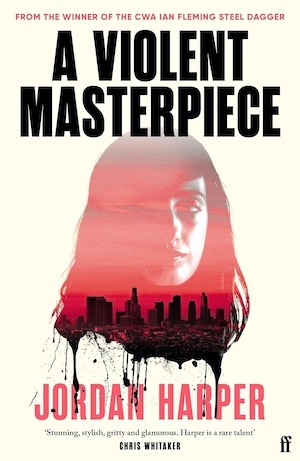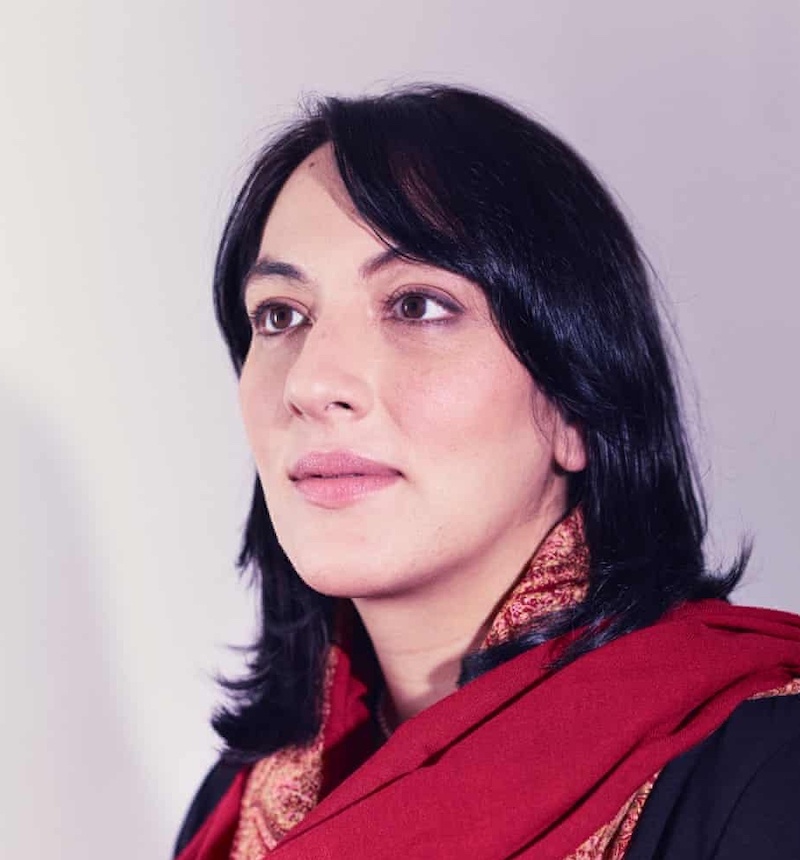
Julie Buntin and I first met when Electric Literature shared an office with Catapult in the mid-2010s. She was a book editor and the director of Catapult’s beloved educational program; I had recently become Electric Literature’s Executive Director. I was an aspiring writer with a few short stories; Julie was about to publish her debut novel, Marlena, to critical and commercial acclaim. We hit it off as two hard-working, mostly type-A people with the same cynical sense of humor that protects over-eager emotions, and began trading work after we both left the city. Julie to Ann Arbor where she was teaching at the University of Michigan and writing her sophomore novel, Famous Men; me to upstate New York where I was working on my debut novel, Slush, which will be published next summer. Julie is my most trusted reader. I have long felt like I can say anything to her; that nothing is too strange, or dark, or vulnerable, or naïve. If I am working out a difficult opinion, she can help me articulate it. What better qualities to have in a writing partner?
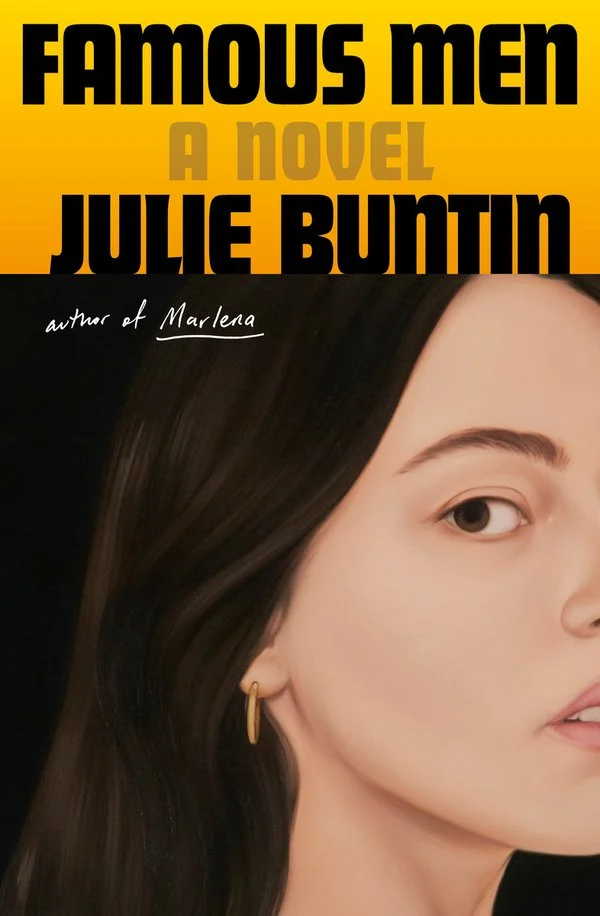
Famous Men tells the story of Wilhelmina Miles, known as Will, an aspiring poet from the small town of Greening, Michigan. She has long harbored the fantasy that her town’s one success story, the decorated writer Nathanial Fellow, is her father. When she moves to New York and tracks him down at the MFA program where he teaches, that fantasy deforms into a relationship, one that is financial, professional, sexual, and even a little familial.
Famous Men is an entertaining, rich, discomfiting novel that rejects black and white answers to complex questions in favor of subjectivity as its foundational stance. Consent is not a matter of “yes” or “no,” culpability is not an easy verdict, and power is multi-directional.
Reading early drafts of Famous Men, I was struck by how they never quite felt like drafts. Scenes were cut, plot points changed, etc., but the world of the novel and the ideas behind it always felt fully formed. Julie has a charismatic prose style that is flowing yet precise, with a clarity of insight that seems casual but is most certainly hard won. When the galley finally arrived, I thought I would dip in and out to gather questions for this interview. But I couldn’t resist reading straight through for a third time; the novel is that compelling and rewarding.
Julie and I spoke over video call, with some follow-up over email. I found myself surprisingly nervous to ask her “serious questions” on the record, after so many casual, private conversations. Initial giggling aside, we settled in, and I was grateful to be able to engage with her not as my friend, but as the author of one of my favorite books of this decade.
Halimah Marcus: Will, long before she ever meets Nathaniel, reads his work at the library. And because they’re from the same small town, it sparks her imagination about what she could be someday. Who were the writers that did that for you when you were that age?
Julie Buntin: I grew up in Hemingway country. I grew up in the Petoskey area of Northern Michigan where the Nick Adams stories on Walloon Lake are set. Hemingway lived in a lot of places, but there’s a lot of regional Hemingway pride where I’m from in a way I took for granted as a young person—that a small town like that might celebrate their literary grandfather out of pride. My husband’s family is from Lorain, Ohio, where Toni Morrison is from, and he went looking for her house once. There was nothing that said Toni Morrison lived there.
Hemingway was a writer I liked and read at a young age because we had his books in our house, The Sun Also Rises, For Whom the Bell Tolls, obviously the stories. I wasn’t necessarily thinking, I want to write like this, but I did have this idea of certain writers as having this cultural impact. I also read a ton of Stephen King, like so much Stephen King.
HM: Will internalizes a lot of lessons from being so obsessed with Nathaniel’s work. There’s this great passage about all the women in Nathaniel’s fiction, and the limits of who they could be and the archetypes they represent. Did you internalize any lessons like that from your reading as a young person?
JB: With this book, I wrestled a lot with questions I still sit with. I remember reading Herzog by Saul Bellow as a teenager and thinking: This is genius. The high/low voice; it’s so funny. How does he do this? This is everything I could ever want to do as a writer. And then having a similar reaction to the Rabbit, Run novels by John Updike, loving them without any ability at that age to question the complicated portrayals of women, which are sometimes really reductive.
In this book, I was thinking a lot about what happens if part of your formative artistic development involves taking in influences that don’t always make space for your full subjectivity as a person. What happens if those are the models you put ahead of everything else? If the first character you identify with in serious literature is like, a middle-aged man? I was thinking about not only how that would affect you as a writer, but how it would affect your sense of what kind of woman you wanted to be or could be.
We’re so permeable to influence when we’re children and adolescents, especially. I see this with my son, who is five—he reads something and suddenly he’s repeating phrases from it, acting like the characters. That’s something I’m endlessly interested in, so that was floating around in my head for sure: How might there be bleeding between what Will reads and what she thinks? How she presents herself to Nathaniel, how she understands how he might see her—all of that is a creation of her imagination, but also created by the texts of his that she’s read.
HM: Later in the book, Will asks Vilma, Nathaniel’s ex and a writer with acclaim and success, if Vilma was ever afraid that her stories weren’t important or literary enough because they were about all the things women thought and felt. I love this moment, because it’s in a book about everything a woman thought and felt. Did you ever have the feeling that this book isn’t important because it is about a woman?
JB: I had that feeling a lot when I was writing my first book [Marlena]. When I started writing it in my MFA, I remember getting a lot of feedback that boiled down to things like, why do we care about what teenage girls are doing? There were obviously other problems with the early drafts, but there was often a question of, is this YA? YA is wonderful—I would love to write it sometime—but that question wasn’t a question. It was a way of saying that the material doesn’t feel high stakes because of what it’s about.
For example, I remember learning about Who Will Run the Frog Hospital [by Lorrie Moore] in grad school, and it being presented as a kind of failed novel, where the girlhood sections were dragging down this more interesting potent story of an adult relationship, and thinking, when I finally read it, girlhood is the point of this book.
HM: One of the culminations of Famous Men happens during the height of the #MeToo movement, when the Harvey Weinstein news is breaking. At the time, pretty much immediately, people started talking about #MeToo novels, even applying the term to novels that were written before—novels that embodied the values of the #MeToo movement, in terms of believing women or the value of consent and autonomy, novels that were expressing often painful stories of sexual violence and abuses of power.
Famous Men engages deeply with those themes. But reading that part of the book, I thought about how this novel is a document of #MeToo and everything that led up to it, even more than a “#MeToo novel.” Because it all started 10 years ago, which makes it practically historical fiction. What’s your relationship with that term today? How do you feel it’s changed over time: in the last 10 years, and while writing this novel?
JB: This book took me many years to write. I started it in the summer of 2019, which I remember as a moment of almost hopefulness. There was some sense of a public reckoning having happened, and of justice or change that was going to be lasting and positive. Maybe I’m just too optimistic in general, but I was like, okay, this is hard but what will come out of it is a slightly better world.
When I started writing in my MFA, I remember getting a lot of feedback that boiled down to, why do we care about what teenage girls are doing?
I finished the book last year. And now we’re in a time when there are even scarier questions to ask: Was any progress real? Has the backlash to #MeToo actually undone the positive things about #MeToo? What was that? Was #MeToo just another version of something that’s happened over and over, and now we’re in a more regressive place? I had children during that time. My son was born in 2021, when I was still kind of hoping for some sort of brighter future. My daughter was born in 2024, and I fear she’ll have less rights and protections than I have.
When #MeToo happened, there was a sense that what was publicly condoned three months ago is no longer okay. Of a real turning point. And I thought, what would it be like to tell this story from the perspective of a character who can’t inhabit that shift because of various things that are happening in her life?
HM: Because she feels implicated.
JB: She feels implicated and she feels stuck. She’s implicated because of the choices she’s made. She’s implicated because of her relationship with this person [Nathaniel], which is financial. She’s financially dependent on him, but she also loves him. I say love, not even in a sexual or romantic way; it’s almost like a friendship by the end of the book.
HM: I love how Will and Nathaniel’s first encounters, at a reading she attends and then in his office, set up the dynamics of their future relationship. She acts in surprising ways. He probably acts more predictably, in terms of what we might expect a guy like that to do. At the reading, he’s goes to help her carry chairs, and he touches her leg. She thinks it’s the wrong kind of first touch. In their second meeting, she’s at his office and drops a book, and when she goes to pick it up, she pushes it further under the table, and then ties his shoe. The moment is so surprising to everyone involved, including the reader.
JB: Including her.
HM: The gesture is at once submissive in kind of a sexual way, and also infantilizing to him. The way I read it, when he touches her leg, she’s learning what he expects from her. And then when she ties his shoe, she’s delivering on what he expects. She’s one step ahead. Where does that kind of intuition come from?
JB: It’s every story she’s internalized and read. She knows Nathaniel’s work really well. She knows the kind of move he might respond to. And when she has that moment with him at the reading, she realizes something about what character she would be to him. Once she knows what character she would be to him, she understands how to get his attention. She’s a character who kind of wants his attention no matter what, even after she realizes that he’s not the person that she thought he was. She has come there for him, or because of a vision of life that his work offered her. It’s parasocial. It’s a fantasy. But once she’s there, she is intoxicated by this world that she sees at this reading. Moving to New York alone at a young age can make anybody kind of bananas. She doesn’t have anyone. She doesn’t have any friends. She’s on her own.
So the step that is crucial to that moment is knowing his work as well as she does, and having this instinct about what Nathaniel might respond to. This is a way of getting at some of these questions about the male gaze and how the pressure of it over the course of a lifetime can make you act in ways that feel as if they are not coming from your true, essential self. Or that you’re being steered by something outside of you, which is an experience I certainly felt as a young woman. Who am I doing this for? What norm am I trying to satisfy with this? Who am I trying to satisfy?
HM: From the first chapter, Will breaks one of Nathaniel’s rules, which is: If you need the past to tell a story, you’re telling the wrong story. The book begins in her small town of Greening and deals a lot with the way she experiences the male gaze. She gets negative attention from the boys in her school because she has big boobs, and she feels like her mother’s boyfriend is always watching her. I wonder if there’s actually something feminist about including the past in this way.
I’m interested in passivity in fiction, and passivity in women.
JB: I hope that that is how it’s read. You might get through this whole book and be like, Will makes bad decisions, she’s an imperfect character in all of these ways, she doesn’t learn anything, and she doesn’t grow. She compromises left and right; what kind of vision of feminism is this? Is this feminist? You could absolutely have that reaction. The way Will tells her story, and the choices she makes about when to break the rules she has been taught are givens, is an act of agency. A declaration of, “I no longer adhere to this narrative that trapped me for so long” and “I will not tell it the way he would teach me to.” A lot of those choices were happening on a structural level, like when and where to start the story, or to cut.
HM: Some readers might be frustrated with Will for her perceived passivity. There’s so much that happens with Nathaniel that she feels is a foregone conclusion, probably because she’s anticipating his expectations. She’s dictating her own fate while also feeling like it’s pre-written. How is that a strength for her and how is it a liability?
JB: We all have these things as writers that creep in, book to book or project to project. I’m interested in passivity in fiction, and passivity in women. One true thing about how I have experienced the world that I’ve not always been able to find in literature is: What does it mean to be socialized in every way to make things easier for other people, to be helpful, to be accommodating of everyone at the expense of yourself, to not cause a ruckus? I was raised in that mold, and so much of my experience of coming of age has been about dealing with those impulses in myself in every context and trying to figure out when they serve me and when they don’t.
Will is incredibly self-determined and she’s not passive at all until she gets stuck in a system where the power is so out of whack that she can’t get it back. She gets in over her head when she’s really young and then she’s swept up in this wave and she’s really stuck. There’s this feeling of time running away from her and “how did I get here?” and “this thing has its own velocity and I’m trapped in it,” which was a way of writing about passivity, and trying to write realistically about those times where you have more self-awareness about what’s going on then you have ability to change it.
HM: Or the will to change it.
JB: I was interested in there being a kind of weird aggressive agency in not acknowledging the truth, in lying to yourself a lot and really hard, and in the ways that you have to lie to yourself if you are opting into certain kinds of relationships that harm yourself or others. A certain amount of self-deception becomes a matter of course, in those contexts.
HM: The violence in Famous Men is very grayed or obscured or sometimes blacked-out, forgotten or confusing to the person who experienced it. The violence in the book that Will writes, the novel within the novel, is very literalized.
JB: That was a really deliberate, conscious choice. You’re not always awake to this in the drafting of a book, but it became more evident to me as I wrote. Especially after I had a first draft. [I wanted to explore] the kinds of violence that are in some way muffled, that might be especially hard for a young woman to define. I have a very clear interpretation of the things that happen to Will as a girl, and where they fall on the violation scale. But Will doesn’t, because of the ways that she’s been raised and the context in which these things happened, and the failure of certain frameworks to protect her, even within her own family.
I was thinking there about what we demand of a victim, or what we need women’s stories to look like in order to feel satisfied that they truly have experienced harm.
Nathaniel gives Will the advice to write something from her life that she can’t stop thinking about. But when she does that, fictionalizing this murky experience she had as a teenager, he tells her to escalate it. I was thinking there about what we demand of a victim, or what we need women’s stories to look like in order to feel satisfied that they truly have experienced harm. We want to know what exactly happened. We need them to look a certain way. I remember taking a cab home from the airport around the time of the Kavanaugh hearings, and the driver brought it up and kept asking, “But how did she get to the second floor?” It was awful.
And why is that? What is unsatisfying about the mess and the confusion and the murk and the ways that all of those things can have years of fallout, and complicated intersections with other kinds of harm that happen later?
HM: Nathaniel reads every draft of Will’s book, he gives her notes, he pushes her towards a bigger plot, essentially leading Will away from herself. But she calls him a good teacher, directly and in various ways throughout. In your opinion, is Nathaniel a good teacher?
JB: I think he is in some ways. You can’t spend six years writing a character and not develop some sympathy. I was inhabiting Will’s point of view, but I have a sense of him outside of that point of view too. I see him as a teacher who is not in his prime anymore. He’s tired, he’s teaching the same shit he’s always taught, he’s not doing anything new in class, he’s regurgitating old lessons. But even his autopilot has moments of profundity that a young writer might be able to latch onto in a way that would be instructive or useful. I do think of him as someone who is interested in his students for personal reasons, but he’s also interested in in their work; at least when it aligns with his taste. That’s the complicated thing about these charismatic teacher figures; sometimes good teachers are good teachers for certain students or for certain kinds of work, or they are good teacher for a minute and then terrible after that, or the longing for their approval outshines any other aspect of what you may or may not learn from them.
HM: As a fiction writer, why did you make the characters poets first?
JB: There’s something really pure and beautiful to me about poetry. The stakes are incredibly high on a human scale and incredibly low in other ways. There was something about that scale that was really interesting.
Poetry was the first art form I really loved, which is probably in part what this book is talking to. Louise Glück, Elizabeth Bishop, specifically that Elizabeth Bishop poem “In the Waiting Room,” where she has that line where she’s like, why should I be myself? [“Why should I be my aunt, or me, or anyone?”] I remember reading that as a teenager and thinking, this is the ultimate question that one could spend all of life pursuing.