Literature from India’s Northeast is an under discussed literary body from a highly contested and racialized region in India. It is widely considered different from Indian Writing in English (IWE) since it comes from a unique region in South Asia that has traditionally been politically, culturally, and racially otherized from the Indian mainland. Northeast Indian Literature is often misunderstood or incorrectly described as a “newly emerging body of writing.” It is also termed “conflict literature,” because many of the books have depicted the long standing anti-India, independentist insurgency movements that have ravaged the region. In actuality, literary works from Northeast India not only inaugurate a new literary tradition, but complicate and interrogate the idea of India itself, presenting a never-before-seen image that goes against the conventional, commercial, and easily consumable version that is usually depicted.
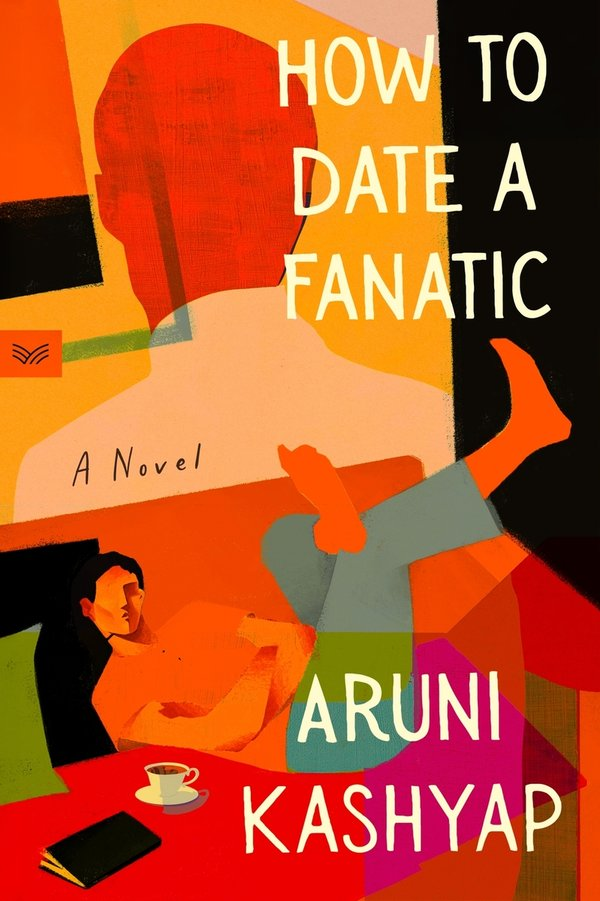
I am a writer from Assam. While writing How to Date a Fanatic, I borrowed deeply not only from the Assamese literary print tradition, but also from the oral traditions of Assam’s many indigenous communities. I am also indebted to a large number of anglophone literary works from this region, which made it possible for me to write today. My novel highlights the consequences of a failed neoliberal state that has created a violently divisive society by politicizing religion. These works introduced me to an exciting literary space, one that speaks in many languages and draws from both contemporary political history and ancient storytelling traditions. When Indian Writing in English failed us—just as the Indian state failed us—these works succeeded in capturing something true.
These Hills Called Home by Temsula Ao
Set in the state of Nagaland, far from New Delhi, Mumbai, and Kolkata—the centers of IWE—this collection of stories chronicles the Naga people’s survival instincts in the face of brutal state repression. Those familiar with Native Nations literature will recognize the haunting depictions of collective punishment: security forces burning entire villages, army raids to quell the armed insurgency and the Naga people’s demands for self-determination, forced migrations, and consequent deaths (reminiscent of the Trail of Tears). What emerges is a cast of characters who navigate this devastation with wit, humor, and courage. Written in a style and tone that Gabriel García Márquez has called “the way my grandmother used to tell stories,” the narrative patterns mirror age-old folk tales while speaking about the horrors of the modern state. Like Indigenous writers across the world, Temsula Ao writes to archive Indigenous lives and history, to pass on to the next generation.
An Outline of the Republic by Siddhartha Deb
Amrit, a Calcutta-based journalist is sent by his editor to investigate a story in Northeast India. Published in India and the UK as Surface in 2005, this novel helped shape the canon of Northeast Indian literature. Inspired by Joseph Conrad’s Heart of Darkness, the book critiques how Mainland Indian journalists arrive in this turbulent region only to project their anxieties and biases onto the people who live there. The brooding, visual prose doesn’t specify the locations the journalist visits, underscoring how, even now, people who lack the lived experience of this region end up writing contextless stories, further perpetuating the agenda of the racist Indian state apparatus and dehumanizing the people of Northeast India.
Shadow Men by Bijoya Sawian
In this short novel that you can finish reading in one sitting, a woman travels to Meghalaya after many years to meet her childhood friend. She is nursing her own grief after her parents are violently murdered in Delhi. In Shillong, she witnesses something that further destabilizes her, drawing up the trauma from her past experiences with crime. In Meghalaya, the ethnic tensions between the tribes in the state, the pushback against “Mainland Indians,” the prejudices toward outsiders and non-Indigenous peoples, and the challenges to a smoothly functioning matrilineal society are now facing pressures from modern-day patriarchy. She understands some of these problems while misunderstanding others, and through these interactions, a palpable sense of unease emerges, creating an undercurrent of insecurity that packs the text with tension. The book also contains two other short stories that cover similar themes, exploring the tribal vs non-tribal tensions in Meghalaya.
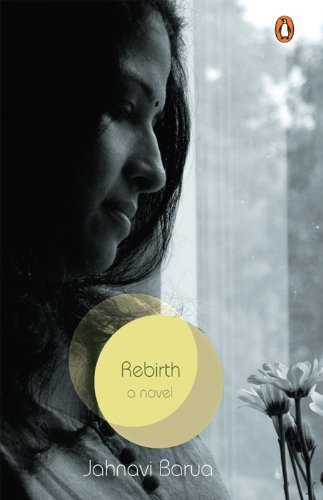
Rebirth by Jahnavi Barua
Addressed to her unborn child, this is the story of Kaberi, a young Assamese woman living in Bengaluru, as she battles loneliness and a tumultuous breakup. It is impossible to imagine literature from Northeast India without the stories of thousands who have left the states in the last few decades, escaping insurgency and underdevelopment, for better educational opportunities. Many have settled across the major metropolitan areas of India, forming a large and visible diaspora. Barua’s short novel is emotionally wrenching, at times reminiscent of a sad, nostalgic letter. The prose is restrained and measured, with a gorgeous use of the second-person pronoun in narration—a difficult technique to pull off.
Bitter Wormwood by Easterine Kire
Set in Nagaland, this book charts the history of the Naga Independence Movement through the eyes of Mose, who tells the story of one of the many lesser discussed insurgencies, and the merciless counterinsurgency measures the Indian Army took to suppress them. Centered on simple day-to-day events, this postcolonial bildungsroman not only tells the story of Mose and the Naga struggle for independence, but also highlights the impossibility of writing the biography of a country as heterogeneous as India. Kire points out that all attempts to construct grand narratives about such a country, however celebrated they might be, will always fail. The author’s introduction outlines the story’s political context in broad contours, providing chilling details of how the Indian army burnt down thousands of villages, used Naga people as target practice, and made women give birth in public, all in the name of quelling rebellion.

The Land Where I Flee by Prajwal Parajuly
Set in West Bengal, New York, London, and Colorado, this drama follows a large cast of characters as they return to their home in Sikkim to celebrate the 84th birthday of Chitralekha, the family matriarch. The novel has an eclectic cast of characters: a gay oncologist in New York who is not ready to come out to his family and tell them about his American boyfriend; an upper-caste refugee from Bhutan living in Colorado with her lower-caste husband and grappling with racism; a disgruntled daughter-in-law who detests her life in London; and a young writer who has exposed a family secret by writing about it openly. The novel is also about the consequences of an impermanent state, precarious citizenship, and the shadow of the movement for self-determination led by the Gorkha people in Sikkim. As we travel alongside the characters and wait for their lives to converge, those themes run in the background—one wonders how much of their lives are simply a result of personal choices, and how much stems from the violence, inequality, and injustice of their homeland.
Sugar, Smoke, Song by Reema Rajbangshi
This novel by Reema Rajbangshi is a pioneering exploration of the Assamese-American experience. A novel-in-stories that spans America and Assam, the book offers a searing critique of something rarely explored in the South Asian novel: racism within the diaspora. During the BLM movement, conversations arose around anti-Blackness within the South Asian diaspora, and how literary culture has not sufficiently explored the theme. Rajbangshi’s fiction digs even deeper, with an unflinching eye, by focusing on the experiences of immigrants from Northeast India in the United States. They look different, carry the imprints of a different culture, and are otherized by immigrants from Mainland India, for whom Northeast India still remains a black hole.

The Moth-Eaten Howdah of the Tusker by Indira Goswami
Set in a small Assam village in pre-independence India, this novel depicts the torturous lives of high-caste widows who are subjected to a series of brutal traditions and food restrictions after their husbands’ deaths. Because child marriage is common, some of these women are widowed before they even reach puberty, and are then forced to live out their lives as widows. This novel follows the rebellious Giribala and her elder brother Indranath. Giribala, a young widow, falls in love with a British researcher who arrives in her village to study medieval bark manuscripts. Her transgression sends ripples across the conservative village. Meanwhile, her brother Indranath’s progressive ideas about women and their feudal society clash with the tradition he inherits, putting him at odds with age-old, rigid conventions and the love of his life, Elimon.
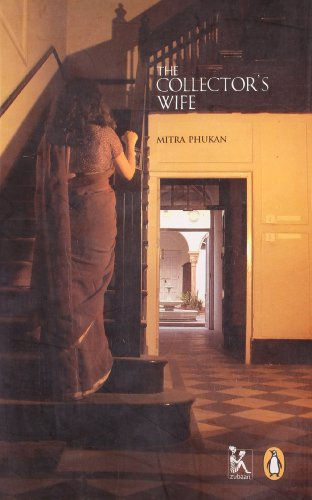
The Collector’s Wife by Mitra Phukan
This novel is one of the earliest works in South Asian Anglophone literature that handles the protest marches and militancy during the turbulent 80s in Assam. The story follows the life of lonely, elite Rukmini, who is married to a high-ranking administrative officer. Her husband remains immersed in work, and they share a dysfunctional relationship with almost no connection. Although she lives a protected life, her comfortable equilibrium is disturbed after meeting the attractive and mysterious local businessman Manoj. The turbulence of the insurgency and the protest marches invade the safe confines of her upper-middle-class existence with tragic consequences. As her relationship with her husband Siddartha deteriorates, she leans on Manoj for companionship in secrecy.

Boats on Land by Janice Pariat
Set in Assam and Meghalaya, this fine collection of short stories has been labeled as an example of “Northeast Gothic.” Written in vivid prose, and generously sprinkled with rich, poetic, and perfectly attuned imagery, the stories evoke the region’s beautiful landscapes. In Pariat’s deft hands, the setting itself becomes a mood, a character, leading the reader to the conclusion that these stories couldn’t have been set anywhere else. If folk narratives aim to provide us with clear answers—evil loses, good wins, and we come away with a sense of closure—these stories do the opposite; they end suddenly, leaving us with a sense of on-goingness, making these narratives about love, heartbreak, desire, and contemporary politics an invigorating experience.