When does an observable that follows a random trajectory reach a certain target value for the first time? And what about if it’s not enough to simply arrive at the target?
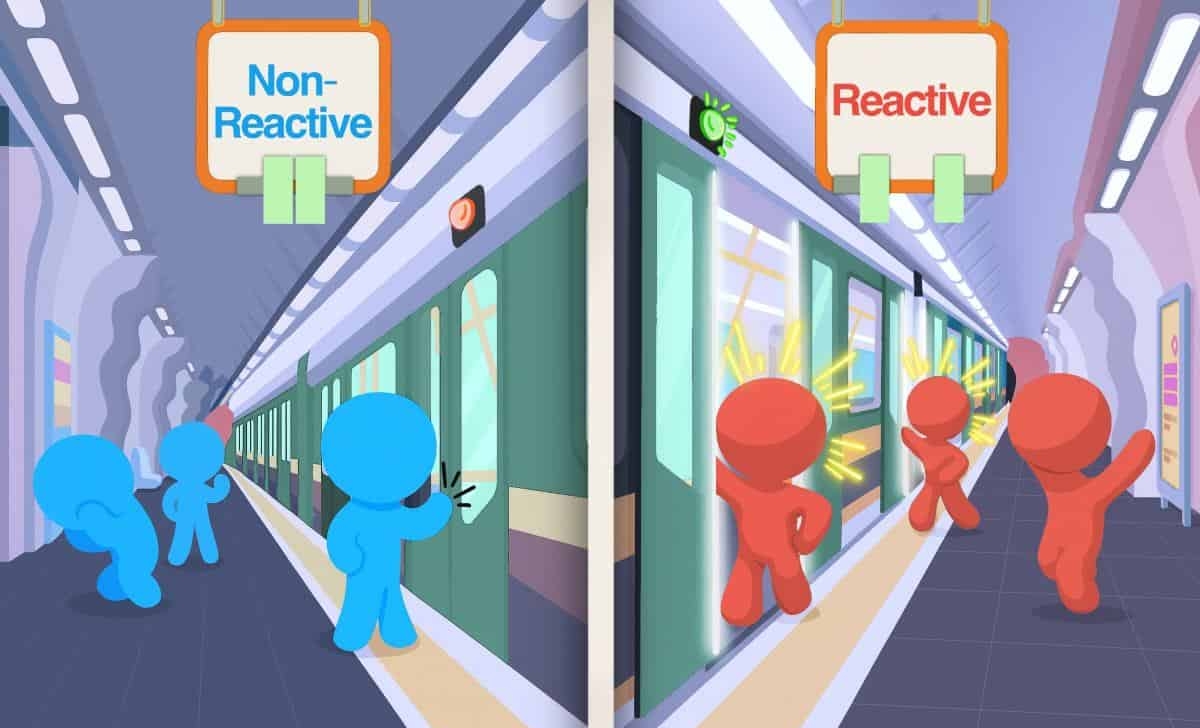
Imagine a molecule moving randomly through a cell. Its goal is to bind to an enzyme, a process essential for many chemical reactions in the body.
However, the enzyme isn’t always ready to bind. It switches between two states: a reactive state, where it can bind the molecule, and a non-reactive state, where it cannot.
Even if the molecule reaches the enzyme, binding will only take place if the enzyme happens to be in its reactive state at that exact moment. Simply arriving at the enzyme isn’t enough -the gate must also be open.
This scenario is an example of a gated first-passage process. The term refers to situations where an event (like binding) only happens if two conditions are met: the particle must reach a specific target, and the target must be in the right state to allow the event to occur.
These processes are important in a wide range of fields including chemistry, biophysics, finance, and climate science.
Existing models have offered valuable insights in simple cases, such as point targets, but even those have left some questions unresolved — and the challenges only deepen in more realistic scenarios involving extended targets or thresholds.
In order to address this problem, a team of researchers from India and Israel set about developing a new mathematical framework to analyse these type of processes.
The new approach uses a concept called renewal theory to break down complex processes into simpler, repeatable parts. Renewal theory is a branch of probability that deals with events that happen repeatedly over time, with random intervals between them.
The team showed that their method can solve previously unsolved problems and reveals universal patterns in how long these processes take. They were even able to explain surprising effects that previously posed a major challenge.
Crucially, their method can be applied to many real-world systems, from chemical reactions to intermittent data monitoring.