Director Darren Aronofsky is no stranger to themes of tribulation and alienation. In his newest film, Caught Stealing, he returns to the seedy side of New York to zoom into the numerous enclaves, this time highlighting the plight of an outsider caught in a far-fetched crime plot. It’s no surprise that Aronofsky returns to New York for his latest project, a recurring locale in his films, first featured in Pi and later utilized to great effect in Requiem for a Dream and Black Swan.
For our fellow movie geeks out there, the oddball casting, grimy NYC setting, prominent use of the punk subculture, and black comedy will draw immediate parallels to the 1985 film After Hours, one of our favorites here at MovieWeb. Like fellow New Yorker Aronofsky, Martin Scorsese also had a unique, if depressing, relationship with the location of his film shoot.
Based on a script by Joseph Minion, Scorsese’s After Hours marked a fertile, if humbling, era for the director, as he abruptly found himself a stranger in his own hometown. Scorsese stepped out of his comfort zone, moving beyond mafioso movies and his usual troupe of actors. After Hours was the first film in many years that he would make without his superstar leading men, Harvey Keitel and Robert De Niro. After a decade of bombastic, intense dramas, Scorsese savored his chance to make a minimalist art movie. Not that he had much choice.
Aronofsky Taps Into a Familiar Formula

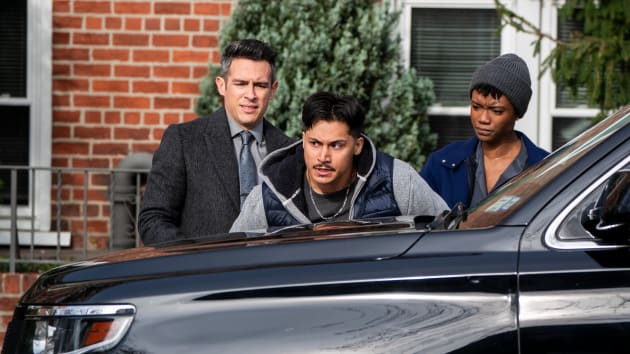
In Caught Stealing, Austin Butler assumes the lead role of Hank Thompson in the adaptation of a novel by Charlie Huston. His baseball days over, Hank is dragged into the crime underworld, dodging Russian mobsters in late ’90s NYC, the cast brimming with a mix of familiar names like Liev Schreiber, Zoë Kravitz, Vincent D’Onofrio, Carol Kane, and Matt Smith.
Alongside the established actors are some peculiar casting choices out of left field, including rappers Action Bronson and Bad Bunny. As much thought as has gone into the casting, there’s one thing that looms over the whole production: location scouting, which is vital to creating the sensation that the city is a glittering spider’s web offering no escape. Aronofsky follows in the footsteps of some of the greats, immortalizing the city’s diversity and, more entertainingly, its dysfunctionality. Yet, one man still did it better.
Martin Scorsese’s Professional Purgatory

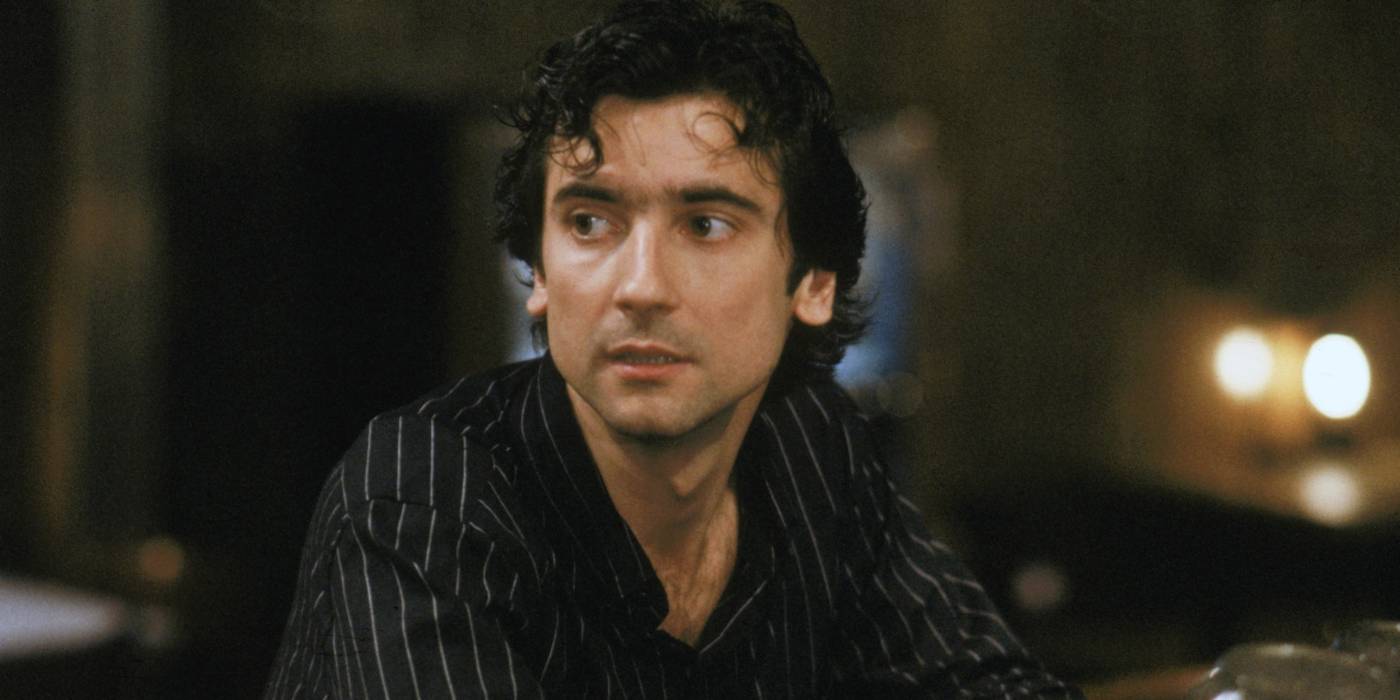
An appropriate Kafkaesque hero, Griffin Dunne stars as the mild-mannered Paul Hackett in After Hours, a computer programmer lured into chaos by a random late-night encounter with a woman with a dark past. He actually cast himself, buying the script. Patricia Arquette, Linda Fiorentino, Teri Garr, and comedy duo Cheech & Chong also make appearances. It is technically a crime film, but those incidents are but MacGuffins to set up the endless hallucinatory series of twists.
Dunne brings a lot to the screen, but intimidation isn’t one of them, which suits the role of a meek office worker harassed by vengeful hippies, punk rockers, and vigilante ice cream vendors. If you blinked during the opening credits, you might not realize Scorsese made this. Borrowing camera techniques from Fritz Lang and Alfred Hitchcock, he described the movie as a farcical take on film noir, as mentioned in the book Martin Scorsese: A Journey:
“There was constant cutting to extreme close-ups for no reason, just to build paranoia and anxiety … But nothing of film noir or psychological horror really occurs. It’s all in his head.”
At this stage, Scorsese was at a career low, shut out of Hollywood, his long-planned passion project rejected. After a single flop, the entire industry had suddenly lost Scorsese’s phone number. As a result, After Hours was cobbled together with independent financing at a frantic speed to keep him busy, with principal photography wrapping up in two months, ditching the protective warmth of Little Italy for a barren, crime-ridden Soho.
Look closely at the club scene, and you can see Scorsese manning the lights, pulling double duty, embracing the whole Hitchcockian-cameo gimmick. Per Jim Sangster‘s biography, Scorsese noted, “When I subsequently went to Hollywood to promote my next film, I found, to my surprise, some people resented that we had made it for so little.”
Starring New York City as Itself

The Big Apple perfectly suits the man-out-of-place concept. Decades later, we see those themes and imagery die hard. Caught Stealing features Matt Smith with a mohawk, a haircut that serves as a plot device in After Hours. Dunne even appears in the Austin Butler film, too, which might have been an intentional homage by Aronofsky.
There are notable differences. After Hours takes place entirely within a single night, providing a more traditional noirish sheen, whereas Caught Stealing feels a tad more like vintage Guy Ritchie. While Butler inhabits the role of a washed-up jock trained in the art of the Louisville Slugger, Dunne runs away like a coward from the first sign of confrontation — two films, created under very different circumstances, in different eras, yet sharing common DNA. Caught Stealing is out in theaters starting this week. After Hours is available for rent on Apple TV+, Prime Video, and other platforms.