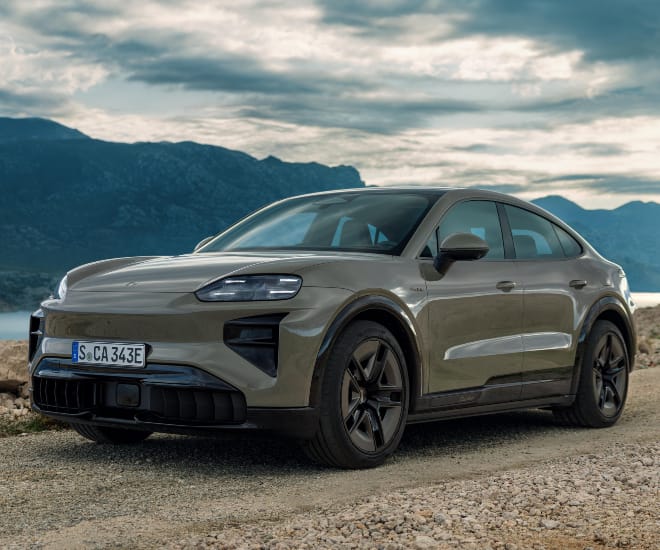

Porsche expands its Cayenne range into fully electric territory with the introduction of the Cayenne Coupé Electric — a model that retains the silhouette and intent of the original while reworking its performance architecture for a new era. The line-up spans three variants — Cayenne Coupé Electric, Cayenne S Coupé Electric and Cayenne Turbo Coupé Electric — with outputs reaching up to 850 kW (1,156 PS) in overboost. Introduced with Singapore-specific equipment — including rear-wheel steering as standard — the model pairs a drag coefficient of 0.23 and a WLTP range of up to 669 kilometres with Porsche’s 800-volt fast-charging system, positioning it as both a high-performance and long-distance electric SUV. This model transitions Porsche’s flagship SUV into a fully electric format while retaining the Coupé silhouette, which is defined by a more aggressive, sloping roofline than the standard SUV version.
Design and Aerodynamics
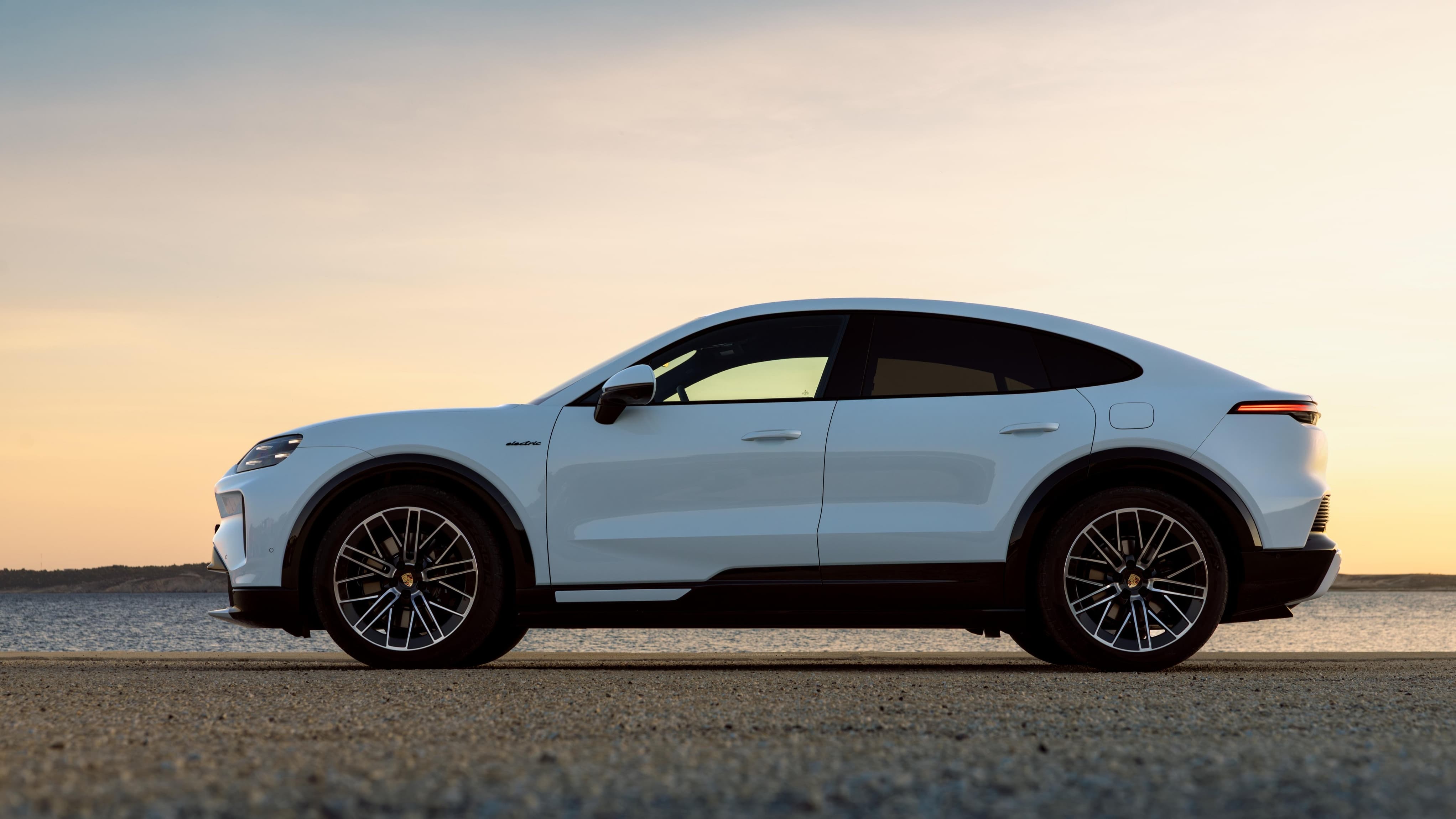
The exterior design is centred around the “flyline” — a specific Porsche term for the tapering roof curve that mirrors the 911 sports car. As the Coupé sits 24 millimetres lower than the standard Cayenne, it achieves a drag coefficient of 0.23. In automotive engineering, a lower drag coefficient indicates that the car moves through the air with less resistance, which directly increases the distance the car can travel on a single charge. In practice, this translates into a longer real-world driving range and a more efficient high-speed profile.
To maintain stability at high speeds, the vehicle uses an active aerodynamic system. This includes cooling air flaps that open only when the battery or motors need temperature regulation. Additionally, an adaptive rear spoiler extends into the airflow as speed increases, creating downward force to keep the rear of the car planted firmly on the road. These systems operate continuously and automatically, adjusting airflow in response to driving conditions rather than driver input.
Technical Performance and Charging
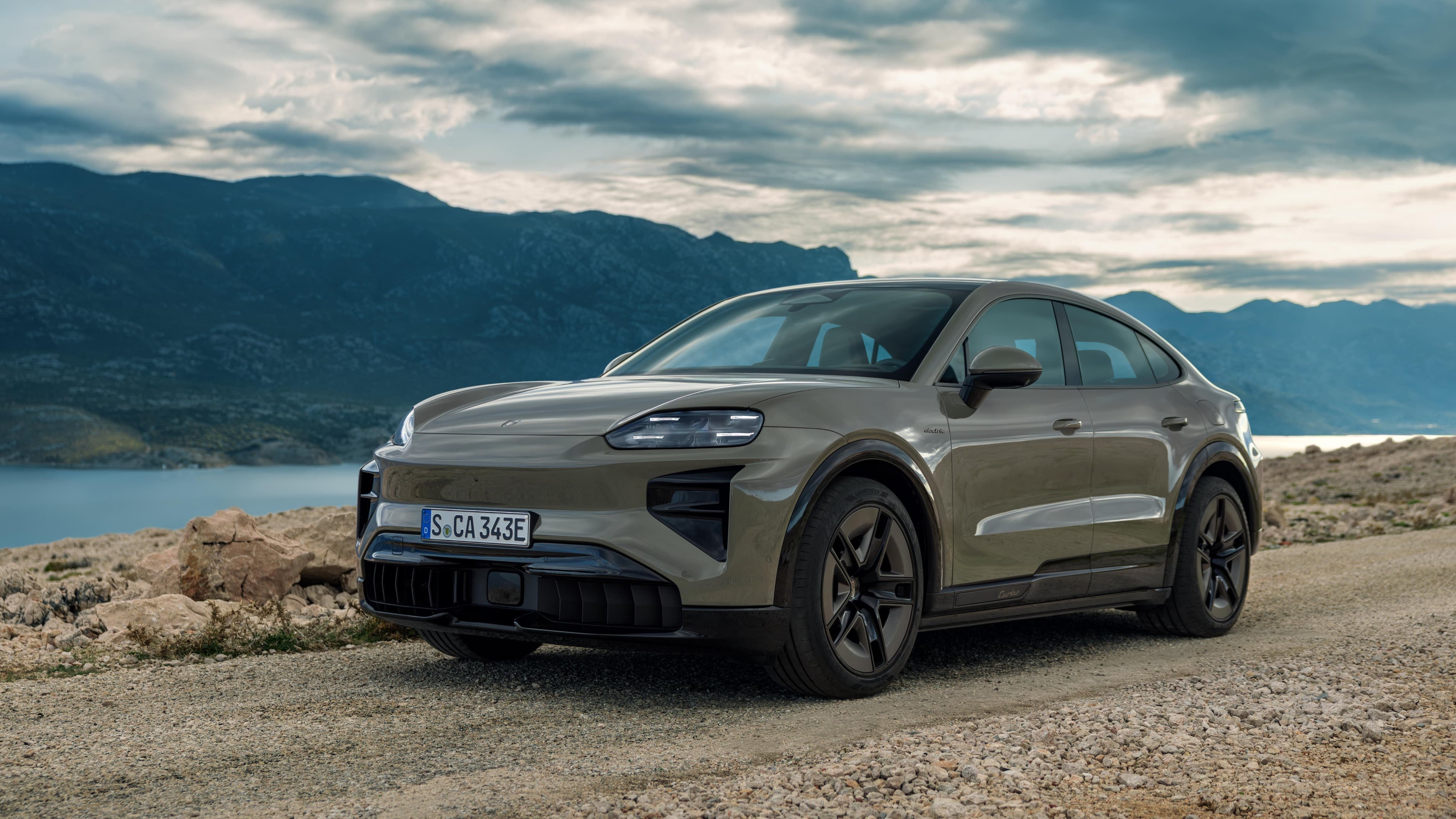
Porsche has built the Cayenne Coupé Electric on an 800-volt battery architecture. Most standard electric vehicles use a 400-volt system, but doubling the voltage allows the car to accept electricity at much higher rates without overheating the components. This allows the car to charge at speeds of up to 390-kilowatt at a compatible DC fast-charging station. This positions the Cayenne within the upper tier of current fast-charging capability in the luxury SUV segment.
The range for the vehicle is rated at up to 669 kilometres under WLTP testing, which is the global laboratory standard used to measure how far an electric car can drive in mixed conditions. For daily use, the car includes an 11-kilowatt on-board charger for standard AC power, though an optional 22-kilowatt upgrade is available to speed up charging at home or in office buildings. The emphasis is less on headline figures and more on flexibility across different charging environments.
Power Distribution and Acceleration
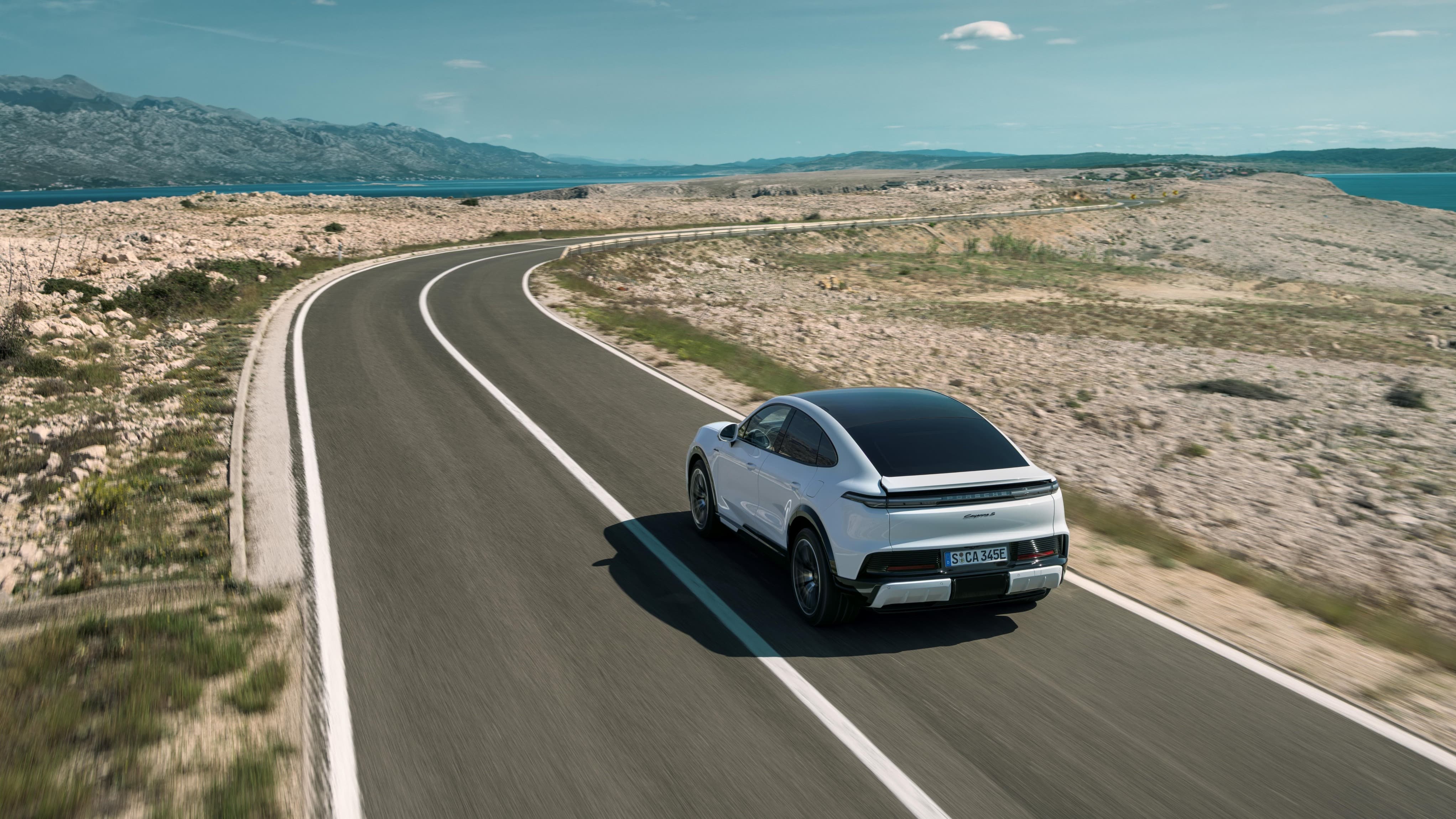
The lineup is split into three performance tiers. The base Cayenne Coupé Electric delivers 300 kilowatts, while the mid-range Cayenne S Coupé Electric produces 400 kilowatts. The top-tier Cayenne Turbo Coupé Electric reaches a maximum of 850 kilowatts when using overboost, which is a temporary peak in power output triggered during a Launch Control start, allowing the Turbo model to reach 100 kilometres per hour in 2.5 seconds. Across all variants, performance is defined by rapid torque delivery rather than sustained peak output.
The vehicle also features Porsche Active Suspension Management as a standard feature. This system uses sensors to monitor road conditions and automatically adjusts the firmness of each individual wheel’s suspension. This ensures the car remains level during hard cornering and stays comfortable over uneven pavement.
Specialised Features for the Singapore Market
In Singapore, all models come standard with rear-wheel steering. At low speeds, the system turns the rear wheels in the opposite direction of the front wheels, which effectively shortens the wheelbase to make tight U-turns easier. At higher speeds, the wheels turn in the same direction to increase stability during lane changes. This dual behaviour effectively gives the SUV the manoeuvrability of a smaller car without compromising highway stability.
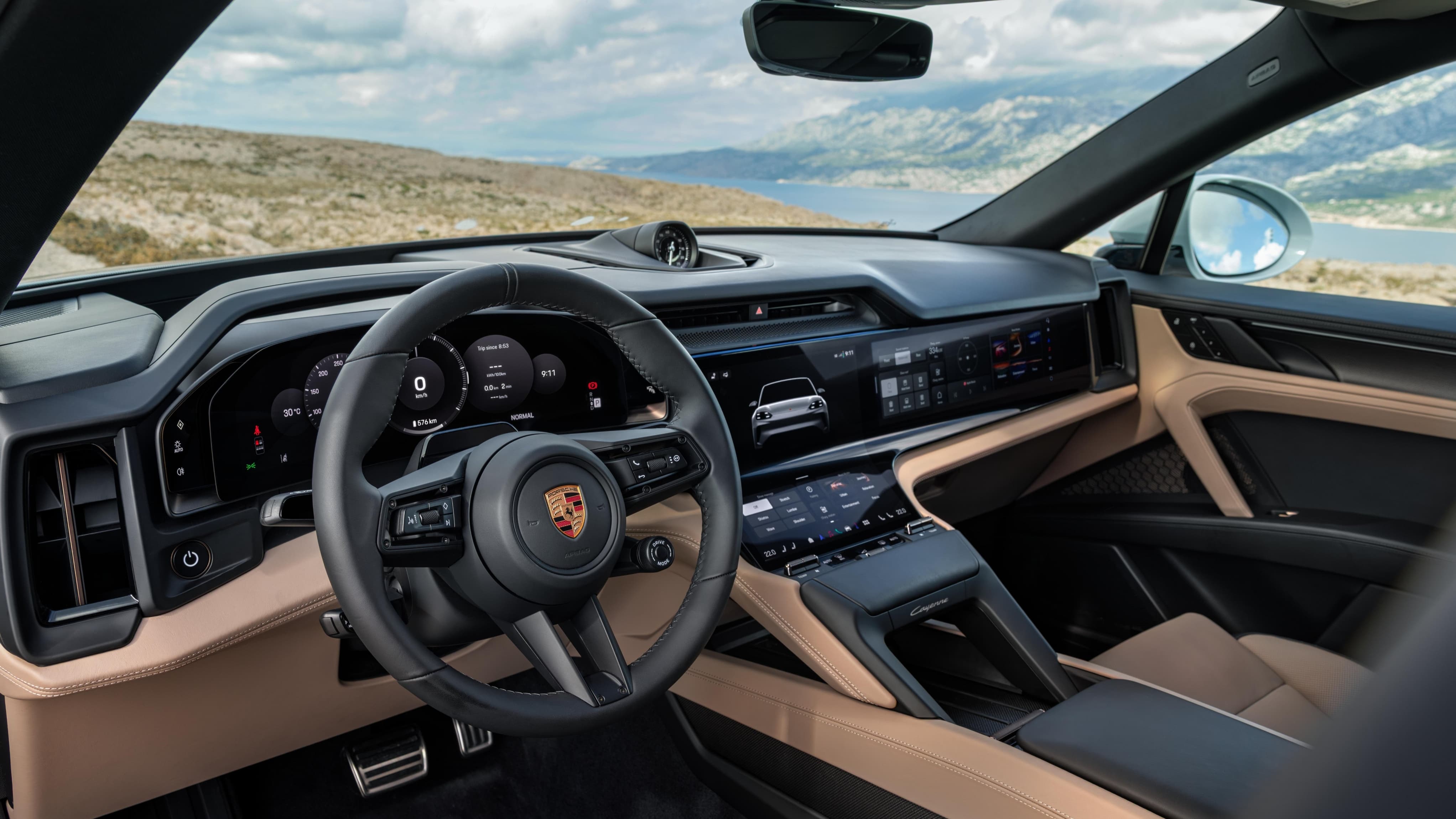
The interior features a digital interface that includes a curved instrument cluster for the driver and a dedicated display for the front passenger. This passenger screen uses a special film that prevents the driver from seeing it while the car is moving, allowing the passenger to stream content without causing a distraction. The layout reinforces Porsche’s shift toward a dual-zone cockpit experience, separating driving focus from passenger entertainment.
Pricing for the new models is indicative and excludes the Certificate of Entitlement (COE). The base model starts at SGD 394,488. The Cayenne S is positioned at SGD 493,388 and the Cayenne Turbo starts from SGD 683,388. These prices include a five-year maintenance and warranty package, along with registration fees and estimated carbon rebates.
The Porsche Cayenne Coupé Electric is now available for configuration in Singapore, with customer deliveries scheduled for the second half of 2026.
For more automobile reads, click here.