
Amid growing scrutiny over its commercial entanglements and escalating displays of wealth, the Met Gala continues to expand beyond its curatorial origins — setting the stage for a theme that is as open to interpretation as it is ambiguous. For context, as of May 2026, Jeff Bezos — founder and executive chair of Amazon — and his wife Lauren Sánchez Bezos, are the lead sponsors and honorary chairs of the 2026 Met Gala. Sponsorship details indicate the couple reportedly contributed over USD 10 million to underwrite the event, which remains the primary annual fundraiser for the Metropolitan Museum of Art’s Costume Institute. Their involvement has triggered significant backlash, with critics condemning what they perceive as an overt display of wealth and branding the evening the “Bezos Met Gala”.
In the days leading up to the event, protest activity reportedly emerged across New York City, with posters and activist messaging calling out the scale of corporate influence attached to the gala. The 2026 edition has also been informally dubbed the “Tech Gala” due to the visible presence of Silicon Valley figures and broader tech-sector patronage. According to media reports, several high-profile attendees — including Zendaya and Meryl Streep — were said to be skipping the event in response to Bezos’s role, though official confirmations remain limited.
Despite the controversy, the gala is understood to have raised a record-breaking USD 42 million for the Costume Institute, reinforcing its position as one of fashion’s most financially powerful cultural events. While previous years have often been framed through a lens of cultural commentary or tightly defined thematic direction, this year’s theme was noticeably more open-ended, allowing for broader interpretation. Recent Met Gala editions have leaned heavily into precise conceptual territory: “Karl Lagerfeld A Line of Beauty” in 2023 centred on the aesthetic legacy and archival language of Lagerfeld’s work; “Sleeping Beauties Reawakening Fashion” in 2024 explored conservation, textile fragility and museum preservation techniques; while “Superfine Tailoring Black Style” in 2025 examined Black dandyism, identity construction and tailoring as a political and cultural code. In effect, the ambiguity itself became part of the social discourse, raising renewed questions about who the Met Gala is ultimately for and what it now represents in the hierarchy of contemporary fashion culture.
This year’s theme — “Costume Art” — positions fashion as an extension of visual art practice, framing the human body as a site of expression and, in theory, a “blank canvas” for designers to reinterpret. In practice, however, such open-ended themes rarely result in literal readings. Instead, designers tend to default to the established visual codes of their respective houses. Rather than a pure exploration of costume as art, the “art” becomes inseparable from brand identity, where each look functions less as a conceptual departure and more as a heightened articulation of existing design language. The result is a red carpet where artistic expression is filtered through recognisable house signatures, turning the body of the wearer (the celebrity being dressed) into a platform for sartorial experimentation and brand storytelling.
With the theme’s ambiguity leaving space for interpretation, designers instead rely on the codification of cultural context through established house codes. LUXUO explores how designers draw on their own House codes to interpret the 2026 Met Gala theme.
Chanel
Chanel’s identity is rooted in an enduring vision of classicism. Beyond tweed suiting, monochrome palettes and camellias, Chanel operates as an institution, projecting a sense of authority that transcends seasonal fashion cycles. This authority is reinforced through its longstanding relationship with cultural figures and image-making, most notably in its cinematic legacy. Nicole Kidman’s iconic Chanel No. 5 commercial exemplifies this, positioning the House within a broader narrative of timeless glamour.
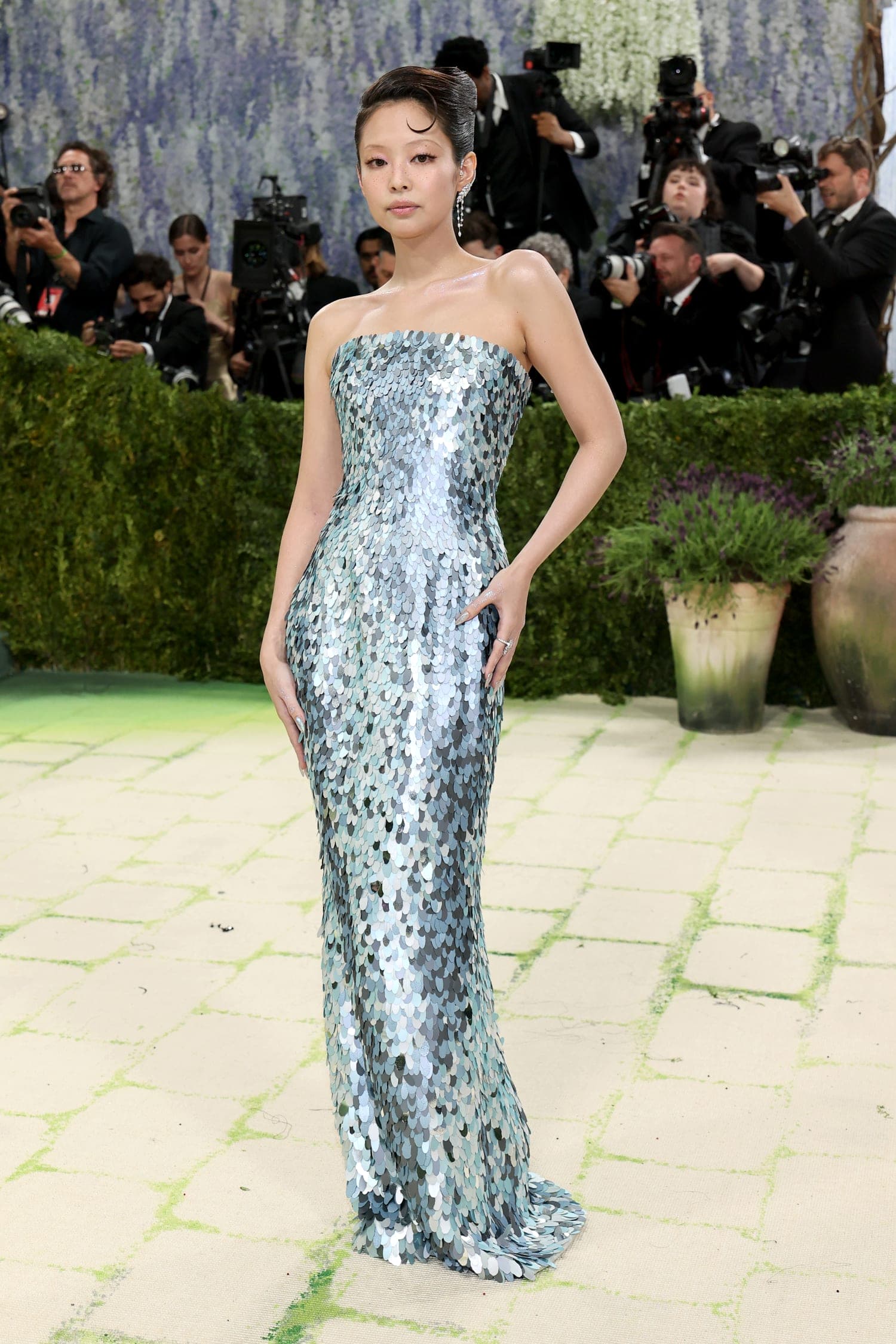
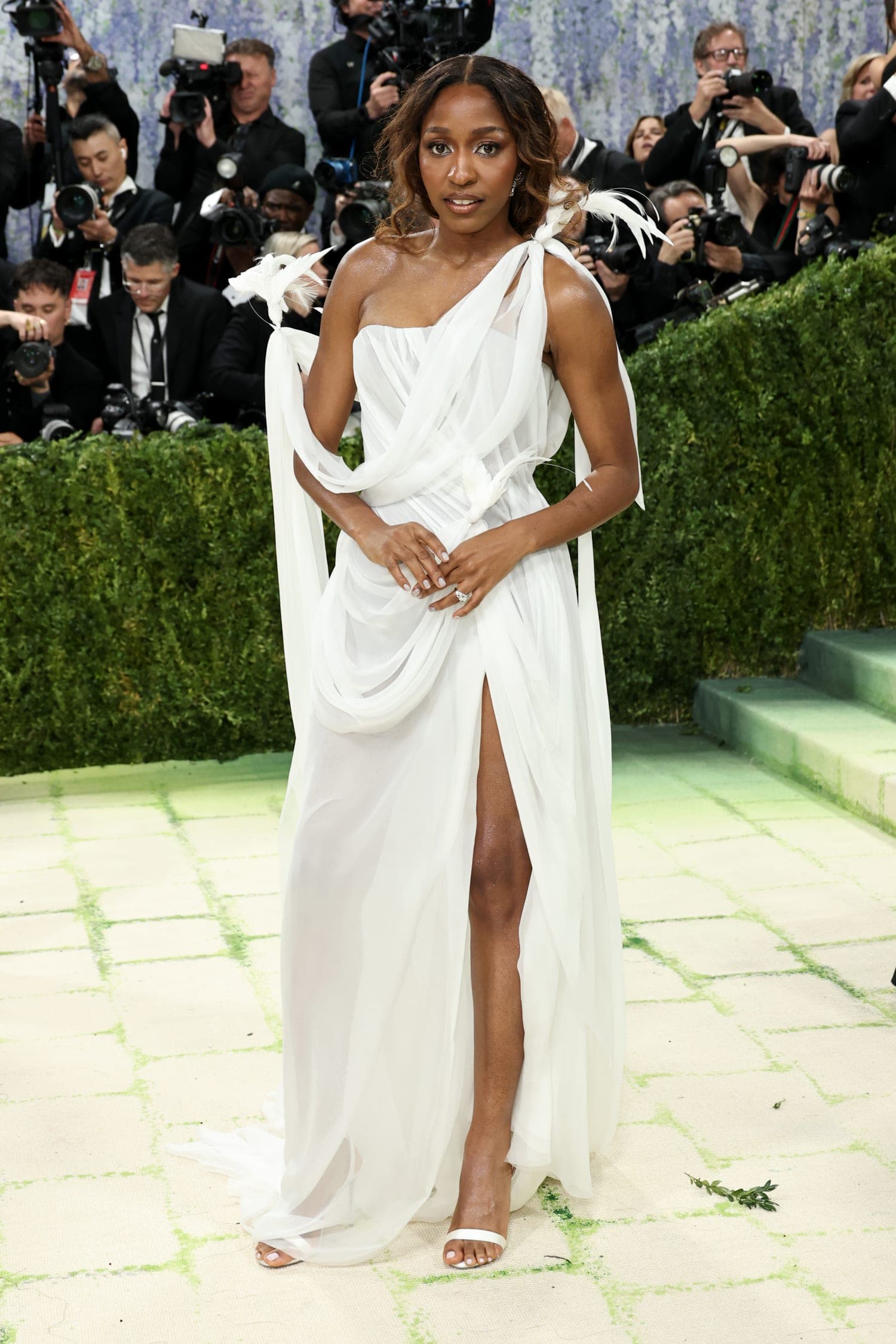
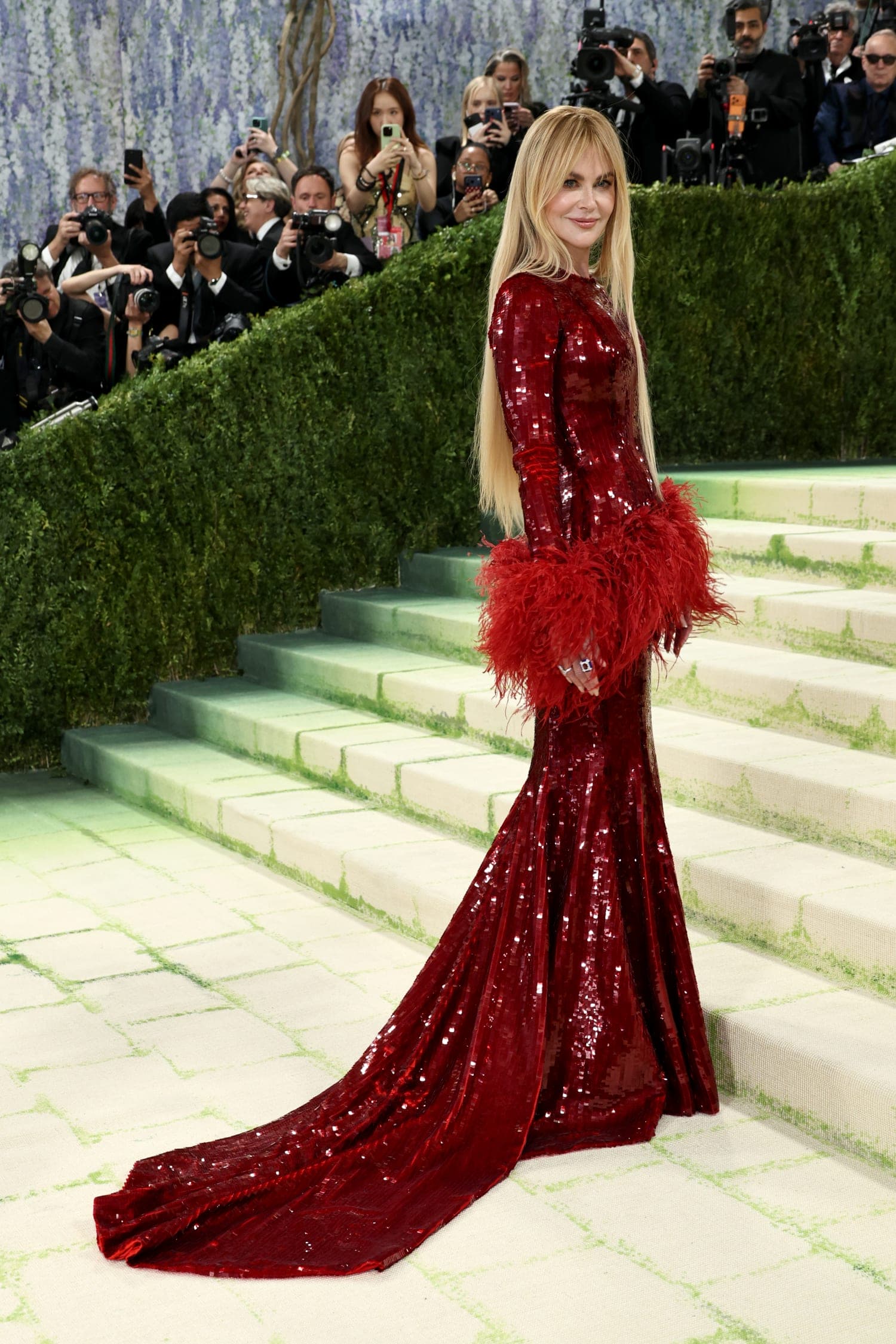
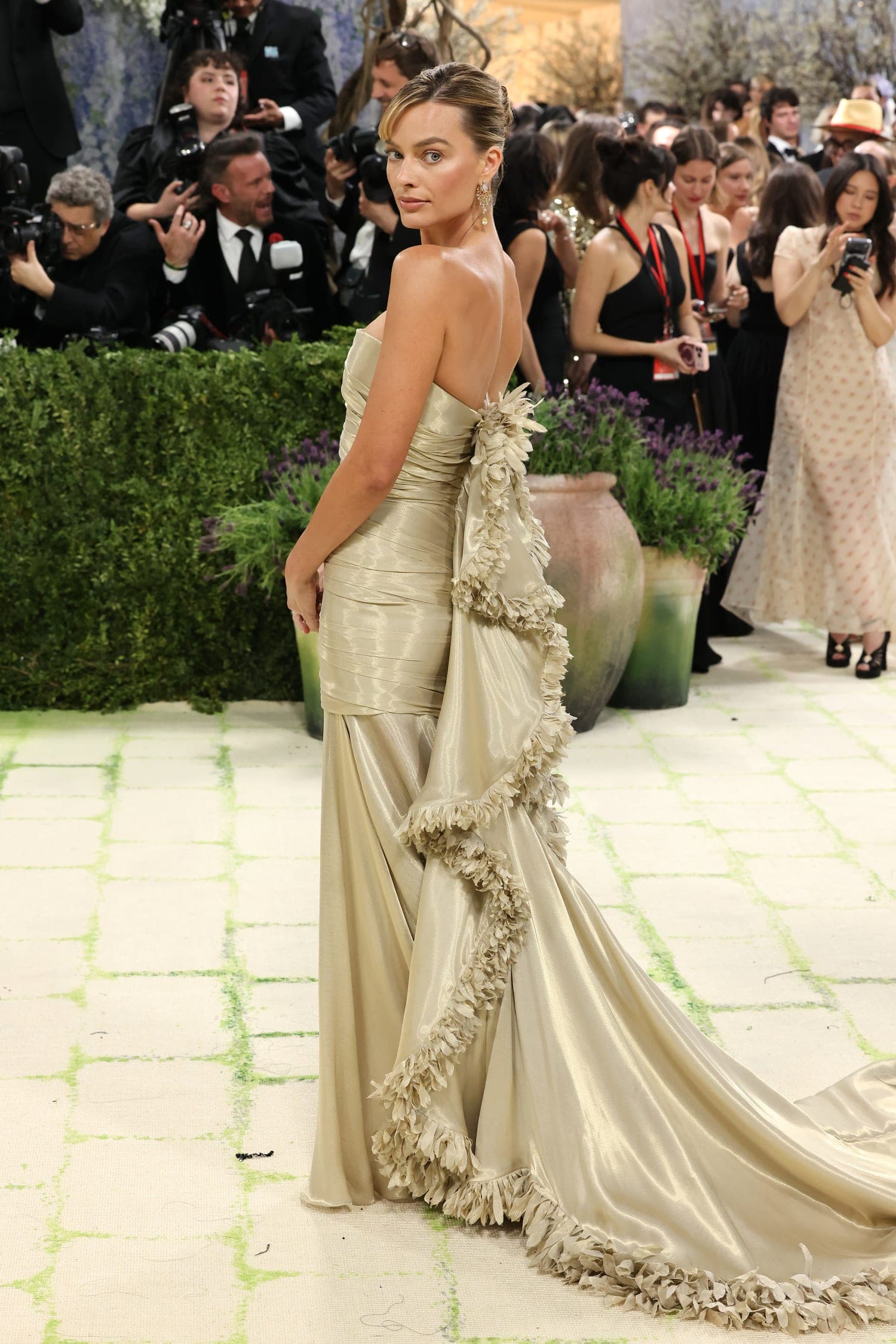
At the Met Gala, this legacy is extended through its ambassadors. Nicole Kidman appeared in a long red dress entirely embroidered with sequins and adorned with feathers and organza flowers — a couture piece requiring over 800 hours of craftsmanship. Margot Robbie dressed in a draped golden lamé gown, detailed in 761 hours of work with cascading ruffles and 1080 feathered floral embellishments. Meanwhile, Jennie’s bustier column dress was embroidered with metallic sequin leaves in different shades of blue, requiring approximately 540 hours and over 15000 embroidered elements. Ayo Edebiri’s white silk chiffon gown adorned with white birds made of feathers marquetry took a total of 632 hours to finish. Across these appearances, the body — when dressed in Chanel — becomes a vehicle for the House’s enduring codes of timelessness and the affirmation of authority.
Dior
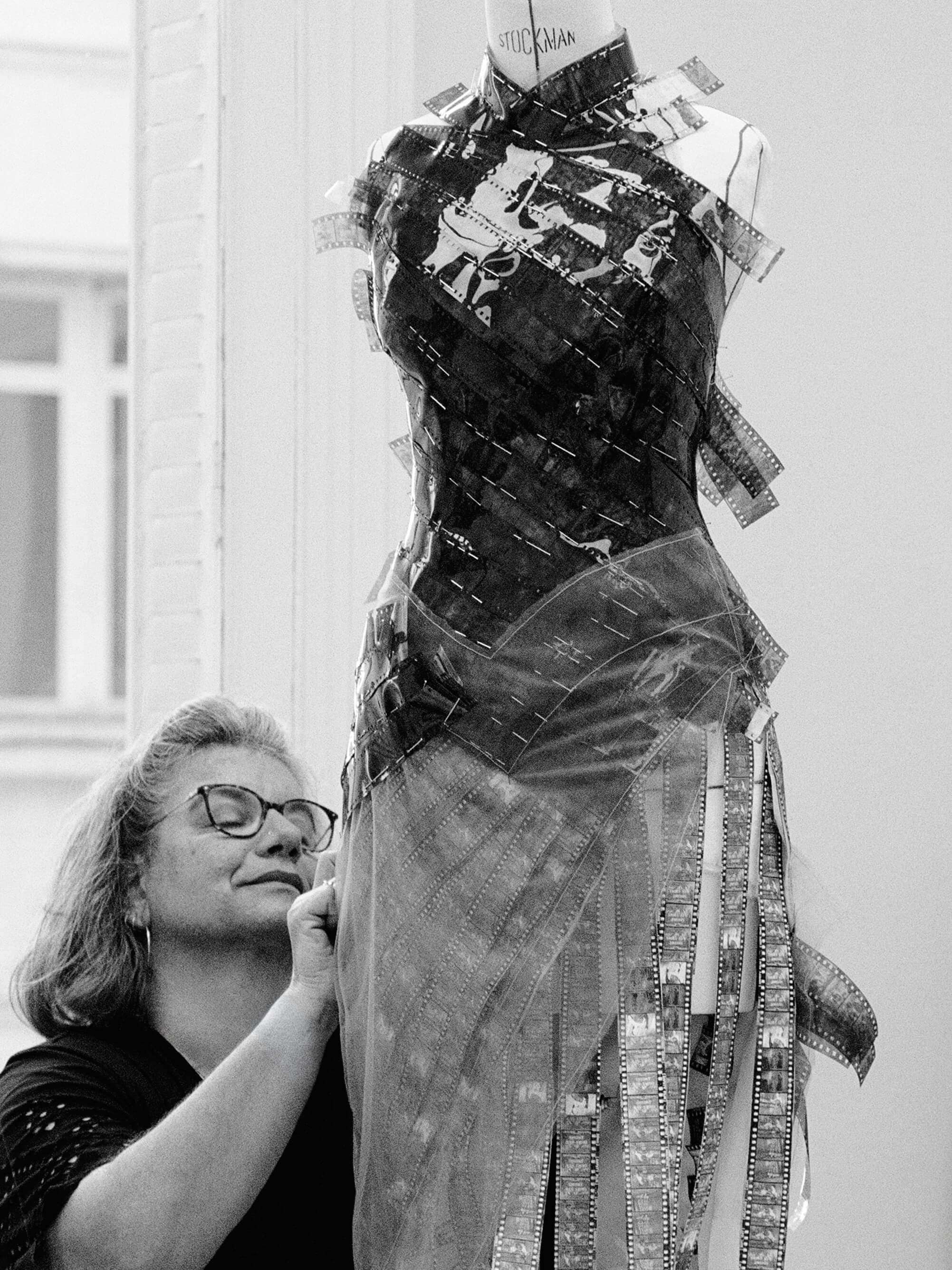
Dior operates through a codified vision of idealised femininity, first established with the New Look’s architectural precision and continually reinterpreted by successive creative directors — from John Galliano’s theatrical historicism to Raf Simons’ modernist clarity and Maria Grazia Chiuri’s feminist-inflected romanticism. Alongside its sculptural silhouettes, the House has consistently drawn on florals and the natural world as a central motif, a legacy rooted in Christian Dior’s own fascination with gardens and botany. Expressed through intricate embroidery and textile manipulation alongside full couture constructions that mimic organic forms, nature functions as a form of symbolism within the house’s visual language.
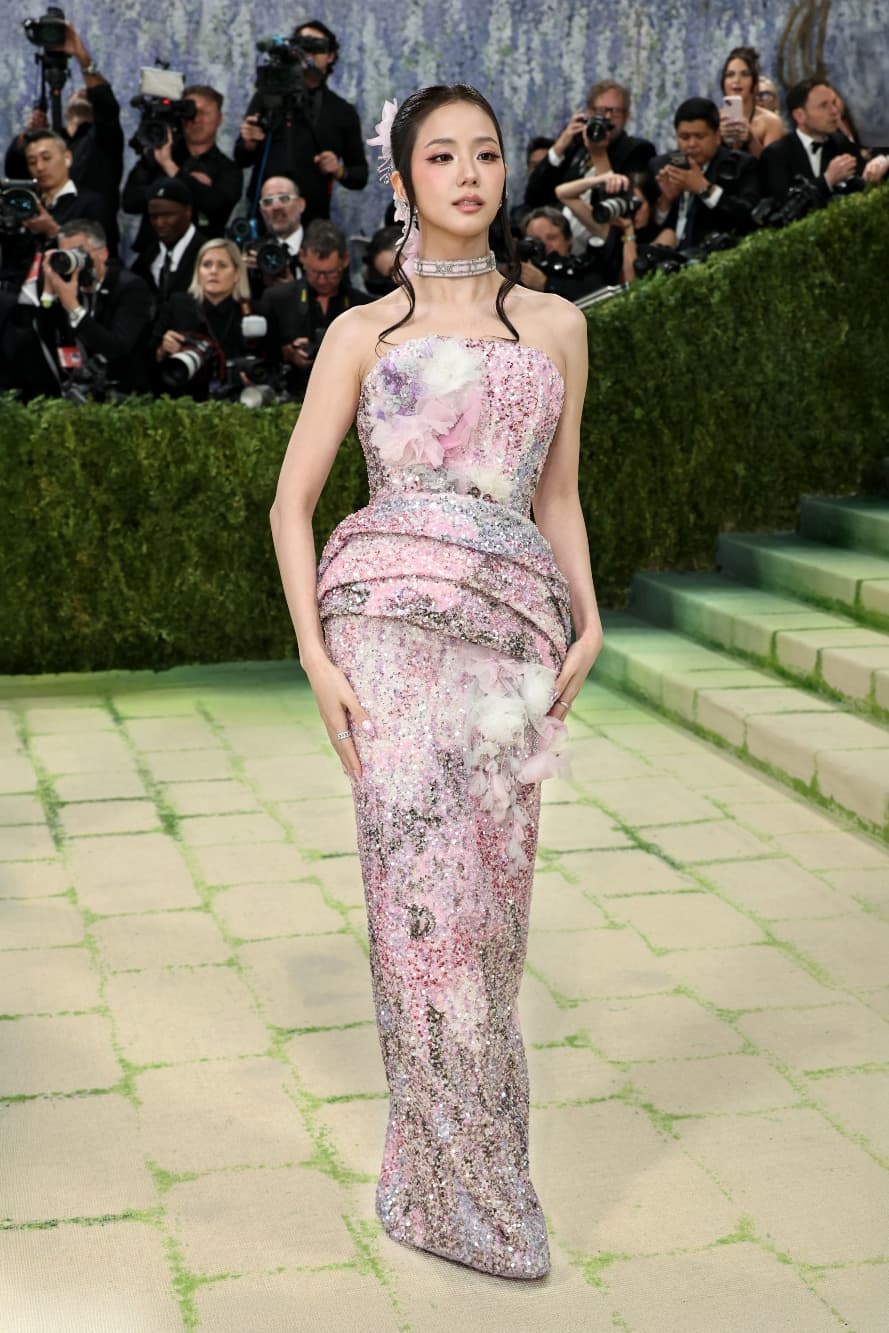
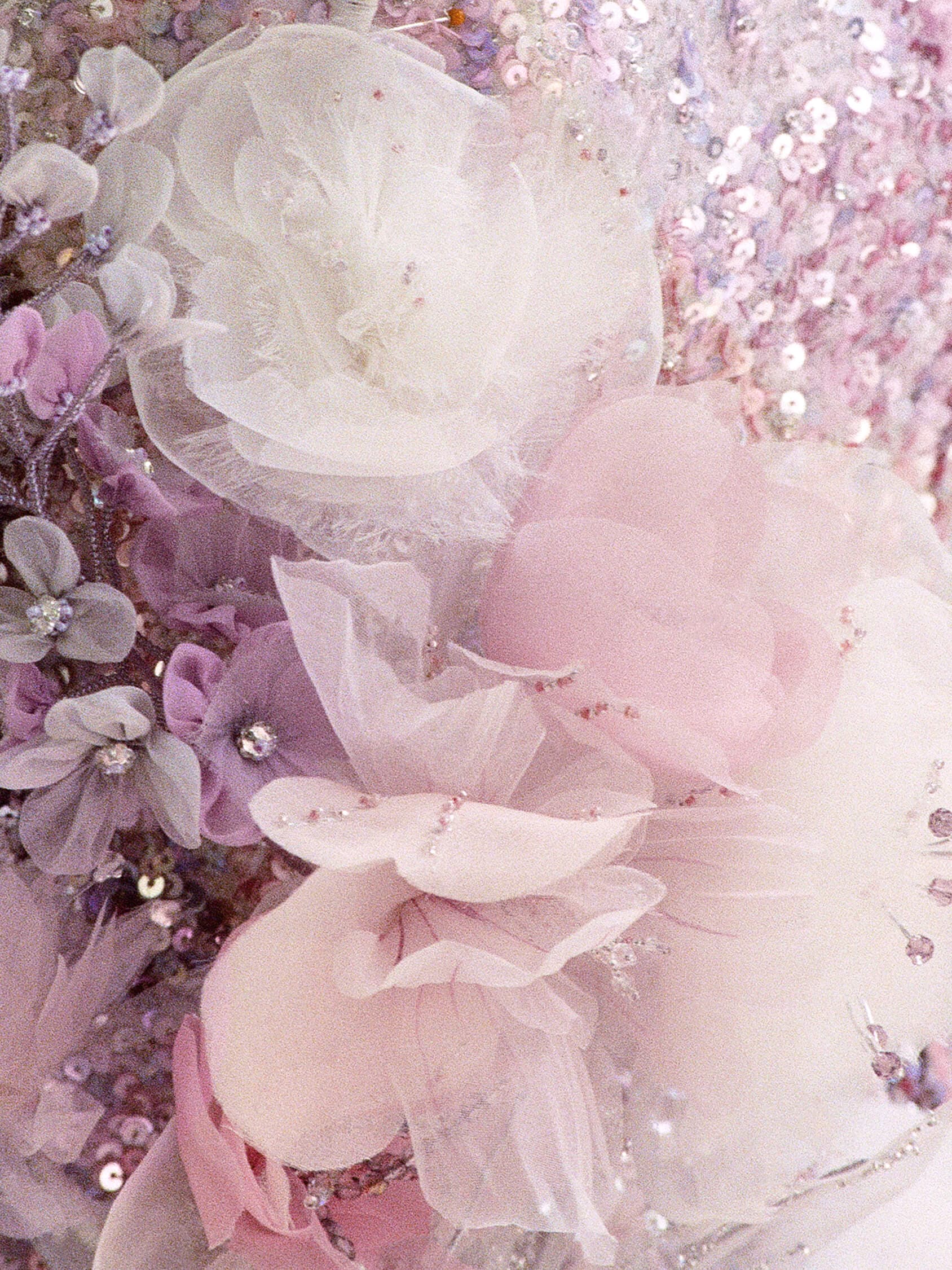
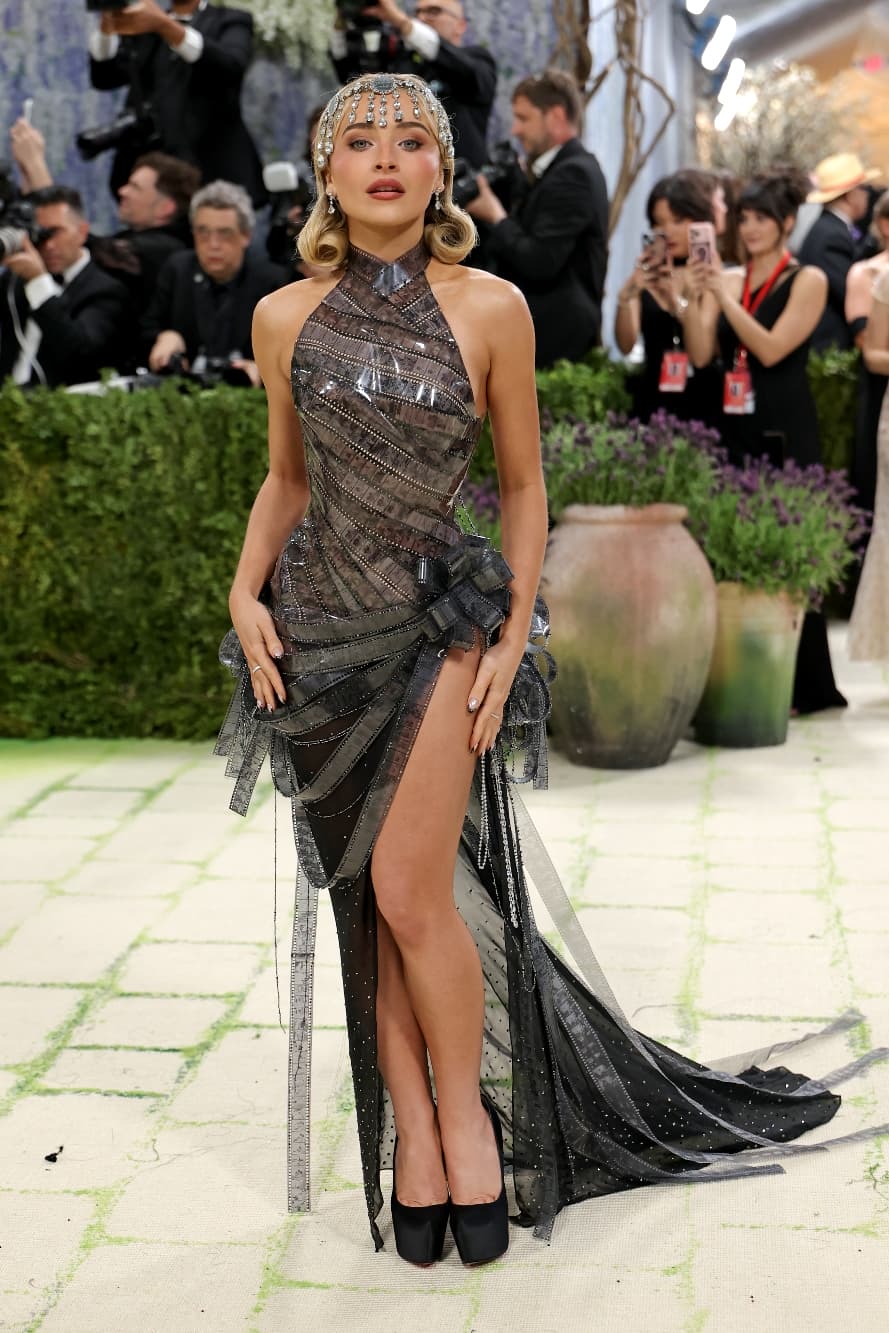
On the MET Gala red carpet, Sabrina Carpenter’s tulle slit dress — featuring an appliqué of rhinestone film strips referencing the film Sabrina — channeled Dior’s longstanding dialogue with fantasy and cinema. In contrast, Jisoo’s embroidered column gown, rendered with an intricate garden scene and floral embellishments, directly reaffirms the house’s enduring fixation on nature as a motif that illustrates the Maison’s expression of fantasy and femininity.
Saint Laurent
Saint Laurent is known for restraint, eroticism and sharp tailoring. Since its inception under Yves Saint Laurent, the brand has consistently resisted theatrical excess, anchoring a design aesthetic based on sharp construction and elongated silhouettes. Saint Laurent’s relationship to “costume” is inherently oppositional. Even within the context of the Met Gala, its codes remain rooted in control.
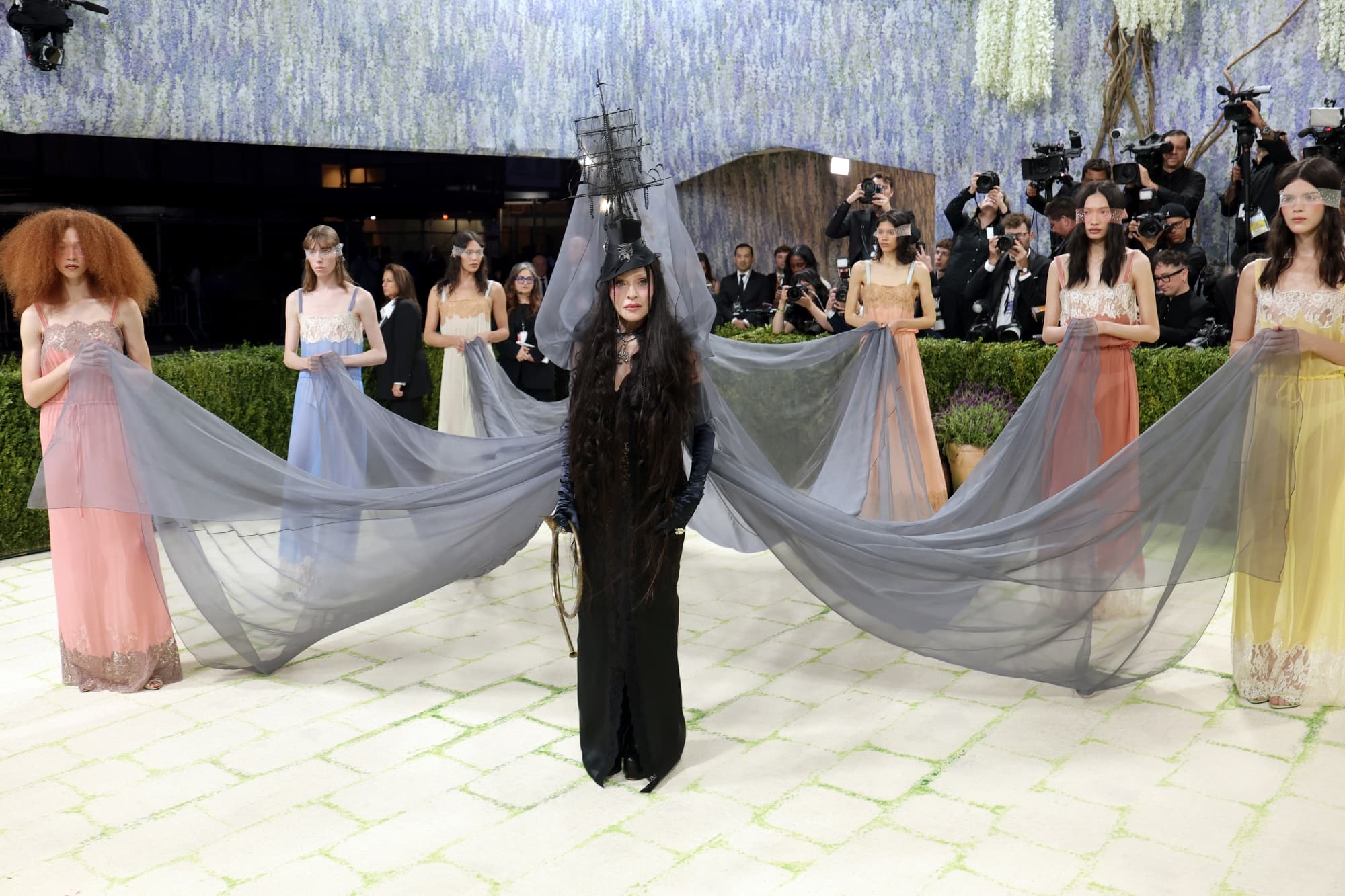
At the 2026 Met Gala, Saint Laurent extended these codes through a series of predominantly black looks that underscored the House’s commitment to restraint. Madonna and seven performers appeared in coordinated Saint Laurent ensembles, featuring sweeping hooded capes and slip dresses in silk satin, lace and silk muslin, layered with veils and rhinestone detailing, anchored by platform boots and satin mules. The effect was deliberately atmospheric, with black functioning as both silhouette and mood.
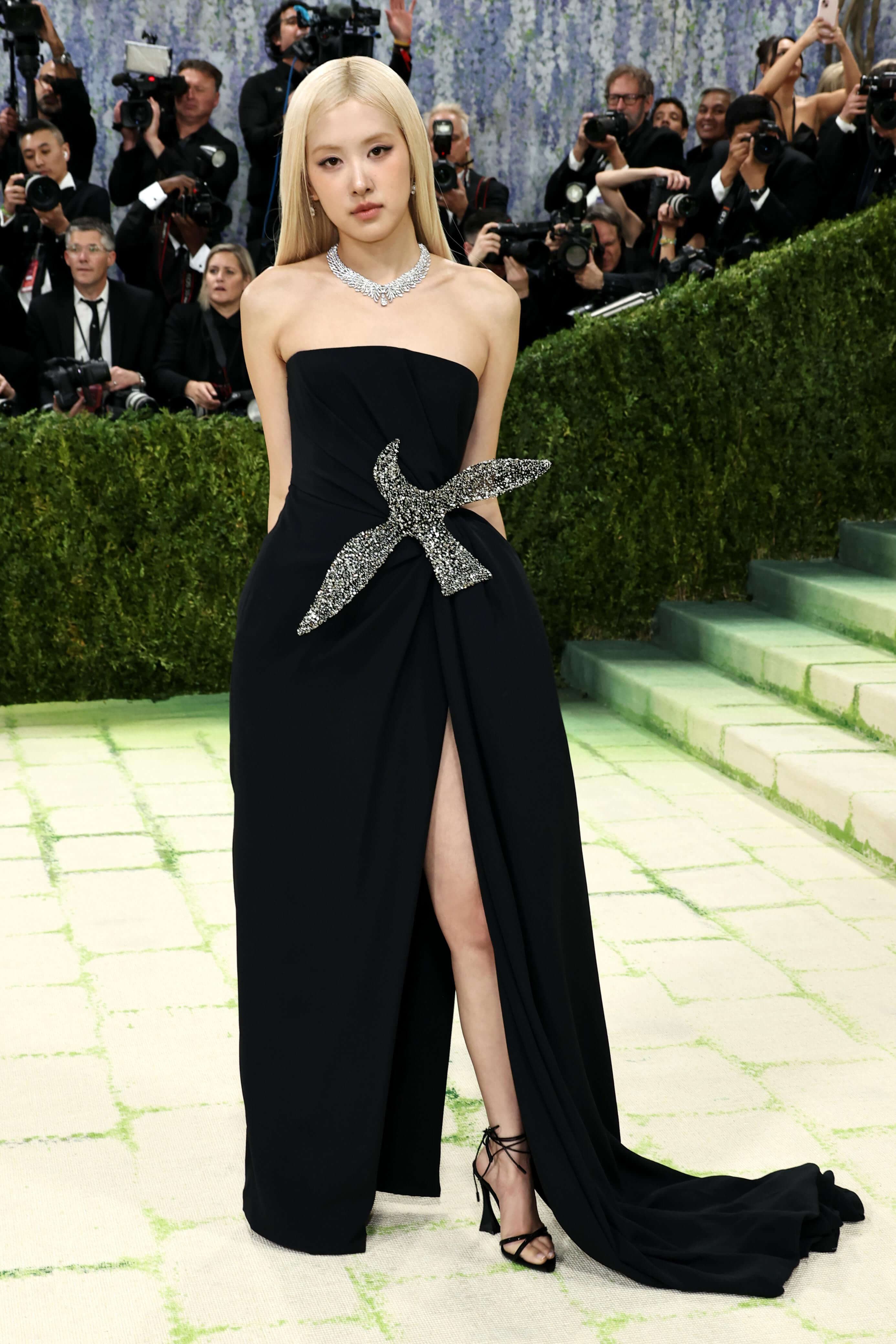
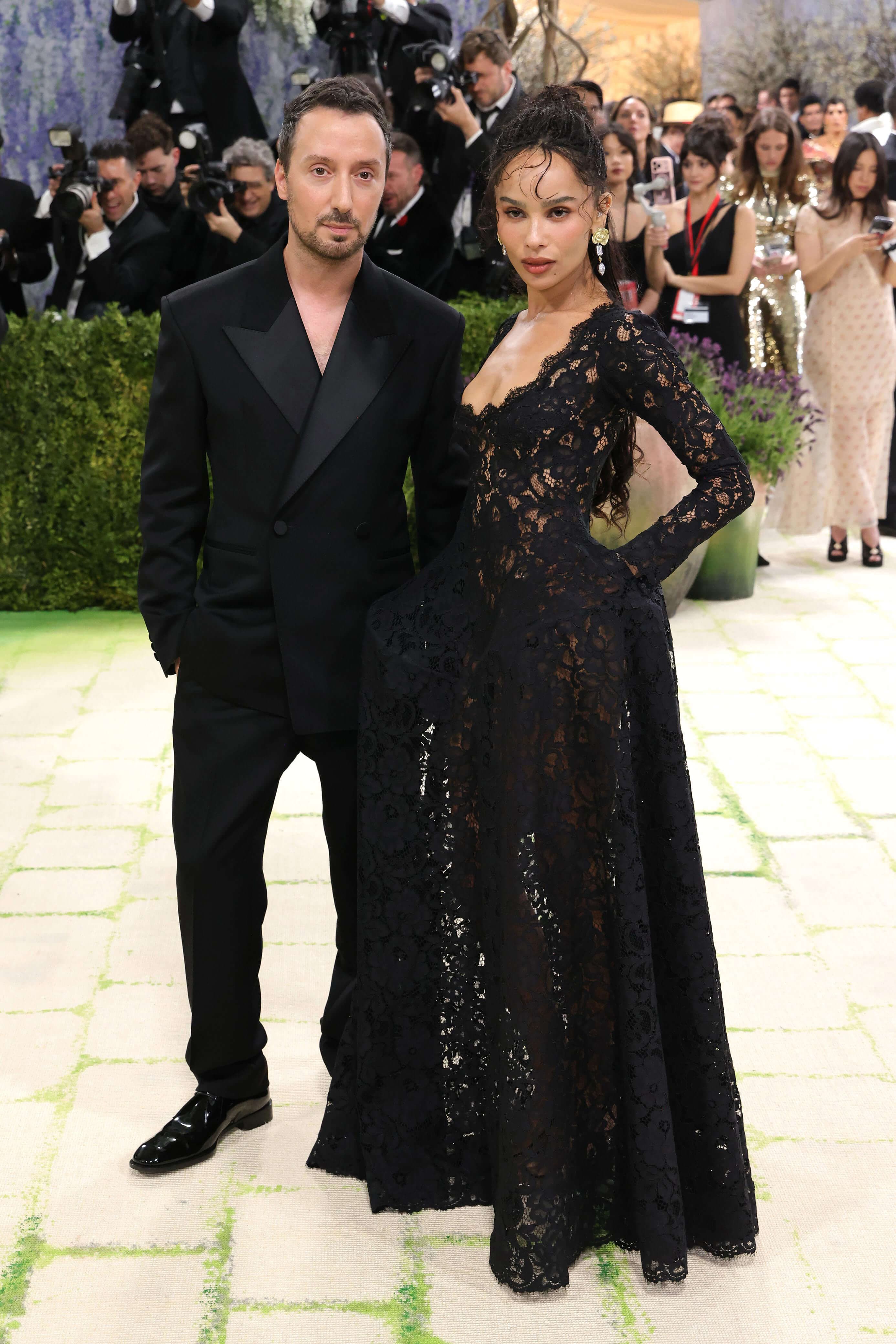
Rosé wore a black silk satin gown embellished with bird motifs in sequins and pearls, styled with satin crepe sandals set with rhinestones, continuing the House’s interplay between sensuality and precision detailing. Anthony Vaccarello and Zoë Kravitz appeared in coordinated Saint Laurent tailoring, with Vaccarello in a double-breasted tuxedo in grain de poudre paired with tuxedo trousers, while Kravitz wore a guipure lace basque-waist gown styled with patent and TPU slingback pumps. Across both menswear and womenswear, the emphasis remained on monochromatic restraint, with black acting as the primary colour for the Maison.
Prada
Prada is known for rejecting conventional beauty harmony. Designs are refined yes, but instead of quintessential notions of glamour or purity, Prada typically distorts established ideas of elegance through deliberate awkwardness, unexpected styling cues and subtle visual dislocation. Rather than pursuing a singular aesthetic identity, Prada constructs meaning through juxtaposition — where softness is offset by rigidity, and tradition is continuously reframed through conceptual reinterpretation.
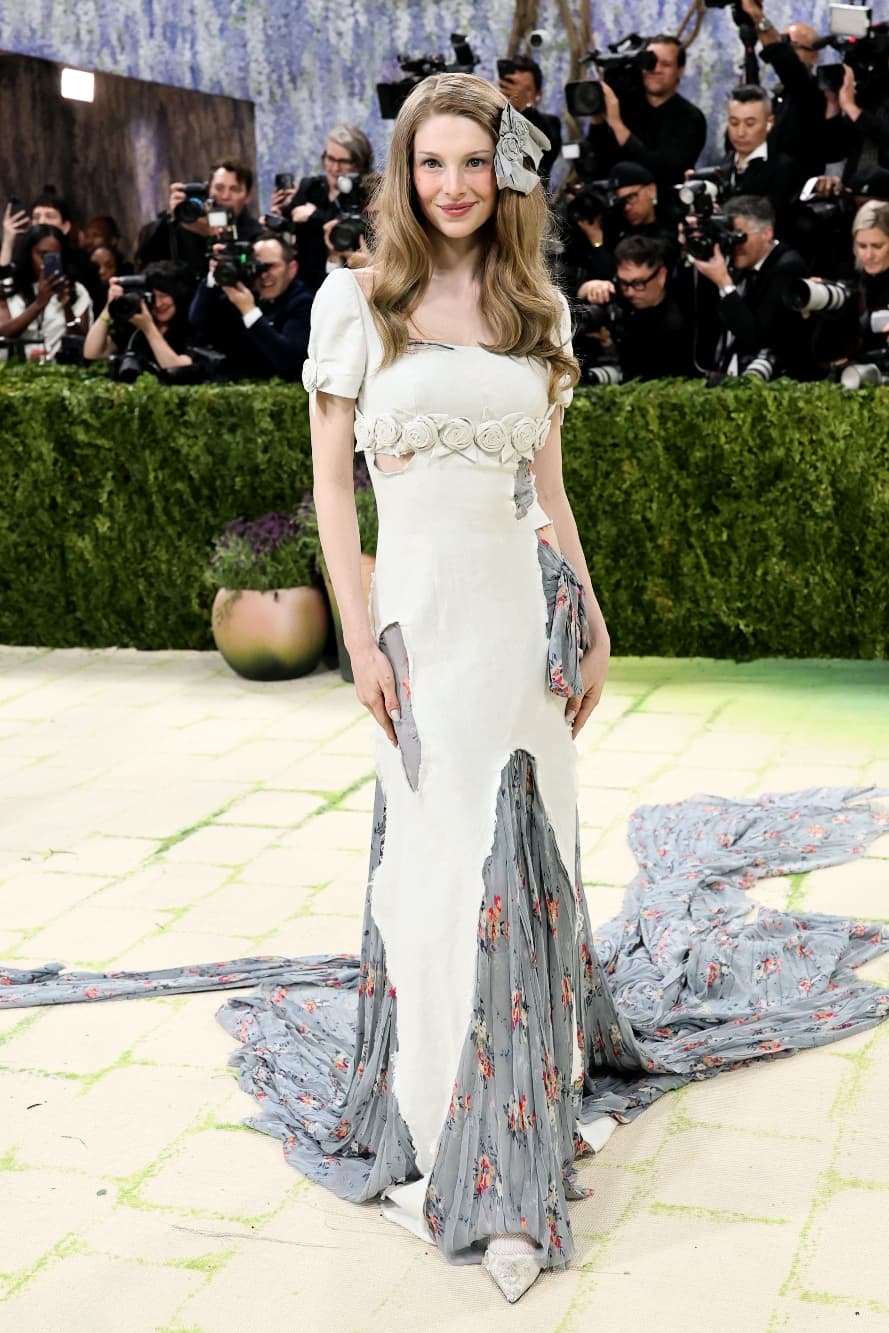
At the 2026 Met Gala, Hunter Schafer wore a custom Prada linen gown with an empire waist and printed silk chiffon devoré detailing, inspired by Gustav Klimt’s portrait of Mäda Primavesi. The look was completed with a matching headpiece, cotton socks and embroidered satin pumps, alongside a yellow satin pouch — introducing a deliberate tension between historical reference, childlike styling cues and refined craft.
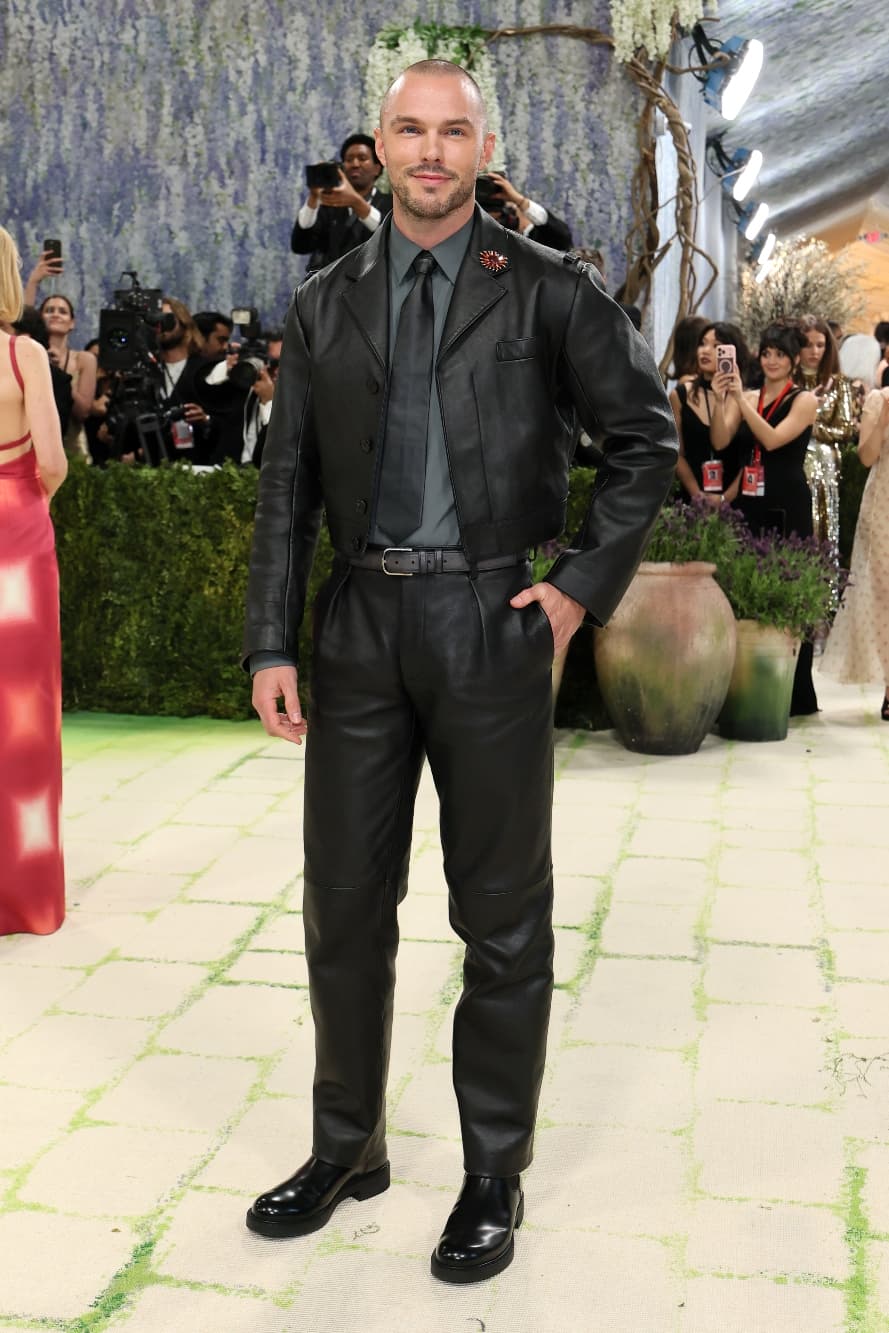
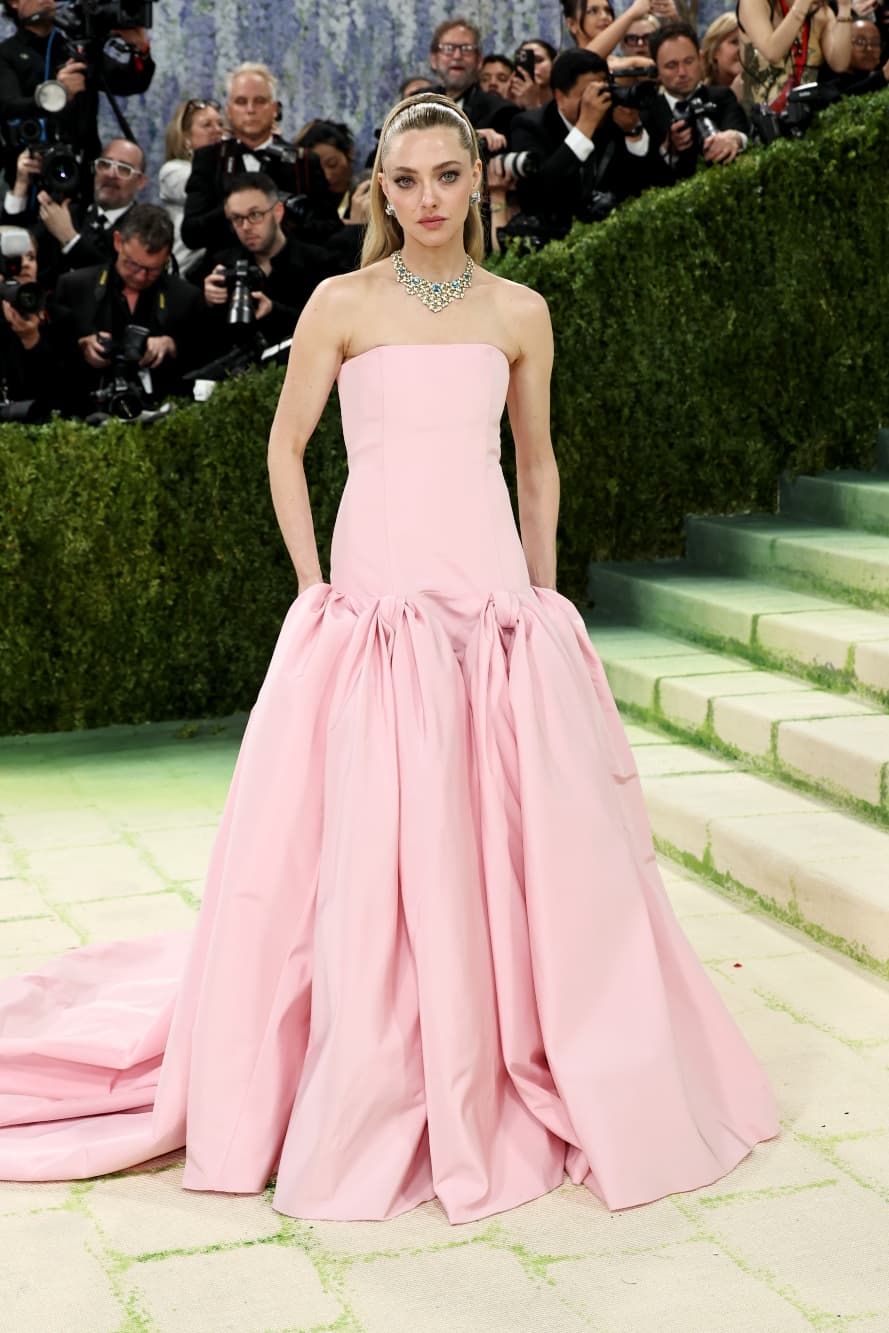
Amanda Seyfried appeared in an alabaster pink silk faille dress constructed with a wide, low-waisted silhouette and symmetrical bow detailing at the front, paired with pearl satin platforms and a coordinated embroidered clutch. The result balanced delicacy with structural exaggeration, reflecting Prada’s ongoing interest in distorting traditional femininity through proportion and finish. Instead of a conventional suit, Nicholas Hoult wore a black leather jacket layered over a grey poplin shirt and black mohair trousers with a leather side stripe, styled with tonal accessories in leather and silk. The look reinforced Prada’s menswear language of controlled disruption, where classic tailoring is subtly interrupted by material contrast.
Balenciaga
Balenciaga is known to feature a level of irony and a unique brand of anti-glamour glamour. The House’s codes are grounded in exaggeration with oversized silhouettes, stripped-back styling and a consistent tension between luxury and the banal. Balenciaga constructs identity through distortion, often reframing everyday dress archetypes as elevated but deliberately unglamorous forms, tapping into monochromatic colour schemes and controlled severity. At the MET Gala, Balenciaga’s codes of irony and construction-led expression are reinforced through illusion and historical distortion.
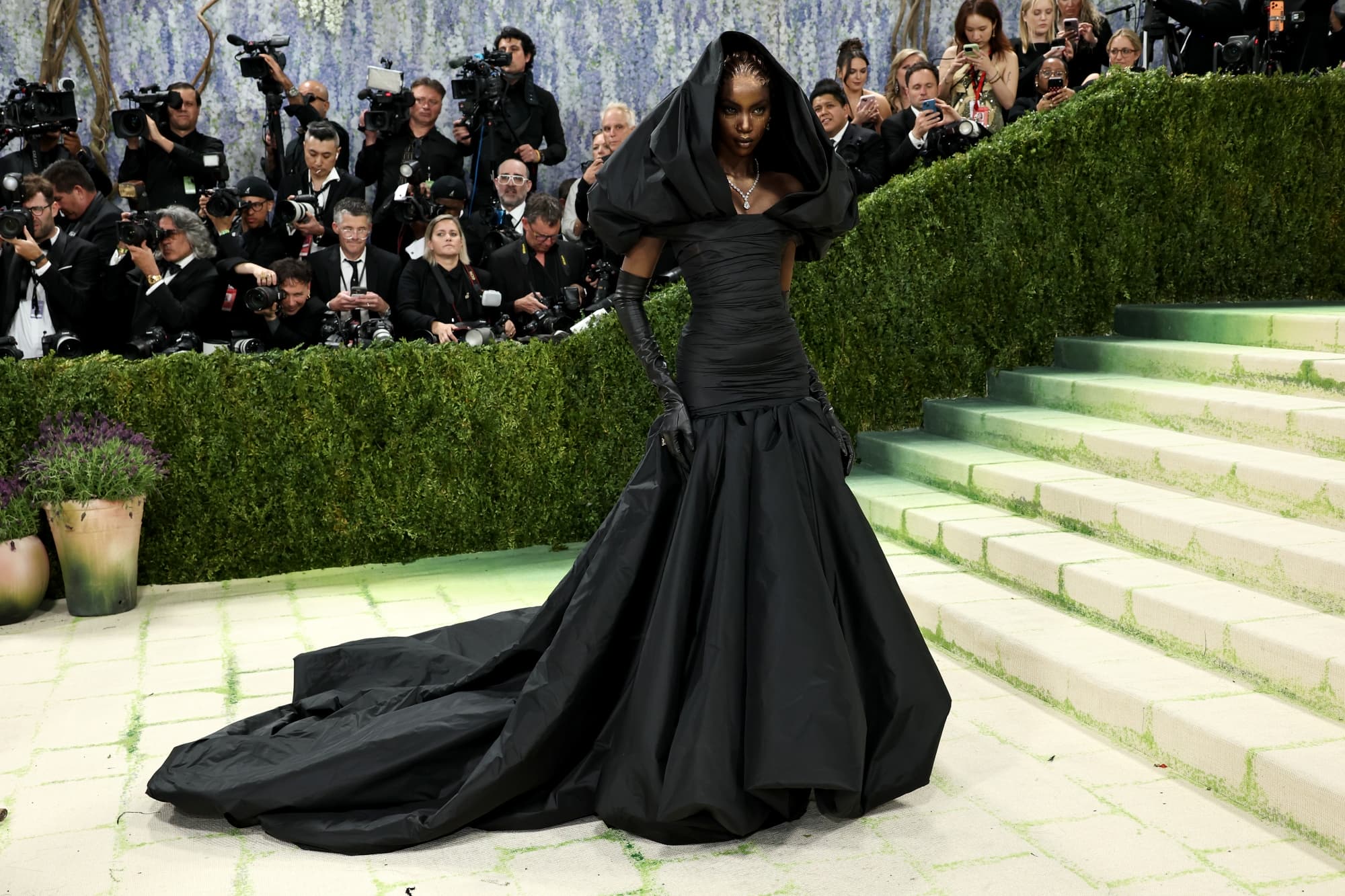
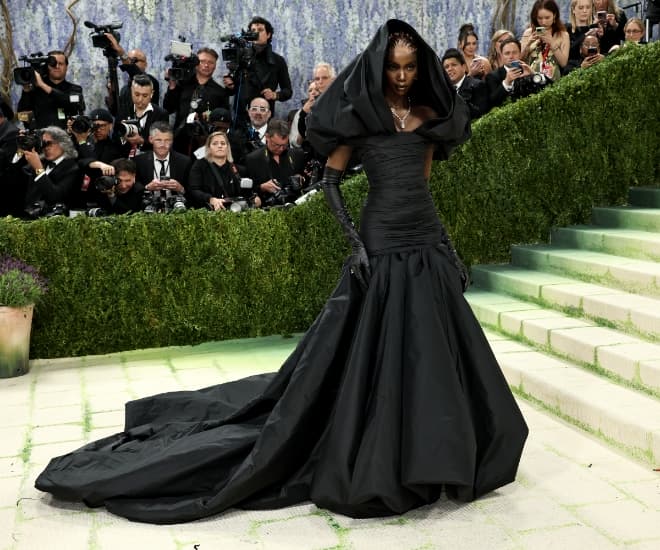
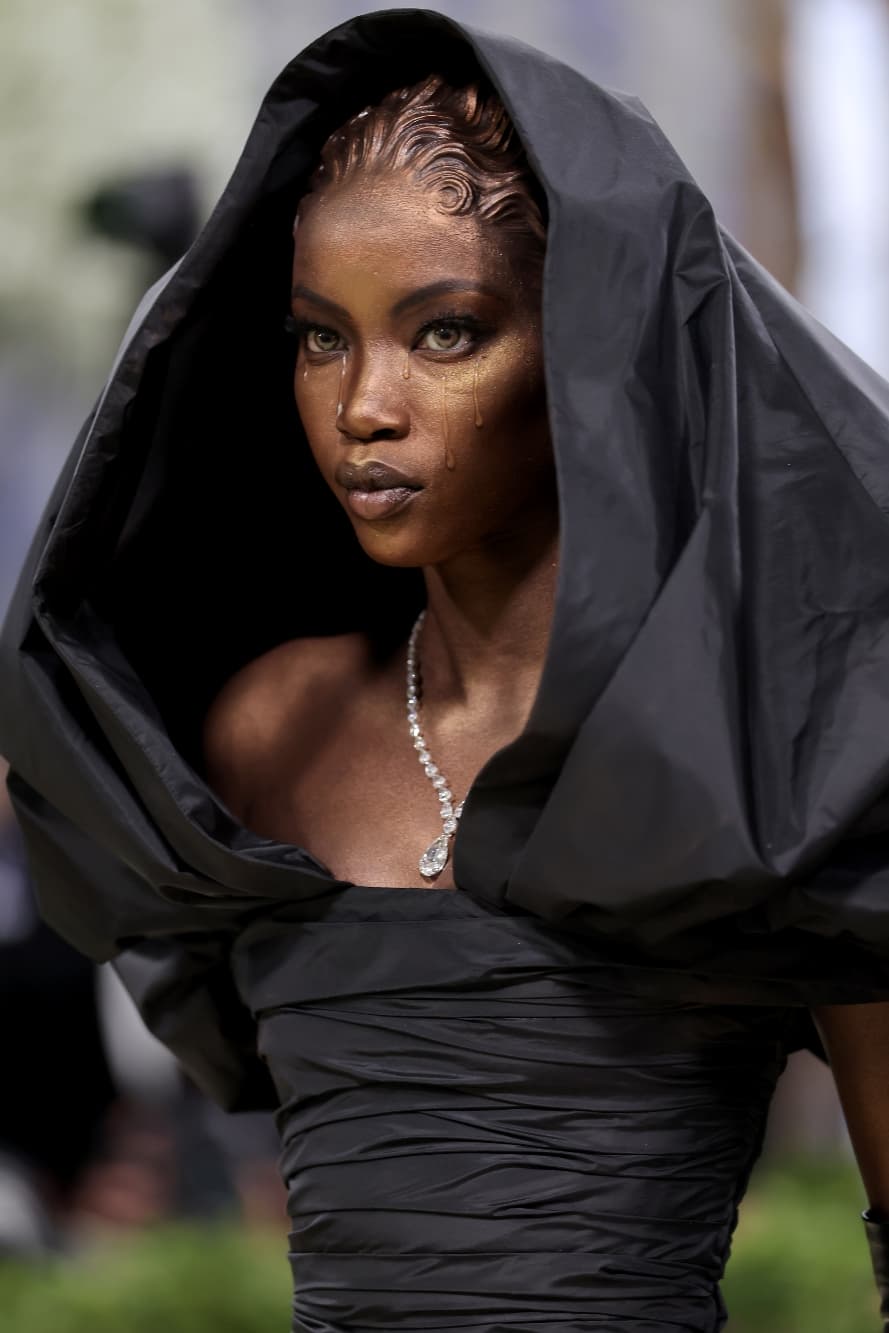
Case in point, Anok Yai wore a custom Balenciaga sculptural evening dress in black silk taffeta, paired with black suede Duchess pumps and Gala ear jewels in brown and dark gold brass. The gown contrasted a fitted, draped bustier with a voluminous hood and layered skirt constructed from silk organza and Cristóbal crin, building an architectural silhouette that enveloped the body in controlled volume. The design referenced Cristóbal Balenciaga’s 1949 “coquillet” technique, translated into continuous wave-like textures that reinforced the House’s historical codes.
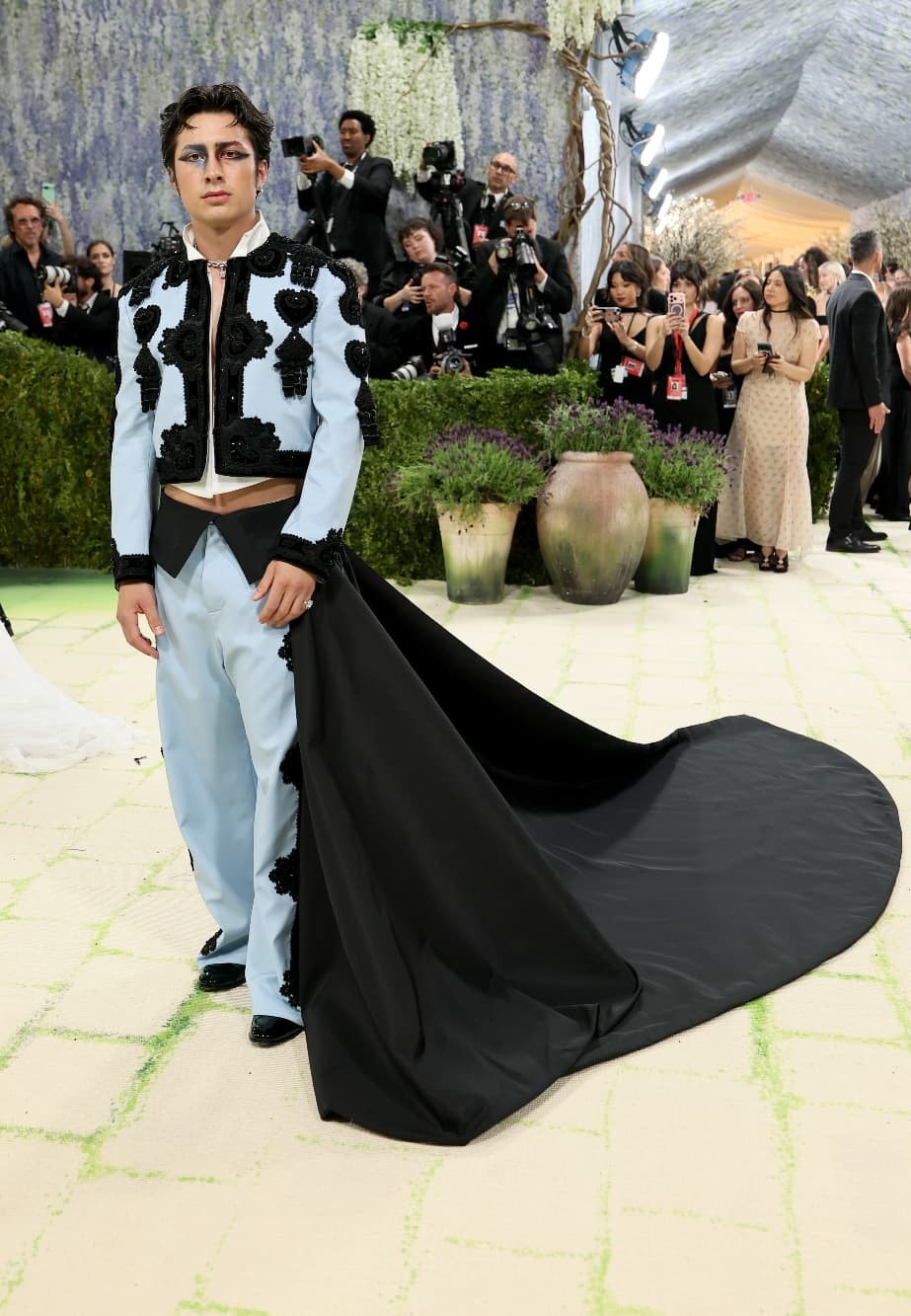
Tapping into the banal, Hudson Williams wore a Torero trompe-l’œil collar jacket and matching trousers in light blue wool, embroidered with pearls, velvet and satin, paired with a train cape in black silk faille. The look draws inspiration from a 1947 Cristóbal Balenciaga evening bolero, referencing Spanish heritage and matador dress codes through a contemporary lens. A trompe-l’œil construction creates the illusion of layered shirting and tailoring, though the garment is engineered as a single unified piece.
For more on the latest in luxury fashion and style reads, click here.