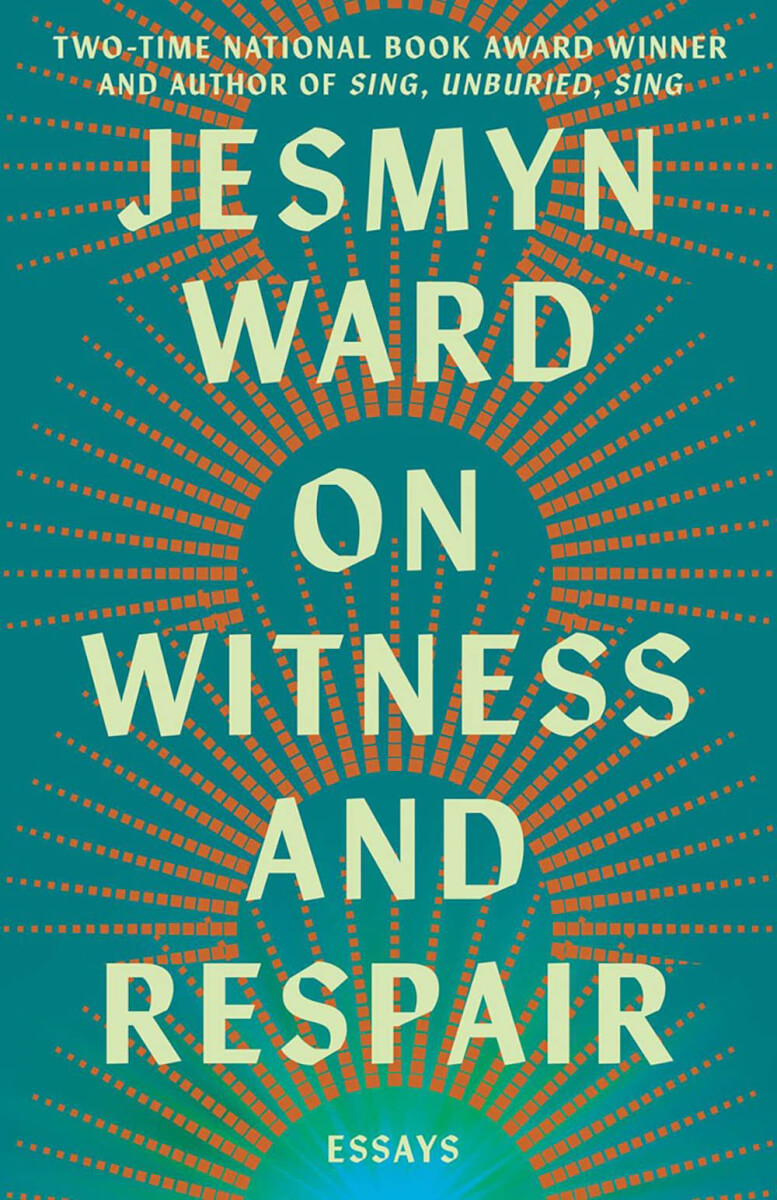

By the time she was 40, Jesmyn Ward had won two National Book Awards for her novels Salvage the Bones and Sing, Unburied, Sing—the first woman, and first Black American, to do so. Ward grew up poor in the poorest part of Mississippi, and as a young writer, she was determined to tell the stories that came out of this legacy. “Tell it straight. Tell it all,” Ward’s grandmother Dorothy taught her. Dorothy told stories of escaping sundown towns at dusk and enduring grinding poverty, but also of sewing beautiful dresses and whirling on the dance floor. “I tell this Southern gothic, this Mississippi tale,” writes Ward. “I write toward what hurts. I write toward the truth, and I tell it again.”
On Witness and Respair collects two decades’ worth of essays, and true to Dorothy’s lessons, Ward notes the pain and difficulties in her extended family and community, but also the joys, like cookouts at a nearby river and riding on the back of her father’s motorcycle as a child. In one standout essay “We Do Not Swim in Our Own Cemeteries,” Ward records a visceral account of Hurricane Katrina and the days afterward. Several essays touch on a seminal event in her young life, the death of her 19-year-old brother after a drunken driver crashed into his car. The driver, a middle-aged white man, never faced substantial legal consequences. “No Mercy in Motion” gives texture to their relationship with sensory details and evocative dialogue.
The collection also traces the development of a writer: the scholarship girl in an all-white school writing stories that might appeal to a white audience; the young woman with two Stanford degrees, unable to find a job in Mississippi and going to work in publishing in New York City; the return to books that she’d loved, like Fitzgerald’s The Great Gatsby and Octavia Butler’s Bloodchild, and also those that eluded or repelled her, like Faulkner’s As I Lay Dying.
Later essays recount Ward’s life as a mother, including the terror she felt after learning she was going to have a son (“A procession of dead Black men circled my bed”). The title essay, near the collection’s end, covers the tragic loss of her partner to acute respiratory distress syndrome, the COVID-19 pandemic and the racial justice movement that spiked in 2020, and how she committed to writing—to witness—during those hard months. Though no longer in common usage, the word “respair” means fresh hope after despair. This clear-eyed collection contains much of it.