France will convene G7 energy summit, Macron says, as fuel prices soar
President Emmanuel Macron said Friday that France would convene a G7 meeting dedicated to energy in the weeks ahead as fuel prices soar amid the U.S.-Iran war.
“In the coming weeks, we will have a G7 meeting devoted to these energy issues, both to strengthen cooperation and to avoid unnecessary tensions between the G7 countries and our main partners,” Macron said. “It will also be an opportunity to consider options for a possible release or unlocking of strategic reserves.”
Oil prices have fallen several percentage points this week on hopes that Saudi Arabia was moving to restore about half of crude shipments within days after they were disrupted by drone strikes on its East-West pipeline to the Red Sea.
But international benchmark Brent crude continued to hover around $104 a barrel on Friday, up from $88 exactly three weeks ago.
AFP/CBS
Democratic senator urges Trump to press Xi Jinping on report Iran used Chinese satellite info
Democratic Sen. Elissa Slotkin is urging President Trump to press Chinese President Xi Jinping on evidence that the Iranians used satellite images from Chinese entities to carry out the July attack on a military base in Jordan that killed three U.S. service members and wounded four others.
In a letter sent to the president on Friday and obtained by CBS News, the Michigan senator urged the president to make that issue “a centerpiece of your talks with President Xi” during his White House visit next week.
Mr. Trump has spoken deferentially of Xi during the war with Iran, in spite of questions that have arisen about possible Chinese assistance to Tehran. Last week, The Wall Street Journal, citing U.S. officials, reported Tehran had acquired images of the base from the Chinese.
Israel to seek compensation from the U.S. after Saudi F-35 deal
Israel will seek additional weapons and weapons systems from the United States following Washington’s decision to sell 48 F-35 fighter jets to Saudi Arabia, according to Israeli news site Walla.
An Israeli official told the outlet that Israel will seek weapons not previously approved for sale, including bunker-busting missiles.
Despite the Saudi deal, Israeli officials said Israel would retain a clear operational advantage over the Middle East’s skies. The Saudi deal will cost them $24.3 billion, according to the U.S. State Department.
Walla reported the Israeli army would prefer no other Middle Eastern country to acquire the stealth fighter, while noting that Saudi Arabia would not receive its first aircraft for at least five years if the deal is signed soon.
Stock markets diverge after central banks hike rates to control Iran war-linked inflation
Global stock markets diverged and oil prices wobbled on Friday, approaching the end of a week dominated by central bank moves to tame inflation driven by the Iran war.
Wall Street opened mixed, while European markets fell and Asian equities were lifted by renewed AI optimism.
The Bank of Japan raised interest rates to a three-decade high on Friday, but the yen sank against the dollar on fears the pace of hikes might be slower than expected.
Japan’s move came after the U.S. Federal Reserve lifted borrowing costs Wednesday, providing relief to traders concerned that policymakers were not moving quickly enough to address a spike in inflation that could deal a blow to the world’s biggest economy.
The European Central Bank has also recently tightened monetary policy, while the Bank of England this week held its benchmark interest rate but signalled possible hikes ahead.
Oil prices fell around 2% on hopes that Saudi Arabia was moving to restore about half of crude shipments within days after they were disrupted by the stoppage of its East-West pipeline to the Red Sea, before paring losses.
The conduit, even more important since the effective closure of the Strait of Hormuz by Iran, was shut last week after being targeted by Yemen’s Iran-backed Houthis.
Crude prices, which soared around 20% in September, have fallen over the past three days, but international benchmark Brent remains over $100 a barrel.
EU’s top diplomat condemns Houthi attacks on Saudi Arabia as “unacceptable”
The European Union’s top diplomat condemned Houthi attacks on Saudi Arabia as “unacceptable” Friday.
In a post on X, Kaja Kallas, the EU’s High Representative for Foreign Affairs, wrote, “Houthi attacks on Saudi Arabia are unacceptable and sabotage the global economy.”
She added that passage through the Strait of Hormuz “must be unimpeded and toll-free.”
“Europe is helping protect shipping in the Red Sea from Houthi attacks,” Kallas wrote.
Her comments come after weeks of turmoil in Yemen, especially along the western Red Sea coast, where the Iranian-backed Houthis have taken key strategic territory from the Saudi-backed Yemeni government.
The Saudis accused Houthi forces of targeting the holy city of Mecca on Wednesday, which the group swiftly denied.
Saudi Arabia’s Aramco won’t supply oil to European buyers next month: Report
Saudi Arabia’s state oil company, Aramco, has told at least two oil refining customers in Europe they won’t sell them any crude oil next month, Bloomberg reported Friday.
Customers in Europe normally receive Aramco crude on what are known as contracts, but were informed there would be no supply coming in October after a key Saudi pipeline to the Red Sea was attacked last week.
The decision applies to all European customers, the sources told Bloomberg.
The kingdom paused the flow of crude oil through its East-West pipeline last week after it was struck by attack drones. The pipeline, which allows Saudi oil to avoid the Strait of Hormuz, remains offline though U.S. Energy Secretary Chris Wright said this week it would be reopened “relatively soon.”
The Economic Times reported Friday that Saudi Arabia will also not send crude oil to India until further notice because of the attack.
U.S. offers up to $15 million for information on Iranian paramilitary financial networks
The U.S. State Department is offering a reward of up to $15 million for information leading to the disruption of the financial mechanisms of Iran’s Islamic Revolutionary Guard Corps and its branches, including the elite Quds Force.
The Rewards for Justice program said it was is seeking information on the IRGC’s sources of revenue and financial facilitation networks, including illicit oil-for-money schemes, front companies, sanctions-evasion networks, financial institutions and exchange houses facilitating IRGC transactions, and businesses or investments owned or controlled by the organization or its financiers.
The program is also seeking information on how the IRGC transfers funds and materials to its terrorist and militia proxies and partners, as well as individuals or entities involved in financing or facilitating its activities.
The State Department says the Quds Force plays a leading role among Iran’s actors in directing and carrying out what it describes as Iran’s global terrorist campaign through proxy groups including Hamas, Hezbollah and multiple militia groups in Iraq.
The IRGC was designated by the United States as a foreign terrorist organization in April 2019. The State Department says the organization has been involved in terrorist plots and supported attacks against U.S. and allied personnel and diplomatic missions, while the Quds Force has planned activities in countries including Bahrain, Bosnia, Bulgaria, Germany, Kenya, Turkey and the United States.
Pakistan will go “to any extent” to defend Saudi Arabia, military spokesperson says
Pakistan will go “to any extent” to defend Saudi Arabia against attack, military spokesman Lt. Gen. Ahmed Sharif Chaudhry said on Thursday, as Houthi attacks put pressure on new collective defense arrangements between the two countries.
“Pakistan fully stands with the Kingdom of Saudi Arabia, both diplomatically and physically,” Chaudhry told Saudi state-backed Arab News. “We will go to any extent.”
He said Pakistan’s commitment included protecting Saudi Arabia and Islam’s two holiest sites in Mecca and Medina, adding, “We are there and we will continue to defend Kingdom of Saudi Arabia against any aggression.”
Chaudhry also described Pakistan’s commitment to Saudi security as “unconditional.”
His comments come just over a month after Pakistan, Saudi Arabia and Turkey signed the Mecca Joint Defense Agreement, while Islamabad and Riyadh have also maintained a bilateral defence pact.
The spokesman did not disclose whether Saudi Arabia had requested additional Pakistani troops or air-defense systems, and the full operational provisions of the defense agreements have not been made public.
Thousands of Iranians rally in massive, state-choreographed display of unity
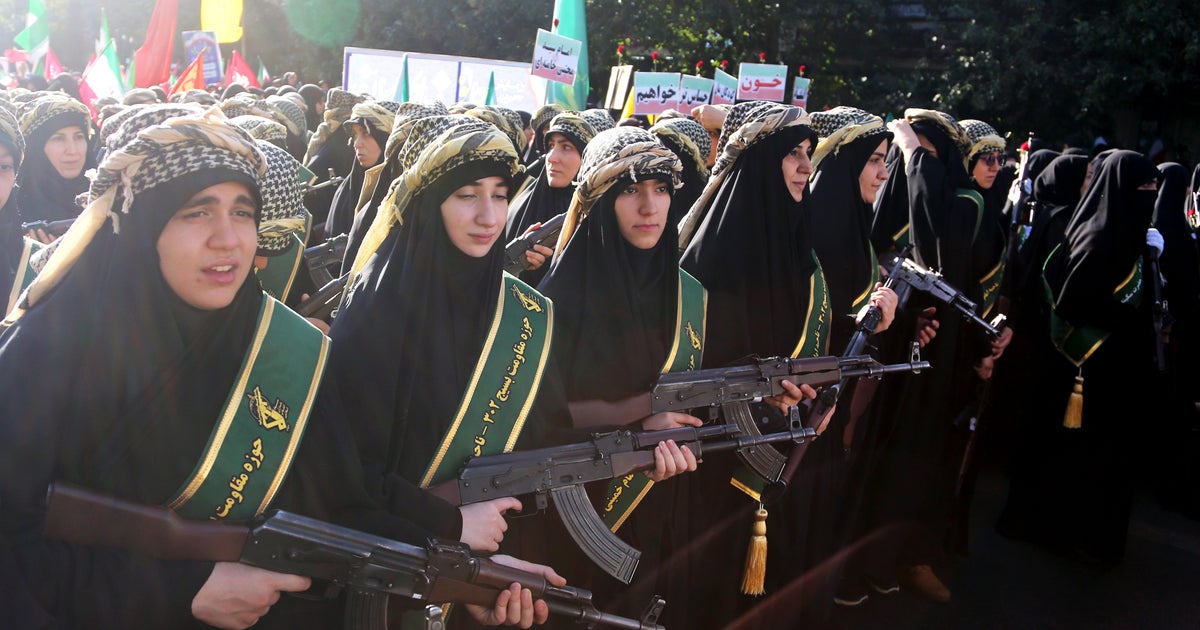
Hundreds of thousands of Iranians rallied Friday in a government-choreographed display of national unity and resistance after months of war, pledging their readiness to take up arms in the biggest such demonstration since the United States and Israel attacked in February.
Iran staged a large-scale nationwide mobilization, involving participants from military and civilian groups, as the country faces mounting economic and social pressure from the war, and the threat of a major new offensive by President Trump.
Estimates vary of the number of people who have pledged to receive limited military training and defend the country in an effort described as “Janfaday-e Iran,” or the “ones who sacrifice their lives for Iran.”
Islamic Revolutionary Guard commander Gen. Hassan Hassanzadeh told state broadcaster IRNA that more than 600,000 people had registered to participate, with over 1 million expected to eventually take part in the training. IRNA estimated that more than 300,000 people had taken to the streets on Friday.
Some participants trampled flags of the U.S. and Israel. Others chanted “Death to America” and “Death to Israel.”
State media have encouraged Iranians to join the campaign for weeks, saying training with assault rifles will begin soon.
CBS/AP
Trump says he has a “big decision coming up” on whether to “annihilate” Iran’s ruling regime
President Trump said Thursday that he is poised to make a “big decision” on whether to “annihilate” the Iranian regime.
“I have a big decision coming up,” Mr. Trump told Axios. “Do I want to go in and annihilate them or do I not? It’s a big decision. Anything could happen with me.”
His comments came ahead of a planned meeting between Mr. Trump and Persian Gulf leaders expected to take place next week on the sidelines of the U.N. General Assembly.
“I want to find out where they are and how they are doing. We have been very protective of them,” Mr. Trump said of the Gulf states, many of which host American military forces and were targeted by Iran in retaliation for the war launched jointly by the U.S. and Israel at the end of February.
Asked whether he would meet with Israeli Prime Minister Benjamin Netanyahu next week, too, Mr. Trump said, “I may.”
Tanker hit by “unknown projectile” in Strait of Hormuz, U.K. maritime agency says
A tanker was struck in the Strait of Hormuz on Friday, causing a fire that was extinguished, according to the United Kingdom Maritime Trade Operations center (UKMTO).
“The CSO (company security officer) of a vessel has reported a tanker being hit by an unknown projectile, causing a fire onboard which has since been extinguished,” the maritime monitor said, adding that the crew was safe, though the environmental impact of the attack was “unconfirmed.”
In a statement to Iran’s semi-official Mehr and Tasnim news agencies, the country’s Islamic Revolutionary Guard Corps claimed to strike a Togo-flagged ship that was making “illegal crossing” of the Strait of Hormuz. It’s unclear whether that incident is related to the one reported by UKMTO.
Iran has pushed commercial ships to ask for permission and use a regime-approved route before sailing through the Strait of Hormuz.
UKMTO later reported that it had learnt of another tanker being struck, this time on Wednesday, Sep. 16. It was hit by an “unknown projectile while transiting outbound of the Strait of Hormuz,” the group said Friday.
CBS/AFP
Attack reported on ship in Strait of Hormuz
An attack was reported late Thursday on a vessel in the Strait of Hormuz, northeast of Khasab, Oman, according to the U.K. Maritime Trade Operations center. The U.K. Royal Navy agency said the crew has been reported safe, and that it didn’t know the exact time or date of the incident.
Russia and China veto U.N. resolution for Iran sanctions monitoring
Russia and China vetoed a United Nations resolution Thursday that would have authorized U.N. experts to keep monitoring sanctions that were reimposed against Iran last year over its nuclear program.
The U.N. Security Council sanctions are still in effect, which freeze Iran’s assets abroad, halt arms deals with Tehran and penalize any development of Iran’s ballistic missile program, among other measures.
Using a provision in the 2015 nuclear deal between Iran and major powers France, Germany and the United Kingdom triggered the “snapback” mechanism, which reimposed the sanctions on Sept. 27, 2025. It restored the Security Council sanctions committee and authorized a panel of U.N. experts to monitor implementation.
The United States had drafted a resolution to extend the U.N. expert panel’s mandate for a year. The proposal was defeated by a vote of 11-2, with Somalia and Pakistan abstaining, because of the Russian and Chinese vetoes.
It comes as the Trump administration is pursuing a wider campaign to isolate Tehran from its remaining economic partners as the more than six-month-old war in Iran has hit a stalemate.
U.S. approves visas for Iranian representatives to attend U.N. General Assembly next week
The Trump administration has approved visas for top Iranian officials, including the president and foreign minister, to attend next week’s U.N. General Assembly high-level meeting in New York even as the two countries are locked in a stalemated war.
The State Department said Thursday it had approved visas for Iran’s “core delegation,” along with essential staffers to participate in the U.N. meetings. The core delegation includes President Masoud Pezeshkian and Foreign Minister Abbas Araghchi, according to U.S. officials, who spoke on condition of anonymity due to visa privacy laws.
“Consistent with our host country obligations, the core delegation from the Iranian regime will be able to attend UN General Assembly High Level week. The delegation will be under travel restrictions and will face prohibitions on the purchase of luxury and other goods per our policy. The delegation is smaller than last year,” the statement said.
The move is unusual due to the more than six-month-long conflict between Iran and the United States and no sign that agreements to reopen the Strait of Hormuz or return to talks on Iran’s nuclear program are close.
U.S. to sell 48 F-35 Lightning fighter jets to Saudi Arabia
Saudi Arabia will be getting a major upgrade to its air force with the purchase of 48 F-35 Lightning II Joint Strike Fighter aircraft from the United States, according to the U.S. State Department.
The jets will cost the Saudis about $24.3 billion, according to the State Department. The fighter jets are built by Lockheed Martin. The planes are in common use by many U.S. allies, including the U.K., Italy, Netherlands, Australia, Canada and more.
The jets will be of the F-35A variety, which means a conventional takeoff as opposed to the F-35B, which can take off vertically.
“The proposed sale will improve Saudi Arabia’s capability to deter current and future threats by strengthening its homeland defense, and improving interoperability with U.S. forces, and other regional and NATO forces,” the State Department said.
The F-35 Lightning II is one of the most common stealth fighters in the U.S. arsenal, with hundreds being used across the Air Force, Marines and Navy. There was a record 191 F-35 fighters delivered to the U.S. in 2025, according to Lockheed Martin.
Iran downed at least 2 unmanned American aircraft in recent days, U.S. officials say
Iranian forces in recent days have brought down at least two American MQ-1 unmanned aircraft, according to U.S. officials familiar with the matter who spoke to CBS News on condition of anonymity because they were not authorized to speak publicly.
It is unclear where in the region the remotely piloted aircraft were brought down or which MQ-1 variant was involved. The U.S. military has fielded two principal MQ-1 variants: the Predator, which became a fixture of U.S. operations in Iraq and Afghanistan before the Air Force retired it in 2018, and the Gray Eagle, a larger Predator-derived aircraft still operated by the Army, including its special operations forces.
Both the Predator and Gray Eagle were designed for intelligence, surveillance, and reconnaissance missions but they can also carry Hellfire missiles for striking targets. In the Strait of Hormuz, these unmanned aircraft can provide U.S. forces with persistent surveillance over the narrow waterway while also tracking Iranian military activity and monitoring threats to both American forces and commercial shipping.