
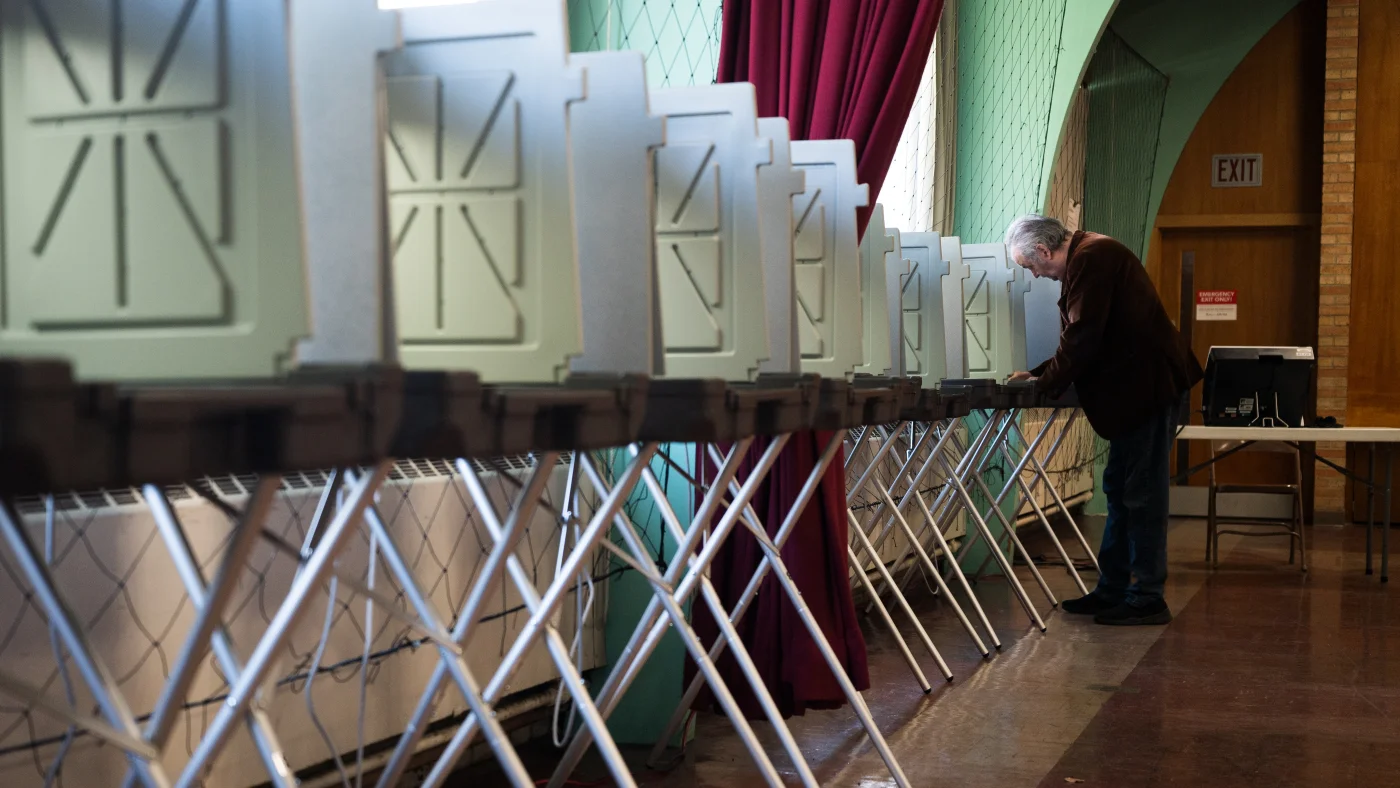
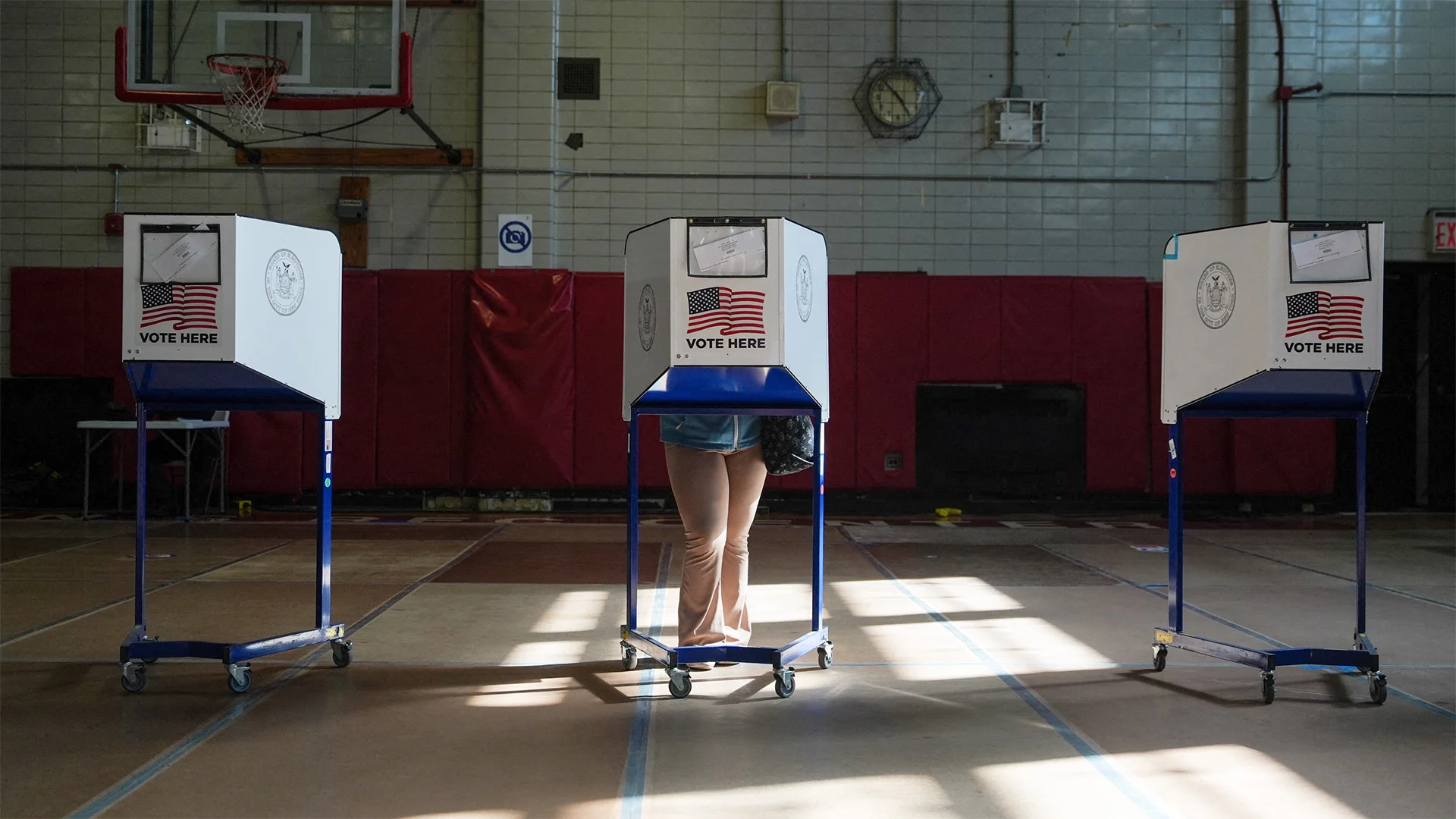

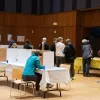
Voters fill out their ballots at an early voting polling place at Bethel Lutheran Church on October 28, 2026 in Minneapolis, Minn.
Stephen Maturen/Getty Images
hide caption
Stephen Maturen/Getty Images
📲 Get the latest on the midterms & more in the NPR App
Ahead of Election Day, there are a lot of questions about what might happen, what the implications of different outcomes might be and even what it’s like to cover elections. In collaboration with the NPR Politics Podcast, listeners sent in their questions about the election and politics for our political correspondents to answer.
Many political polls have been wrong recently. How can you as a reporter provide an accurate news piece utilizing poll results?
This is a common question every election cycle, but it’s a little like saying, “I don’t like the media because the media is biased.” There are good polls and bad polls just like there are good reporters and bad reporters.

There have no doubt been some high-profile misses, particularly at the state level. National polls have actually been pretty good when it comes to the horse race, with a slight underestimation of Republican turnout. But remember, these polls have margins of error. That means a poll with +/- 3 or 4 percentage points is actually a range of 6 to 8 points. That’s important because in a country with very close elections, the kind of precision that Americans expect sets up the polls for failure because they’re not intended to be that specific. They set more of a fuzzy range.
State surveys have seen a lot of junk polls, even a couple fake ones this time around. So it’s really important to pay attention to the quality of the pollster. The reason for this is because of the decline of local journalism. Local newspapers and TV stations just don’t have the kind of money that national outlets do to pay for good, rigorous and frequent polling.
Horse-race polling isn’t even the best use of polling. I talk a lot about polls, but you rarely hear me talking about specific margins between candidates, unless there’s been a trend moving the needle in a certain direction. The races are close, within margin of error in many places, and that’s all that really needs to be conveyed. Unfortunately, some outlets emphasize the horse race, but the best stuff is underneath. Are there trends over time with statistically significant movement on important questions and issues? For example, we wouldn’t know how quickly public opinion moved on important issues, approval ratings, attitudes and how strongly people feel about those things without this data.
Also, for those who don’t think reporters should use polls at all, understand that campaigns and corporations spend millions of dollars on polling to inform where they spend money, where they travel and what messages to use. They use the same pollsters you hear about externally. All that said, polling is one tool. It’s not everything, and it should be mixed with historical context, reporting with campaigns, and being on the ground, which are all priorities of NPR’s as well. – Domenico Montanaro, NPR senior political editor and correspondent
Do you prefer reporting on midterms or presidential election years? Are there unique opportunities that midterms have?
Presidential elections are certainly easier to cover in the sense that there are two sides who are looking to be in one job. Plus, regular people are very interested in presidential elections, as is evident by the decline in turnout from presidentials to midterms. But midterm elections are also consequential — and can be a lot of fun.
You get a lot of quirky candidates in down-ballot races sometimes with interesting storylines that might not see a lot of daylight in a presidential election, which is like a solar eclipse. Plus, I got my start covering midterm elections, researching the 2006 elections and learning about every single congressional race, and it was fascinating — the characters, the different types of places and economies and people in this very large country. – Domenico Montanaro, NPR senior political editor and correspondent
Reporting during the midterms is so much more fun! Rallies for presidential candidates have tons of security and stadium-size venues. A lot of sitting and waiting, using your camera zoom and being stuck in a press pen.
Tagging along with a candidate for House or Senate, especially early in the cycle, can be so much more intimate. This year, I’ve covered candidates at an antique shop, a farmer’s market, a UAW picnic, a family farm and a smokejumper-themed brewery. There is more opportunity to see candidates up close, watch them interact with voters and even ask them questions. – Sam Gringlas, NPR congressional reporter
I personally like all elections, which is what makes a presidential year so great, you get a whole smorgasbord of contests. The top of the ticket certainly consumes a lot of oxygen but I’ve found you can often learn more about how the election is going by spending time with congressional candidates or even candidates for the state legislature. And, unlike midterm years, more voters are engaged, which makes for better voter interviews. But, please check back in a week and a half to see how my sleep debt is doing and whether I still say I “like all elections,” because this may just be the light at the end of the tunnel pre-election euphoria speaking. – Tamara Keith, NPR senior political correspondent
Is there a race you’re watching out of your own curiosity that may not “matter” at the national level?
Every race counts when it comes to the balance of power in the House and the Senate. But I have been joking that following the twists and turns in Nevada’s 2nd Congressional District is now my hobby. I did a story about this race about a month ago and it has only gotten more wild since. It is a district that President Trump won by 14 points that hasn’t been represented by a Democrat in its more than 40 years in existence. But Republicans ended up nominating a Trump-backed candidate with a ton of baggage who only moved to the district to run for congress. In an interview with me, he blamed his grandkids for one of his missteps.
Democrats nominated a former Miss Nevada turned state legislator, who has been running a very solid campaign. The retiring Republican congressman is using colorful language to trash the GOP nominee every chance he gets and announced that he voted for a Libertarian instead. So, it’s just totally messy. The Republican is still favored to win but I am watching closely because I just want to know how this drama ends. – Tamara Keith, NPR senior political correspondent
There are a lot of redistricting ballot measures before voters. In Maryland, voters are going to consider whether to [amend the state constitution which would ultimately] allow Democrats to add one more seat there. That one actually looks like it might not pass, which is surprising because this is a Democratic state. You’d think Democrats want to give their Democratic lawmakers an edge to create a new seat.
Coloradans are considering a ballot measure that would basically make it harder for their legislature to mid-decade redistrict, which a lot of other states did. And then in Missouri, they’re going to be weighing another question about whether to allow congressional redistricting that would help Republicans flip a seat there.
Then there’s Alaska. Every cycle they go back and forth about this primary system that they have and ranked choice voting. It is going before them again. It’s always a squeaker. It’s always really close. But voters have stood by their top four primary nonpartisan primary system and their ranked choice voting. – Ashley Lopez, NPR political correspondent
I’m paying very close attention to places like Michigan and Texas and what they tell us about the Senate. There’s a couple of really interesting House races that I think are going to tell us something, especially in South Florida and South Texas with Latinos and how they move in this election, because they’re quite the swing group at this point. There are a couple of governors’ races and ballot initiatives across the country.
In California, I’m really interested to see how this wealth tax ballot initiative does. There’s been a ton of money, tens of millions of dollars spent on that, and it’s going to be interesting to see if in a place like California that do tend to be the ones out front on a lot of these kinds of experiments, if it winds up passing or not.
I’m also curious about something like the Nevada governor’s race. And Nevada is always a really interesting place because people have a real independent streak. You’ve got two candidates here in Gov. Joe Lombardo, the Republican who was elected in 2022, and he’s going against the state’s attorney general, Aaron Ford. There’s been all this talk about crime and about Trump and the high unemployment rate. But then you dig into some of their backgrounds. Ford has had to talk about how, as a college kid, he made some bad decisions, including running into trouble with the law. I think the outcome there is going to be really interesting to see, asking voters whether they’re going to take the dirt of what happened with somebody a decade or so ago versus the national political climate. – Domenico Montanaro, NPR senior political editor and correspondent
How is the executive branch going to be affected if Democrats take one or both houses of Congress in the midterms?
Midterms tend to be a check on the party that holds the White House. The way that happens, first and foremost, is when there’s split power in Washington, legislation comes to a standstill unless there’s compromise and with only about 10% of congressional districts being competitive, there isn’t much incentive to meet in the middle.
Some issues that have bipartisan support, like guardrails for artificial intelligence, could see progress. But the president is not in favor of restrictions on AI. The biggest effect of a Democratic House or Senate will be investigations and oversight of the current administration. One thing that could be politically tricky for Democrats is how far they go with impeachments, if they go there. Republicans paid the political price for their impeachment investigations of former President Clinton in the late 90s.
Only twice since World War II has the president’s party picked up seats in a midterm — once in 2002 after 9/11 and the preceding midterm in 1998. – Domenico Montanaro, NPR senior political editor and correspondent
Are political debates dead? And if not, when they are held, are they doomed to be ever more divisive at the expense of platforming policies as they have been in recent years?
In midterms, you have incumbents who are reluctant to get on a debate stage because they don’t want to give a challenger oxygen and raise their profiles. The thing about debates is that sometimes people don’t feel like they get a lot out of them, because politicians are talking-point machines. The job of journalists and interviewers is to try and get them off of those and to press on vulnerabilities so voters get a clearer understanding of what those candidates want to do and why they want to do it.

That’s a real service to voters when done well, considering the only things voters see or hear from politicians otherwise is pre-packaged campaign ads, speeches or curated social media clips. Pressing them on their policies in a debate is an important part of the Democratic process, and a big platform for people who need to increase their name identification, so, no, I don’t think debates are dead. In fact, I think with what could be a record number of candidates in this upcoming presidential election, you’re gonna see a lot of debates. Just wait. – Domenico Montanaro, NPR senior political editor and correspondent.
What from this year’s midterms are you watching as potential indicators for the presidential election in 2028?
Jon Ossoff’s margin in Georgia. LOL. Ossoff has emerged as a dark-horse potential presidential candidate, despite his denials. They always deny they’re running until they do. There are a handful of potential 2028 Democratic candidates who are governors running states where they are heavily favored to win reelection, people like J.B. Pritzker in Illinois, Josh Shapiro in Pennsylvania, Wes Moore in Maryland. What do they say on Election Night to give any clues about what they do next. Or will they simply say how proud they are of their records running their states, which, by the way, can be hints of messages for… 2028.

There will be lots to learn from how Democrats affiliated with democratic socialism or the very progressive wing of the party perform on election night compared to moderates in various places. That could set the stage for the issue debates in the 2028 Democratic primary. Also, how do Republicans run post-Trump? Do any start to distance themselves in the days and weeks following the midterms, trying to lay out a different direction, while walking the line to keep MAGA on board?
You can’t really read into how states go in midterms to say whether they’re going to be competitive in 2028. These are just very different electorates than much-higher turnout presidential elections. The margin for the Senate will be interesting for 2028 and what it means for the potential of a governing majority for the next president. – Domenico Montanaro, NPR senior political editor and correspondent
Thank you to Courtney, Nathaneal, Chad, Erin, Renata and Tyson for the questions.


