
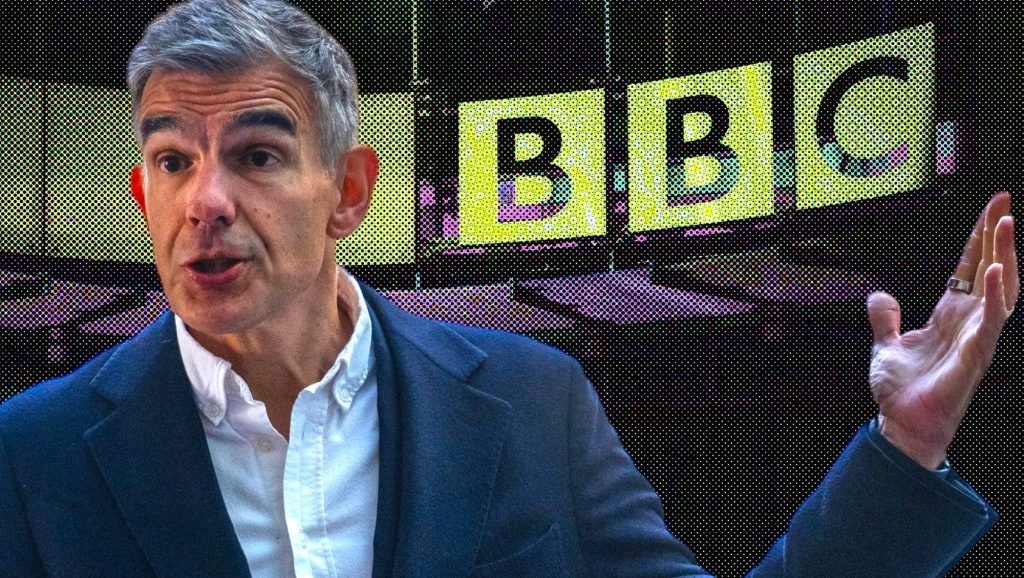
EXCLUSIVE: BBC director-general Matt Brittin has argued that the entertainment business is lagging behind other industries in tackling workplace power abuses amid the Russell Brand and David Walliams scandals.
During an internal town hall meeting on Thursday, Brittin was challenged by staff over a culture of “reverence” towards on-screen stars. The former Google executive admitted that decision-making processes around talent can be “subjective,” while he also called on the BBC to be more transparent in complaints handling.
During the staff call, the most upvoted staff question read: “The behaviour of people like Russell Brand, Gregg Wallace and David Walliams, amongst many others, was widely known yet they continued to work here. How can we ensure that we are protecting people now rather than paying lip service to the behavior of the talent and apologizing in 15 years’ time?”
Another BBC employee added: “The revelations about Russell Brand and David Walliams point to a culture of ‘reverence’ towards ‘talent.’ What will change to make sure that production staff feel like they do have a voice and that they will be supported by more senior management?”
Watch on Deadline
Brittin commended the “brave” journalists and survivors who helped bring Brand to justice after he was convicted of rape and sexual assault. He echoed this sentiment on Walliams, though qualified that the allegations of predatory behavior reported by ITV News and The Guardian were “unproven.” Walliams has strongly denied wrongdoing.
“I want to just call out that at the heart of this is people being prepared to come forward,” he said. “I do think there’s change afoot in the world.” But Brittin added that the entertainment industry needs to get better at holding people to account as they move between different productions.
He explained: “Personally, I think the entertainment and media industry is behind others in terms of standards. I think one of the reasons is we’re in an industry where there are subjective decisions about talent. You can’t make those decisions objectively. We’re often in a program structure that isn’t continuing over years, with strong HR and other processes around it.”
The BBC conducted a workplace culture review last year, which found that there were a minority of employees who were “able to behave unacceptably without it being addressed.” Since then, Brittin said the BBC has made progress in resolving complaints quickly, while more employees feel able to raise concerns. He added that work needs to be done on preventing power abuses.
“What we want to do is have a culture where these behaviors, or even micro versions of behaviors that are not acceptable, are nipped in the bud early,” Brittin said. He added that there needs to be greater transparency for complainants during grievance processes.
“If there’s a complaint, often the complainant doesn’t hear back, and sometimes complaints are not upheld. So you might be upset about something, but there isn’t a finding. So we need to be clear about those things,” he said. “And obviously, some go through to being investigated, and there are some with consequences, and some of those consequences lead to termination or other action against employees. So we need to sort of look at how we can be more transparent.”
Culture secretary Lisa Nandy has convened an emergency meeting about industry safety next week. Nandy will tell TV leaders that if their response to the recent allegations is not robust enough, she may consider introducing legislation to force them to fund the just-launched CIISA anonymous whistleblowing service.
“I want to be clear that if protections are insufficient, the government will not hesitate to take further action,” Nandy said. “For too long, too many people have had to choose between their careers and safety. People must be safe in their jobs, whistleblowers must be protected and those who abuse their position must no longer be able to hide.”


